Thursday, 17 October 2013

Representing Australia: Lake Mungo (2008)

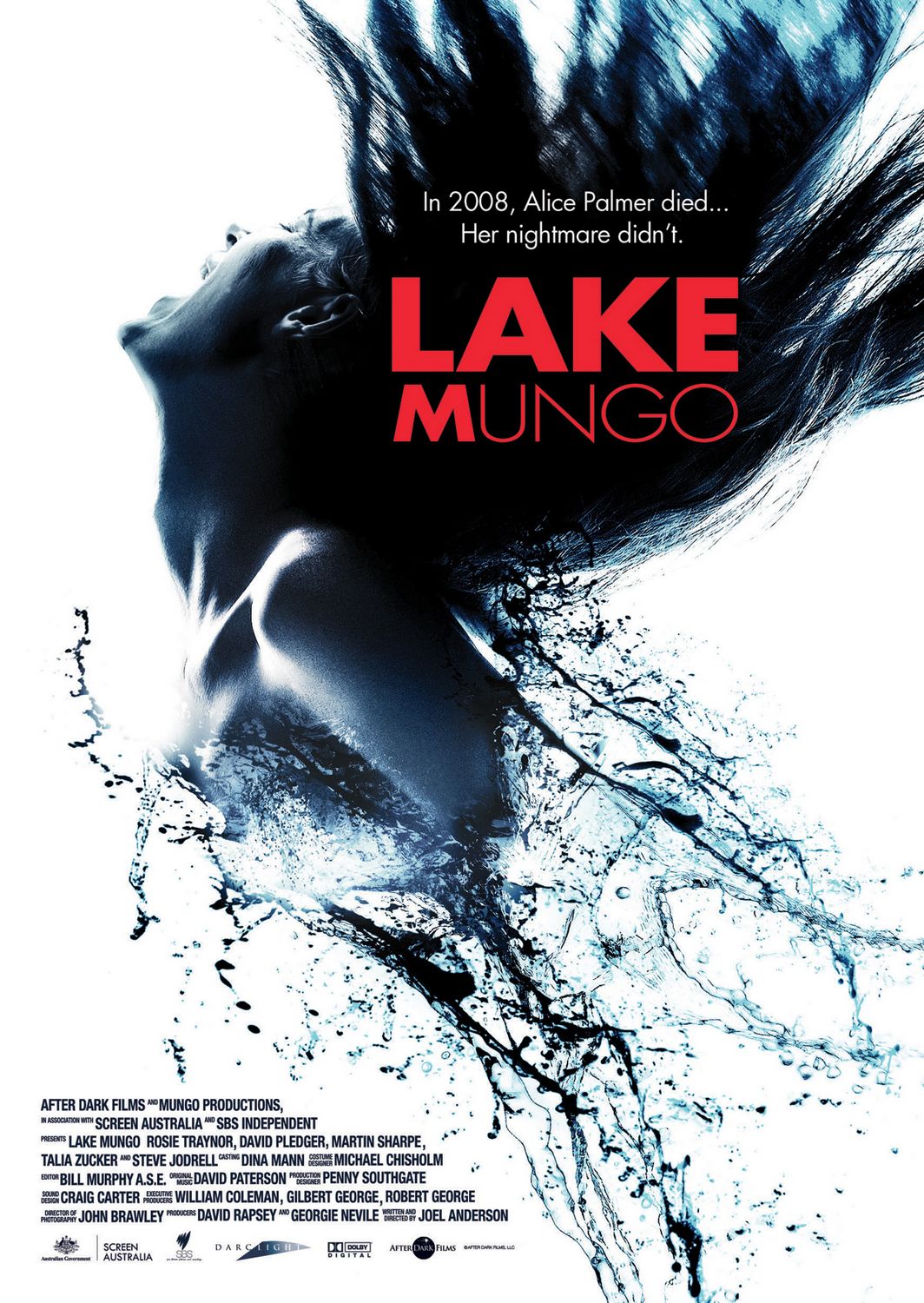
From http://www.impawards.com/2010/posters/lake_mungo_ver2_xlg.jpg

Dir. Joel Anderson

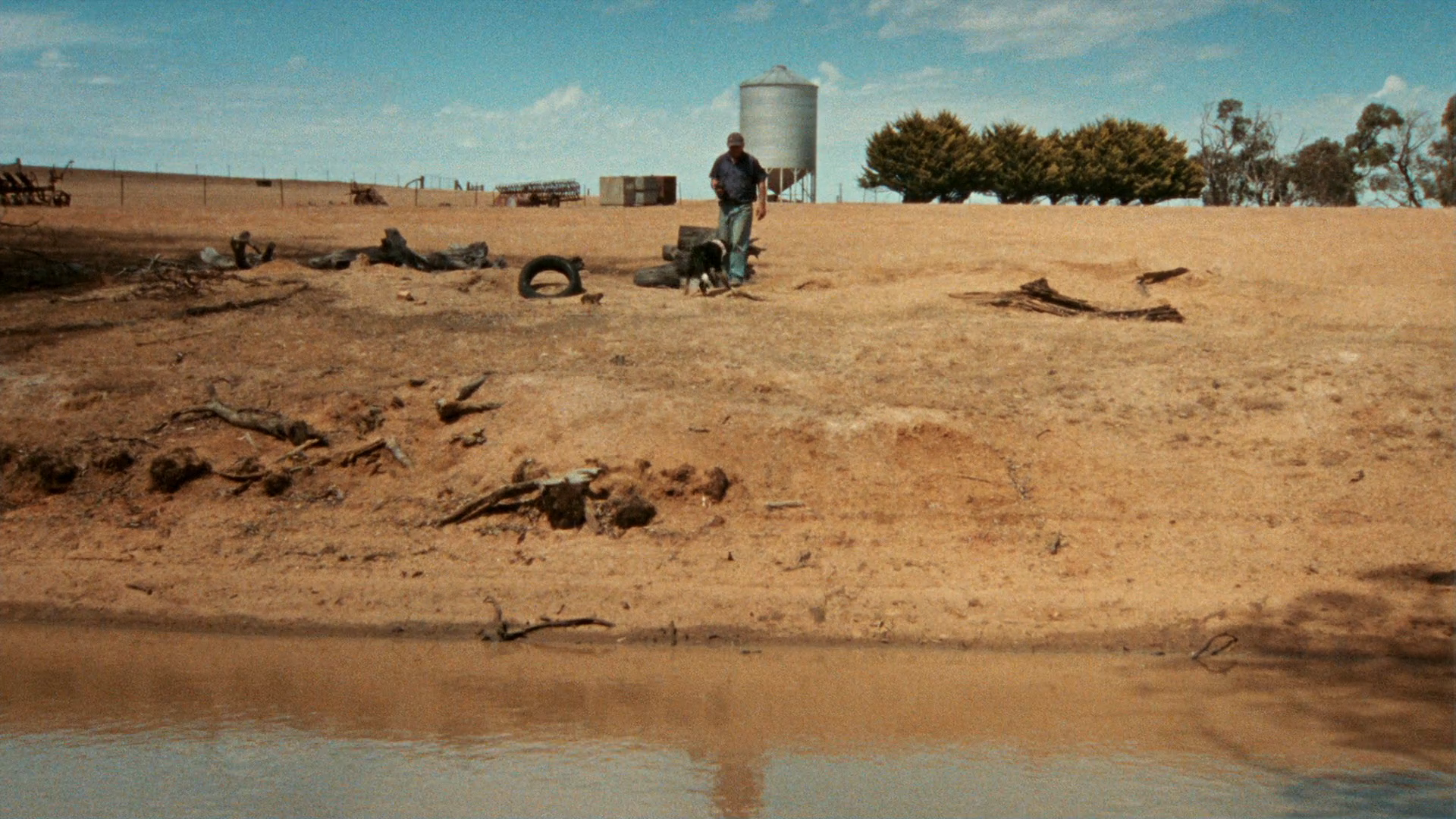
Told as a documentary, Lake Mungo is the story of the disappearance of a sixteen year old girl named Alice, her family coping badly with her loss but, over the next two years, dealing with the possibility that her ghost haunts their home and certain other areas. Using the tropes of the stereotypical documentary found on television - talking head interviews, establishing footage, archival material from the hauntings and slowly discovered events - the story peels away the layers until the truth about Alice' life and her last days alive are revealed. It sounds very interesting. The film reaches something of immense interest when there is more to the story than a mere haunting, the contradictions of a family where members don't reveal things to the others, expectations are not met and new discoveries are found, including an almost mythological or Edgar Allen Poe-like conclusion to the story. But there is a fatal flaw. It may be only a personal one for me as a viewer, but it's a major aesthetics issue that ruins the film. The documentary structure itself.

Fromhttp://thewolfmancometh.files.wordpress.com/2011/09/lake-mungo-movie-film-alice-ghost-woodas.gif

It looks like a lot of documentaries made nowadays on purpose, on cinema screens as well as TV, which is worth praising for accuracy, but this is a bad mistake in terms of cinematic style for Lake Mungo as it continues a side of filmmaking I hate for its laziness. Now if the film had manipulated and scrutinised the style, this would have helped the film immensely, but aside from actual documentaries on cinema itself, which feel more like moving resource books, it is completely insipid for me as a style that has been repeated ad nauseum. Creating it for verisimilitude in this fake documentary was not a good idea. Filmmaker Peter Watkins dubbed this kind of presentation - in editing, use of music, number of shots - the Monoform, a basic structure of audio-media composition repeated continually in most works, a barrage of audio and visuals. It's used in documentaries, sports coverage, the news, many places. Replicated in countless documentaries from talking heads and musical scores that make you feel emotions from the beginning of the work instead gain them yourself, Lake Mungo as a fake documentary replicates it all without ever questioning it in context of its story. For me, you have no time even contemplate anything in the film, no time to think to bring it altogether for yourself, as narration immediately goes into the next interview, no time to illicit emotions of your own because the film's score tries to force you into how it feels you should at that moment. In replicating the real examples of this filmmaking, Lake Mungo becomes a tedious work, where a potentially disturbing and emotionally affecting story is transformed into the kind of supernatural documentary on television that trivialises concepts of death and trauma for cheap emotional pull. Pandering to our desires to feel sadness for others' plights without caring for them once the show ends, not even as fictional characters in a  good drama. It's a potentially meaningful ghost story turned into a trivial piece of (fictitious) tragedy porn, straight jacketed into the format it has. Again, it could have played with the format, especially as this happens in the film with the haunting footage itself, while other films have television formats and made great use of them, but barring the story idea surrounding the titular lake, you are being forced to watch a replication of documentaries with rarely any real soul to them and tiring for me to see.

From http://i133.photobucket.com/albums/q80/trungcang/hdbitz-org/lake-1.png

Wednesday, 16 October 2013

Also Representing the US of A: The Entire Twilight Saga (2008-2012)

From http://moviefarm.co.uk/image/2010/04/twilight.jpg

Dirs. Catherine Hardwicke (Twilight), Chris Weitz (New Moon), David Slade (Eclipse), and Bill Condon (Breaking Dawn Part 1 & 2)


To ignore films that are marketed for a female audience would be a hypocritical stance for me. I want to cover anything of interest, and regardless of the gender of the target audience, if its interesting on first glance, I will look into it. And I'm not reviewing this series as a joke entry for this blogathon either, but completely seriously as someone who actually wanted to see this entire series for myself all the way through, revisiting the first three parts, and considering how significant these films are in pop culture. There's more chance of hell freezing than me rewatching Peter Jackson's Lord of the Rings films after nearly falling asleep in the first one on a repeat viewing a while back, but this series I had no issues with whatsoever. The results, in one of the longest reviews I've posted for Videotape Swapshop, of watching all five films and developing my thoughts on them were more complicated and interesting than I may have suspected beforehand. Aside from that, said review should speak for itself. Just bear in mind, said review will contain gratuitous references to sparkling vampires.

Review Link - http://www.videotapeswapshop.co.uk/17311/technically-a-twilight-eclipse-2010-review-but-more-about-the-whole-twisted-series/

Tuesday, 15 October 2013

(Unfortunately) Representing the Philippines: The Killing of Satan (1983)

From http://3.bp.blogspot.com/_BK-6fWMP6m4/S99R0GSdOOI/AAAAAAAAAIM/AOHAy7RDSyk/s1600/KILLINGOFSATAN-1.JPG

Dir. Efren C. Piñon

The Killing of Satan is awful. A candidate for one of the worst films for this year's series. I confess last year I controlled the choices for films to write about more strictly, hesistating to have to write negative reviews but going by nationality now I've decided to loosen it, and sadly for the Philippines, this was a poor film to represent them. A father of two, although his son is killed in opening establishing scenes and is never mentioned again, is called to replace his uncle in an isolated rural community. When his daughter is kidnapped by human mercenaries for Satan himself, wanting to make her his virginal bride, and his wife is harmed, he goes after them to rescue his surviving child, quickly discovering his capabilities for supernatural powers to help him in a war between literal good and evil. It's cheap, tacky, the version I saw had the type of English dub you get on these sorts of films which underwhelm your expectations further, and it's something like this which is a stronger candidate for the worst of cinema than Plan 9 From Outer Space (1959).

From https://blogger.googleusercontent.com/img/b/R29vZ2xl/AVvXsEgWrylCWrvlQcNWKBnH1dXPugJtt6bBQXuAVSwRkLLHltyiGDWo3_wj3yp4QGXTU9t8ARbE41g7ZRs5QZPWh9bzPSYV1ztD-NuQKIJ4kzwamqu0OzLGzc753nq4XBgixQa0oc2OKOB0W-RB/s1600/killingofsatan3.jpg

It's supposed to be a Christian battle of good and evil, with appropriate religious symbolism, but paradoxically it plays up to lurid content. The rudimentary gore is surprisingly violent and effects heavy, a poor man's Riki-Oh: The Story of Ricky (1991), and there's a magical cage of completely naked, brainwashed women which completely jars against the film having a religious message. It's an erratic film in presentation, and frankly despite the presence of things I've just mentioned, they have little effect on you when the movie in its whole is completely dull to sit through. It's also the poor man's z-movie, far worse than well known examples I've seen, on a completely different plane, in how horrifically sluggish it is. It's strange moments - snake fighting, a dog attack involving one poor man being tackled to the ground in a living room by a real canine with its jaw around his arm - are really not that rewarding for the slog you're putting yourself through watching the whole film. To enjoy this, The Killing of Satan can only have merit if you give up on any entertainment value, beyond laughing at how bad it is, a perverse mindset to end up in anyway, and not doing this will make it hell to sit through. No amount of ridiculous, added-onto-frames magical/psychic power effects can prevent this film from being atrocious even on the scale of z-movies. It's something that's only rewarding, if there's another way to find entertainment in it, if you watch the potentially funny clips, separate from the film, on YouTube. That is not a good place for any film to be in, as it effectively means that it has been scrapped and recycled into clips while the rest is eliminated from the minds of viewers.

Randy Savage would be proud of that elbow power
(From http://4.bp.blogspot.com/-wjtoZ_1jtxs/T423kxLZIYI/AAAAAAAAAYc/RRPJ7V5suTQ/s1600/killing%2Bof%2Bsatan-lando%2Bmagic%2Bdefense.jpg)

It's also a caution against the notion of any bad film being instantly enjoyable. Even if your soul has died and there is no such thing as a bad film to you now, you still would have a strict idea of what entertaining is, where the highest and lowest of cinema only is what interests you. The Killing of Satan is just boring, not rememberable at all. Even if it has ridiculous moments, and an impressive chest explosion, its only merit is if you watch the segments by themselves only, and never watch the whole film, because the journey of the hero against the forces of the Devil is completely worthless. Truly bad cinema is not rememberable. If you try to enjoy every "bad film", you are gullible to embrace something legitimately awful like The Killing of Satan; I have seen so much better for this kind of perverse kick of watching ramshackle movies, and this one provides me with nothing baring this review. 

From http://nekonekomovielitterbox.files.wordpress.com/2008/07/kos-052.jpg

Monday, 14 October 2013

Representing Denmark: Häxan (1922)

From http://karlails.files.wordpress.com/2012/03/haxan_poster_final.jpg

Dir. Benjamin Christensen

As much as it's a product of its era, with aspects that have dated, the uniqueness of Häxan is still rich, and the ideas are (sadly) still of importance in the current era. People who do not follow a conventional viewpoint will be ostracised. Those who are different - minorities, those of a belief opposite from the religion or atheist mindset with most influence, etc. - will be looked at suspiciously by those who do not take into account the complexities of individual personality, and not necessarily on purpose, but because of a presumed idea they are left in the vicinity of without any sense of full knowledge of it, from the accusers to the defenders of such groups. Women, regardless of the attempts of feminism, are frowned upon still in certain areas when they are too "ugly", too "weird", too independent, or even if they fit the stereotypes put upon them (pretty, sexually open, motherly) too much to the point they make it their own. Rationality and logic, based on scientific logic, or if you are spiritually or mystically inclined, is abused, both science and spirituality victims equally, when someone wants what they want done, to the point any cockamamie concept, as shown in scenes in this film, can be used as evidence against someone. And unfortunately, real people were murdered using these arguments, and considering the last century, with genocide, ethnic cleansing, and assaults against groups for their gender, sexuality, beliefs, social standing or race, we've yet as a species gotten the message we should have learnt from the witch burning. As much as Häxan is pure, phantasmagorical entertainment, it was made with an important message, and when you actually connect the  content to reality it is a grim reminder. Häxan does feel naive in its wonder of its subject of witchcraft, buts its virtuous naivety that wanted to learn from its subject, and still realised, and reminds the viewer, that what it is based on was reality.

From https://blogger.googleusercontent.com/img/b/R29vZ2xl/AVvXsEjUydlGpqqAl6i88tBziPPFyyq-K4uWPtMi9dn1_sqzUfPaQHksSQZ50WP_Bxq9S3ZIWJ8FEF6QqoOWh11xDpBlkTg29X_wFVkTblX5abIAIlctU1CaH2CkVic43toSXGtew6zFFwsj0Ywy/s400/HAXAN-2.jpg

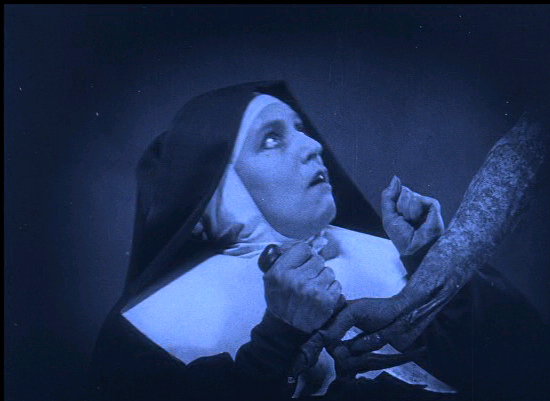
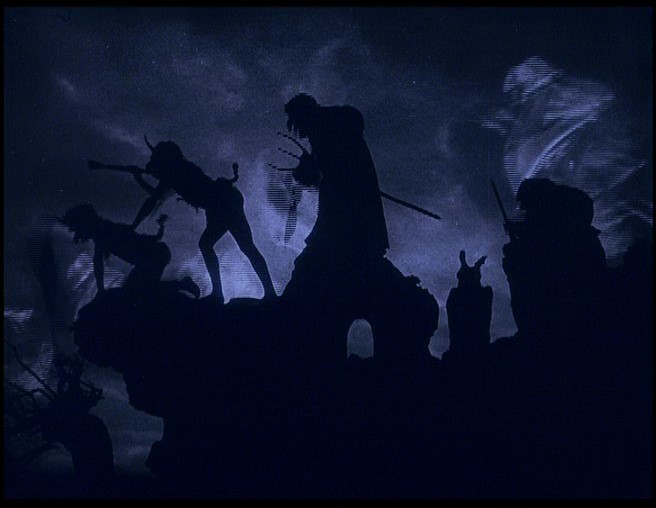
Separated into seven parts, Häxan is a docu-fiction silent era film about the subject of witchcraft, the persecuted witches, the beliefs practiced, and how the trials played out. As phantasmic cinema, it's still full of incredibly surreal and bizarre images, and from some of the illustrations shown, the director was likely basing it all on real concepts people believed. Women dancing with bipedal pigs, witches riding upside-down wooden benches as well as brooms, a whole manner of weird images. The primitive nature of the effects, the superimpositions and costumes, adds to the raw imagination and fantastical tone of it all, (like with Viy (1967) the Soviet supernatural film), giving it the sense of the otherworldly. However it's still carrying said important message. The recreations, particularly one about an old woman who is accused as a witch only for it to affect many others, shows the absurd and disturbing sides of humanity. That any vague notion could find someone guilty. That even the accuser could become the accused if someone got back at them or did so to save themselves from the pyre. Even if it's very melodramatic, it's still rewarding to demonstrate this through drama, with intertitles bringing additional information with them.

From http://www.opasquet.fr/wp-content/uploads/haxan2.jpg

Häxan still to this day has no real predecessor or any film which directly took from its particular melding of fiction and document. In terms of imagery, it's not surprising a sixties recut was made with William S. Burroughs narrating it. A catalogue of perverse images are seen, from pornographic use of a butter churn to a "Kiss My Ass" club for Satan long before some people required it for their followers and lackeys. But the sobering truth is still there. The last segment shows how the things women were accused of being witchlike or possession were then contemporary mental issues like sleep walking or hysteria, with even the latter eventually removed from medicine for more accurate diagnosis. It shows how so much had changed, but Christensen does leave on a note that, while no longer violent, there may not be much difference between a shower in a health club and a pyre that burns witches. Even now this causes one to step back. Even if we have care for the mentally ill, the physically and mentally disabled, the neglected or old, they're still treated as others. Even now, more so with how images paint what perfection is, those who do not stay within a web of conformity - act like everyone else - is seen as standing out usually in a negative way or as weaker. We have gone beyond use of thumbscrews, but Christensen's dramatic scenes are as much about straw man arguments, emotional blackmail, and complete cheap evidence to prove a point, which we still have. While as much a head-trip still, it shows as much now the horror of the content, the true horror, is not Satan, ridiculous and imp-like as he flickers his tongue continually and seems to be the only being who will physically love and hold the decrepit and lost. The fear of evil is the true horror because it can become evil itself. Human behaviour turns out to be scarier because without the Devil actually making his prescience known, many millions can dies under the belief of doing the just and sanctified. Häxan is still rich for a film over ninety years old, and proves to be more than a mere curio for this humanitarian morality melded alongside the incredible work to realise it.

From http://www.dvdbeaver.com/film/dvdreviews10/haxan/haxan_PDVD_00501.jpg

Sunday, 13 October 2013

Representing the USA: The Lords of Salem (2012)

From http://cdn.bloody-disgusting.com/wp-content/uploads/2013/03/1-lords-of-salem.jpg

Dir. Rob Zombie

With Halloween II (2009), Rob Zombie got interesting as a director. It was, reflecting back on it since covering within the first months of this year, a frustrating film but this was where the meatiest, fascinating pieces were, the parts that made the film more rewarding than straight forward horror movies praised by those who trashed Zombie's film. At this point, Zombie intends to make The Lords of Salem his last horror film for at least a while, which could expand his directing skills but could affect whether his work is just as interesting from beyond now. The Lords of Salem admittedly is more frustrating, out of his work this time, but that doesn't mean virtues aren't there.

From http://cdn.bloody-disgusting.com/wp-content/uploads/2012/06/2-the-lords-of-salem-060712.jpeg

The problems with this film really surround the fact that the stereotypical Satanism and evil witches being drawn from cinematic history are not that interesting in this film's context. Considering how the symbolism in Halloween II was in no way as interesting as having the gall of making Laurie Strode, once played by Jamie Lee Curtis, an incredibly damaged character, the really interesting aspects of two-thirds of this film is the incredibly casual nature of it all. Set in Salem, a radio DJ Heidi Hawthorne (Sheri Moon Zombie) finds herself, along with her co-hosts, with a recording from an unknown band from the town called The Lords which, from the moment it is first played to her, throws her into a slowly distorting world linking back to a mass witch burning that took place there and connects to her. The film for most of it scraps pass fully with an ominous mood more engaging than other movies. It's not really a "horror film" in the traditional or perceived sense of it as in recent times. Jump scares linger far too long, showing too much, but it feels purposeful, as much the eliciting of a jump from the viewer but far more creepy in how, say, a living corpse waits impatiently in the corner of a kitchen wall for when the evil curses of the town eventually get the control back. It says a lot about the film that the cursed song that sets it all off is a languid, ambient percussion piece, not black metal with lyrics straight from Dimmu Borgir that is almost satirised in one of the first scenes. You're introducing Captain Obvious to the film by saying perverse, evil witchcraft and demons will eventually raise hell, and the first three quarters of it embraces this fact. The references too establish this and are removed from the usual Texas Chainsaw Massacre aesthetic Zombie has used before. Song choices lay more with The Velvet Underground's Venus In Furs, slow, dense sensual strings, disturbingly calm. Its referencing silent cinema and showing black-and-white crime thrillers on the televisions in scenes. The obsession with long corridors and densely patterned wallpaper is à la The Shining (1980). It sets up a compelling tone.

From http://cdn.bloody-disgusting.com/wp-content/uploads/2012/06/4-the-lords-of-salem-060712.jpeg

The film is far more interesting, like with Halloween II, when it tries to be more subtle and goes against the expected horror tropes, the potential to become something spectacular there as it builds up to the final act.  When it starts bringing in a potential romance between Heidi and fellow DJ Herman 'Whitey' Salvador (Jeff Daniel Phillips), and Heidi's history of drug addiction.  The slow pace. The bizarre, tiny demon with flippers like a penguin in a scene that melds Federico Fellini, Ken Russell, black metal corpse paint and potential tentacle porn in a strange centrepiece. The fact that the real villains of the piece have reasons to be as angry as they are, and are so nonchalant in their behaviour, like villains in a Hammer movie at their best, that when they bludgeon someone to death, they shrug it off and fancy another pot of tea afterwards. Then the finale of the film takes place, when The Lords play a concert, and it sadly becomes a disappointing conclusion to a movie that needed a good ending to actually work as a whole. The problem with the choice of material eventually cannot be ignored - the po-faced, black metal version of Satan is frankly silly. It goes against what the silent docu-drama Häxan (1922) did, bringing the reality of witchcraft out and pushing the fantastical further than the per usual. Considering some of the interpretations of Satan, including one where his sin was loving God too much and developing ego and jealousy from it, making the version depicted here, in a very serious film, this comic book and music video take on it feels out of place. Its sticking a cartoonish goat devil in a film that could all be a metaphor, if altered a little, of Heidi's mind falling to pieces, and psychological and drug effected psychosis. The shift to completely abstract, heavily edited images is when the film loses its point, what I don't expect as someone who wishes films did this more often, as it becomes completely uninteresting and generic in what it actually shows. Undead cardinals masturbating red, gummy penises is too obvious and feels out of place in a film that is trying to be subtle rather than a crazed, heavy metal film with a sense of humour.

From http://cdn.bloody-disgusting.com/wp-content/uploads/2013/03/6-lords-of-salem.jpg

As a result of this, it's difficult to say whether The Lords of Salem was any good. Unlike Halloween II which ended very well, The Lords of Salem unfortunately moves Rob Zombie closer back to the uninteresting films he made like House of 1000 Corpses (2003) and The Devil's Reject (2005). Those films were about shocking the viewer and music video aesthetics without any sense of impact to them. Halloween II  left you sad, depressed and melancholic with real emotional weight in it, taking a franchise that got terrible or at least completely uninteresting when Halloween III: Season of the Witch (1982) was rejected for safe slasher scares, and turning it inside out with some power. With The Lords of Salem however, like a lot of films being released this year in Britain alongside the few great ones, the promise it has is squandered by the ending, doing everything expected of it without any interest and failing to live up to the virtues of the rest beforehand. It's still better than most horror films, but the failure in its end leaves me with a conflicted view of it that hurts immensely.

From http://www.zekefilm.org/wp-content/uploads/2013/04/16-the-lords-of-salem.jpg

Saturday, 12 October 2013

Representing South Korea: A Woman After a Killer Butterfly (1978)

From http://upload.wikimedia.org/wikipedia/en/a/a5/Killer_Butterfly.jpg

Dir. Kim Ki-young

After being tricked into a suicide pact with poisoned juice by a female stranger, a male college student enters a suicidal depression of his own despite surviving, but many things get in his way of a literal closure. The first an old man who refuses to die even when burned alive. The second a two thousand year old woman. The third, the key narrative, a history professor whose specimens of of Mongolian descent may be provided to him from fresh victims, and his daughter who has connections to the suicidal woman in the beginning. Kim Ki-young has been growing in stature, slowly, within the last few years. In the right areas you may know of The Housemaid (1960), his most well known and completely available film so far, and may have actually watched it for free thanks to cinema preservation and Martin Scorsese. The existence of a remake also from Korea also helps, but Ki-young beat the remake bandwagon by reimagining the movie in at least a few more re-adaptations. I can also say proudly, while a DVD release of this would be great, that this review is possible because the Korean Film Archive have placed films like this, difficult to see, legally on YouTube with English subtitles for anyone to watch. It's wonderful, considering the sorry state of availability of many films still, that a cinematic organisation is making a canon of South Korean film history available, all there for me and others to pick through when we find it, and including stuff like Killer Butterfly next to the arthouse dramas.

From http://3.bp.blogspot.com/-3LHL6RAV1xQ/UE0ePUfeNcI/
AAAAAAAAFfk/DZBWX25Rnms/s1600/Killer%2BButterfly%2B23.jpg
Ki-young's film isn't exactly conventional genre fare though. With the growing amount of idiosyncratic, unconventional films making themselves stand out for this year's Halloween 31 For 31, against disappointing, bland or even unfinished movies, Killer Butterfly is just as different. In another's hands this would be a melodramatic mess which drops plotlines all over the place, but with Ki-young, it's both an immensely engaging journey but also all connects together into the central themes. The male student is forced into what is revealed, in an ending just as out-of-the-blue as The Housemaid but set up clearly, to be a crisis in his existence, debating if life is worth it at all. Three things stop him. The first is where one's will, the old man's, refuses to die and refuses to leave him alone. The second, including human livers and sex surrounded by increasingly created pastries (?!), is the potential for life or sacrificial death that he squanders because of either the moral cost or his own life that it would involve. This pulls him into the third, especially the daughter, where he is pushed away from how he wants to snuff his life out, or actually, how he wants to live.

From https://blogger.googleusercontent.com/img/b/R29vZ2xl/AVvXsEjX4EBtT1GazqQBtwULq3Xs3uXj0JZnFo7kYb2WBIMtBD019F24fwH8wKMeronZFxAFr1bsITKI6mqS3fFiPYjKZA-3Cz_-ZfVV0EnFv6dbmddtOigp9cEky6Dv_VMCZIuxMDANfCUKw6E/s1600/KB03.jpg

To achieve this, Ki-young has no issues with using genre tropes with heavy aesthetics. Bright coloured lighting and coloured gels, and distinct decor designs for interior scenes all create a distinct, hyperactive tone for a film which knowingly gets ridiculous in tone. It's very much in touch with lurid b-movie horror and thriller films, but like immensely auteurist works created with one's own determination, it feels like you are swimming through the creator's id. Gender divide and conflict are very much an issue for the director, especially when it gets to the third part, as are sexuality, and the clear themes of death and one's existence. The fact that the three parts do connect together, in the tone of a complete fever dream, is a success for Ki-young being able to make such a tonally bizarre film work on a simplistic level when you understand the wavelength he is on. Once you do, is also becomes apparent that our protagonist is far from likable while yet still understandable decades later now - a miserable, selfish youth who only cares about offing himself, yet aimless in his existence and alone in poverty, eating the same noodles day-in-and-day-out, he understandably suffers from a lack of any progression in his life that can only be shocked out of him when he sees the absurdity and weirdness that death can involve. Even the Professor and his daughter are trapped in themselves, the former through his obsession with historical ethnography of his ancestors, which could make him an accidental accomplice to murder and corpse desecration, and the later by a pact and the fragility of the body that makes this pact grow to an impossible place to abandon. The absurd push in the ending, like The Housemaid's, feels like Ki-young wanted to viewer not to walk out of the cinema with a clear cut conclusion that would close the idea and make them able to ignore it. When the protagonist gets a new lease on life, so should we think about it while admiring such demented imagery the film has. Heady stuff indeed, but to Killer Butterfly's credit, mixing these ideas with lurid genre tropes makes the ideas more significant. Instead of cased in petrifying drama, the oddity of it gets stuck in your mind, and gives the late Ki-young more potent messages, his will like that of the old man still managing to survive through them and the most ridiculously awesome use of a model skeleton you could find in cinema.

From https://blogger.googleusercontent.com/img/b/R29vZ2xl/AVvXsEhlM12IWqsbjQ4lS1o338PB0aK-snIyj7u8Kfsd2EGbgrEqOVI6zjr2on2jvytZt8Hl4xzHkul5nFdmxQZGq43UV4nSht7WQ-zEtoKBn6-3fp8f4zSM-Bv0l6vmpfK2e67GhysuFzj2bfQ/s1600/KB01.jpg

Friday, 11 October 2013

Representing Finland: The White Reindeer (1952)

From http://i27.photobucket.com/albums/c187/TStatic/polish_white_reindeer_linen.jpg

Dir. Erik Blomberg

Falling in love and marrying, the wife of a hunter enquires about a ritual to make him fall in love with her even more, hesitant since he is continually out for long periods to hunt. The ritual however leads to disastrous consequences of her continually turning into a white reindeer, which entices hunters to try and catch her, only for her to turn back with fangs and kill them. As people in her village die, slowly it leads to tragedy. The film is not that long, brisk in its running time, and tells this story with immense amount of engagement. The different environment, of the snow covered Finnish lands, adds a freshness to this film, seeing the country's traditional culture through this supernatural tragedy and being able to appreciate it. Erik Blomberg uses the environment to its full advantage too. The village community is very close knit, small, where increasing amounts of death from sinister causes would bring anxiety to them more so, and the vast white landscape is isolating, able to be lost in it or pulled away from other people to die alone within it.

From http://b.vimeocdn.com/ts/206/247/206247843_640.jpg

Aside from this, it's just an alright film. It's no way near the best take on this idea, of love broken by the curse of bestial transformation, but The White Reindeer is still good. This does actually make it difficult to write a lot about the film because of how small it is, so rigidly concentrated it is on just depicting its story. It could be a flaw of the film that it leaves little space for tangents that stand out, or a flaw in me for being unable to go into more detail about the virtues that are there. Probably the biggest flaw with the film is that it does so well in merely telling the story that it loses out on the potential elaborate artistry that could have made it a great film too. But as the Finnish entry for this series, the obsession with using supernatural and horror cinema to look back on traditional culture and folk law has always revealed itself in films defined by various countries, including my own, and it's very interesting and distinct with the better examples like this. The ominous aspects, the bestial aspects having a physical affect on the heroine's appearance, the shrine she conducted the ritual at littered around with reindeer skulls and bones, mix with the basic aesthetics of the period of the clothes, the everyday activities of the people and the relationships with fascinating effect. You can probably learn more about a country through films like this than other mainstream entertainment or news documentary. The White Reindeer, melancholic and ultimately sad by its end credits, shows a great deal of Finland, even if the film's short and to the point, and makes you wish you could see more.

From http://s3.amazonaws.com/auteurs_production/images/film/the-white-reindeer/w448/the-white-reindeer.jpg?1301729719