Showing posts with label 1920s. Show all posts

Monday, 14 October 2013

Representing Denmark: Häxan (1922)

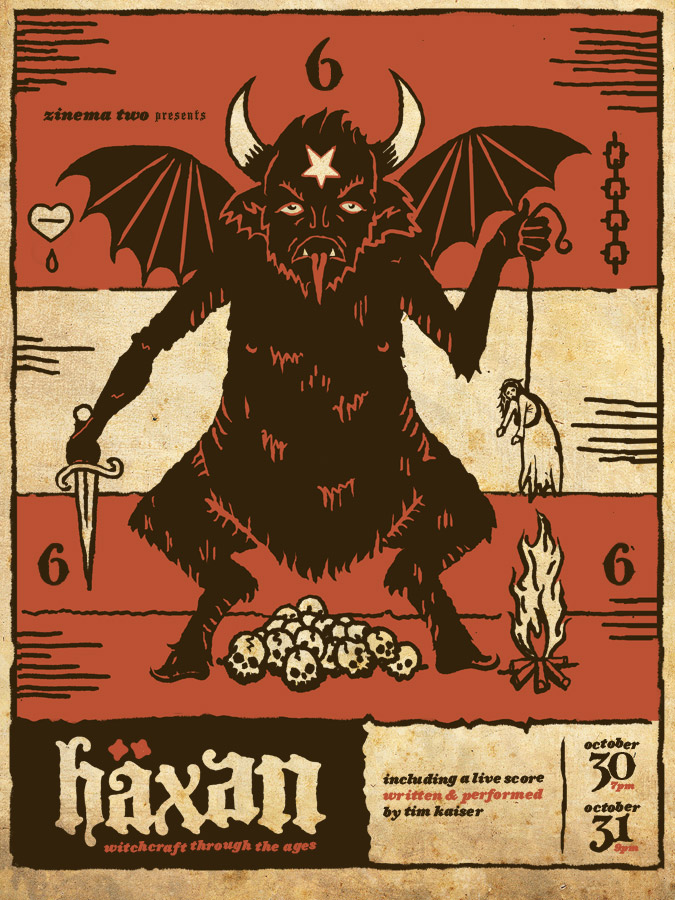
From http://karlails.files.wordpress.com/2012/03/haxan_poster_final.jpg

Dir. Benjamin Christensen

As much as it's a product of its era, with aspects that have dated, the uniqueness of Häxan is still rich, and the ideas are (sadly) still of importance in the current era. People who do not follow a conventional viewpoint will be ostracised. Those who are different - minorities, those of a belief opposite from the religion or atheist mindset with most influence, etc. - will be looked at suspiciously by those who do not take into account the complexities of individual personality, and not necessarily on purpose, but because of a presumed idea they are left in the vicinity of without any sense of full knowledge of it, from the accusers to the defenders of such groups. Women, regardless of the attempts of feminism, are frowned upon still in certain areas when they are too "ugly", too "weird", too independent, or even if they fit the stereotypes put upon them (pretty, sexually open, motherly) too much to the point they make it their own. Rationality and logic, based on scientific logic, or if you are spiritually or mystically inclined, is abused, both science and spirituality victims equally, when someone wants what they want done, to the point any cockamamie concept, as shown in scenes in this film, can be used as evidence against someone. And unfortunately, real people were murdered using these arguments, and considering the last century, with genocide, ethnic cleansing, and assaults against groups for their gender, sexuality, beliefs, social standing or race, we've yet as a species gotten the message we should have learnt from the witch burning. As much as Häxan is pure, phantasmagorical entertainment, it was made with an important message, and when you actually connect the  content to reality it is a grim reminder. Häxan does feel naive in its wonder of its subject of witchcraft, buts its virtuous naivety that wanted to learn from its subject, and still realised, and reminds the viewer, that what it is based on was reality.

From https://blogger.googleusercontent.com/img/b/R29vZ2xl/AVvXsEjUydlGpqqAl6i88tBziPPFyyq-K4uWPtMi9dn1_sqzUfPaQHksSQZ50WP_Bxq9S3ZIWJ8FEF6QqoOWh11xDpBlkTg29X_wFVkTblX5abIAIlctU1CaH2CkVic43toSXGtew6zFFwsj0Ywy/s400/HAXAN-2.jpg

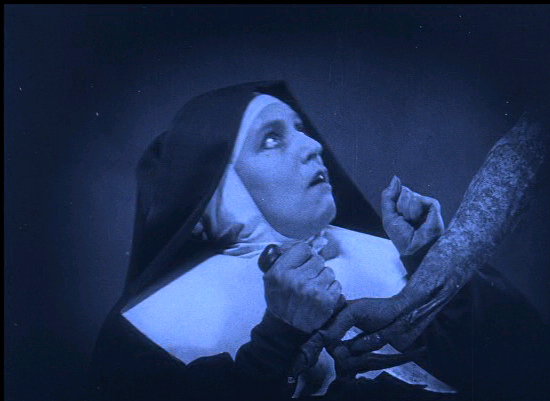
Separated into seven parts, Häxan is a docu-fiction silent era film about the subject of witchcraft, the persecuted witches, the beliefs practiced, and how the trials played out. As phantasmic cinema, it's still full of incredibly surreal and bizarre images, and from some of the illustrations shown, the director was likely basing it all on real concepts people believed. Women dancing with bipedal pigs, witches riding upside-down wooden benches as well as brooms, a whole manner of weird images. The primitive nature of the effects, the superimpositions and costumes, adds to the raw imagination and fantastical tone of it all, (like with Viy (1967) the Soviet supernatural film), giving it the sense of the otherworldly. However it's still carrying said important message. The recreations, particularly one about an old woman who is accused as a witch only for it to affect many others, shows the absurd and disturbing sides of humanity. That any vague notion could find someone guilty. That even the accuser could become the accused if someone got back at them or did so to save themselves from the pyre. Even if it's very melodramatic, it's still rewarding to demonstrate this through drama, with intertitles bringing additional information with them.

From http://www.opasquet.fr/wp-content/uploads/haxan2.jpg

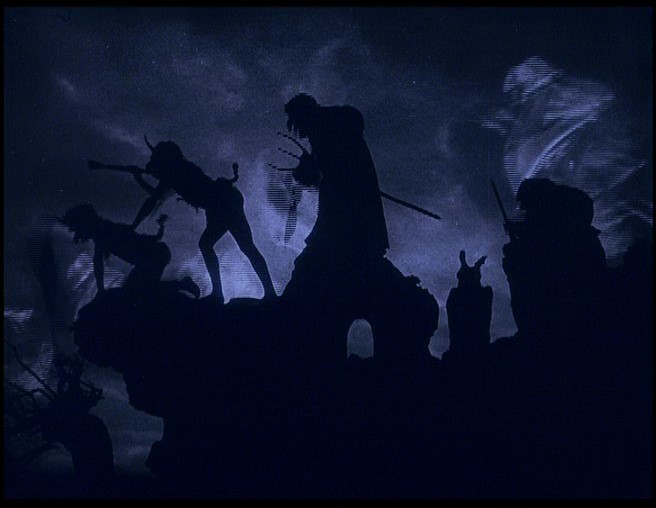
Häxan still to this day has no real predecessor or any film which directly took from its particular melding of fiction and document. In terms of imagery, it's not surprising a sixties recut was made with William S. Burroughs narrating it. A catalogue of perverse images are seen, from pornographic use of a butter churn to a "Kiss My Ass" club for Satan long before some people required it for their followers and lackeys. But the sobering truth is still there. The last segment shows how the things women were accused of being witchlike or possession were then contemporary mental issues like sleep walking or hysteria, with even the latter eventually removed from medicine for more accurate diagnosis. It shows how so much had changed, but Christensen does leave on a note that, while no longer violent, there may not be much difference between a shower in a health club and a pyre that burns witches. Even now this causes one to step back. Even if we have care for the mentally ill, the physically and mentally disabled, the neglected or old, they're still treated as others. Even now, more so with how images paint what perfection is, those who do not stay within a web of conformity - act like everyone else - is seen as standing out usually in a negative way or as weaker. We have gone beyond use of thumbscrews, but Christensen's dramatic scenes are as much about straw man arguments, emotional blackmail, and complete cheap evidence to prove a point, which we still have. While as much a head-trip still, it shows as much now the horror of the content, the true horror, is not Satan, ridiculous and imp-like as he flickers his tongue continually and seems to be the only being who will physically love and hold the decrepit and lost. The fear of evil is the true horror because it can become evil itself. Human behaviour turns out to be scarier because without the Devil actually making his prescience known, many millions can dies under the belief of doing the just and sanctified. Häxan is still rich for a film over ninety years old, and proves to be more than a mere curio for this humanitarian morality melded alongside the incredible work to realise it.

From http://www.dvdbeaver.com/film/dvdreviews10/haxan/haxan_PDVD_00501.jpg

Sunday, 11 August 2013

E Is For... Eveready Harton in Buried Treasure (1929)

From http://www.videotapeswapshop.co.uk/wp-content/uploads/2013/04/600full-eveready-harton-in-buried-treasure-screenshot.jpg.png

Dir. E. Hardon

It will surprise some to say I really have not viewed a great deal of pornography. Limited access, even in the world of the internet, is the cause and also for the fact that looking for anything of more interest is like looking for a needle in a haystack. It scares me off most cases from looking for it. This short was new to me when I first read of it in the late Amos Vogel's Film As A Subversive Art, and far from such taboo work in this day and age suppressed, its quite easy to find it online in its entirety. The reason I put a warning at the front of the blog before you first enter it is for covering films like this or the censored version of Alien From The Darkness (1996), although this one actually has a naughty picture below to justify it. Compared to that one, censored or not, Eveready Harton... is a significant step above it, and to imagine the talent who may have secretly created it is more surprising. If you are instantly put off by anything that vaguely feels "porny", even if its a cartoon from the era of Betty Boop, don't follow the link. Just bare in mind that, if I ever find any erotic or pornographic works of interest, I'll be covering them on here. Those who aren't offended, its not safe for work, but most people would be used to that warning if they use the internet.

Review Link - http://www.videotapeswapshop.co.uk/14594/e-is-for-eveready-harton-in-buried-treasure-1929/

From http://s3.amazonaws.com/auteurs_production/images/film/pecker-island--3/w448/pecker-island--3.jpg?1322393125

Monday, 22 October 2012

A Reoccurring Curse [The Fall of the House of Usher (1928)]

From http://static.guim.co.uk/sys-images/Guardian/Pix/pictures/2011/9/20/1316515399529/The-Fall-of-the-House-of--007.jpg

Dir. Jean Epstein
France-USA
Film #21, of Sunday 21st October, for Halloween 31 For 31

The numerous adaptations of a single work can leave a fascinating and tangled web, the odd examples permanently disrupting the history of the original work, and the changes and similarities between them all taking the source version into different dimensions that exist in the same plane of existence, where characters can commit the same actions, suffer the same fates, but their appearance and their outcomes likely to alter depending on the decisions of the new ‘God’ who takes over the characters and reinterprets the material. Edgar Allen Poe’s The Fall of the House of Usher is a good example of this. I have already reviewed the 1960 Roger Corman version, but there is also an abstract short by James Sibley Watson and Melville Webber also from 1928, Jan Svankmajer’s 1982 short version, and as mentioned in the review of the Corman version, the late Ken Russell’s version shot at his own home, not to mention a handful more. Having also read the original story for the first time this month, the fluxuations between the versions I have seen is surprising.

Co-written by Luis Buñuel, Jean Epstein’s version strips away the American Gothic nature of the original story in favour of a more impressionist light, the closest comparison for me from my limited knowledge being the films of Jean Cocteau, but balancing between a more fairytale tone and a style that heavily evokes Soviet montage techniques. The use of sets is a key to show the vast contrast to the Corman film. With deep, delirious colours, the Corman film replicates the madness of the story in an upfront depiction as vivid as the paintings Vincent Price’s version of Roderick Usher paints. For Epstein’s earlier film, the sets are sparse, intentionally so, contrasted with specific touches of the fantastical – the depictions of the Usher family home and the burial tomb – which brought to mind the Cocteau similarities. It is less an outright horror depiction, but a fantastical work which slowly drifts into horror tangentially.

Epstein’s version also mixes material faithful from the story and completely original aspects. Corman’s version had some differences, but Epstein’s has some significant changes; with an older protagonist travelling to the house of Usher, Roderick Usher’s sister is replaced with a wife Madeleine Usher who, in a more fantasy based concept, is slowly becoming weaker and weaker as her husband paints a portrait of her that may be drawing away her life essence. With a more faithful conclusion bar the very end, the film is a very unconventional interpretation which does not necessarily make ‘sense’ at first. It does however have its own logic, Roderick Usher far from the morally slipping interpretation Vincent Price played but someone under the circumstances undermined by fate outside his hands. This film also emphasises the sense of the unknown only in a different way, the fissure within the Usher’s home wall replaced by electrical storms and trees that spark and burst in smoke outside.

The film also includes a growing sense of anxiety and fear as it goes on that, as my first Jean Epstein film, shows him with an excellent eye for using the techniques he had available to him. Superimpositions, doubling of images over each other, extreme close-ups and distance shots, and choice use of editing are all used with considerable effect; my knowledge of this area of silent cinema is still minimal, the only thing close to this outside of Soviet cinema in terms of montage and image is clips I’ve seen of the films of Abel Gance, included in critic Mark Cousins’ TV series The Story of Film: An Odyssey (2011) but with none of his films available in the UK, but the clear influence and/or continuation of the cinematic effects is obvious. 

From 2.bp.blogspot.com/
_SPYL8UC1UCY/TJtKcmr6PtI/AAAAAAAADx8/2jrJgEaWW9Y/s1600/The+Fall+of+the+House+of+Usher+(1928).jpg
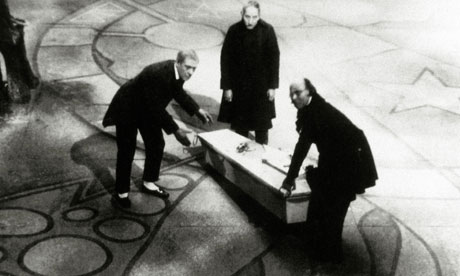
Does the film fit Halloween though? Yes, closer to fantasy it still fits the mood of the season with its supernatural tone and the fact that the main thread of Poe’s original story, the growing madness and dread, is still that and expertly done by Epstein and his directorial style when the move to the conclusion is set up. The drastic changes still emphasise this but shifts it to a more lyrical depiction of the supernatural, poetical before pushing itself into a maddening rise in tension if you see a version with a great score like I did. Which is the better version, Corman’s or Epstein’s? I would throw in a third choice personally, James Sibley Watson and Melville Webber’s short version also from 1928, a completely avant garde version that doesn’t follow a narrative thread at all, merely conveying the moods of the story, with a use of sets and cinematic effects from the period that are still jaw dropping. With the two films I have reviewed though, the differences allow them both (and the others I’ve seen) to co-exist without the sense of redundant repetition. While the web of a source’s multiple adaptations involves repetition inherently, the duplications of narratives can become merely of interest from a curiosity’s sake rather than vested. With both versions of Poe’s story I have seen two very different interpretations which work on their own merits. To choose between them is difficult on first viewings of them each, but they connect together as different sides to the same spectrum regardless.
From http://s3.amazonaws.com/auteurs_production/images/film/the-fall-of-the-house-of-usher/w448/the-fall-of-the-house-of-usher.jpg?1289442848

Monday, 15 October 2012

Hands of Fate [The Hands of Orlac (1924)]

From http://data.sueursfroides.fr/affiche-the-hands-of-orlac-1231.jpg

Dir. Robert Wiene
Austria-Germany
Film #14, of Sunday 14th October, for Halloween 31 For 31

The Cabinet of Dr. Caligari (1920) still stands up as one of the best horror films ever made, 90 or so years later after its conception, above many others, dwarfing them under its shadow. I first encountered Caligari in my Film Studies classes in college, part of a brief overview of German Expressionist cinema alongside Nosferatu (1922), and was transfixed by it. Distorted and abstract sets, less the architecture and setting of its tale but the cracked worldview of someone’s mind, and human beings portrayed as unstable forms with stiff, choreographed moments. Years since I first saw Caligari, I have not seen any other of director Robert Wiene’s films. None of the others to my knowledge are on British DVD, but with the exception of one whose only full print survives in a single copy preserved by a Munich film archive, Wiene managed to amass a grand filmography despite only making films between 1915 and the mid 1930s. This review starts a slow crawl through them.

The Hands of Orlac, reuniting Wiene with Caligari star Conrad Veidt, Cesare the gaunt and spectre-like somnambulist, is an adaptation from medical-horror novalist Maurice Renard, whose work I would gladly investigate after this film. When his hands are removed in a train accident, concert pianist Orlac (Veidt) has them replaced with surgically donated ones, only to discover they are those of an executed murderer, causing him to feel his entire body and mind slowly coil in on itself from revulsion of the evil within them. More of a psychological thriller than the stereotype of visceral horror, it nonetheless soaks itself in an uneasy and implied gruesomeness as the first part plays out like a twisted domestic drama, Orlac unable to play the piano, even give affection to his wife, as his horror of his hands’ origin paralyzes him from the outside world. Then his mental coil tightens when he feels the hands drag him further to commit crime, and the former owner returns from the grave.

Unlike The Cabinet of Dr. Caligari, the sets are more real world settings, but the use of lighting confirms it as a German Expressionist film. A great influence on Film Noir of the 1940s onward, Expressionism almost revelled in darkness to suit its dark subject matters, The Hands of Orlac almost always set at night or with scenes drowned in shadows. The other aspect of the subgenre, which remained interlocked with it, is that moments of extreme emotion are conveyed and acted through unnatural, choreographed gestures and movements more befitting an avant garde dance piece, completely unrealistic but amplifying the sense of unknown horror the characters feel or exude. German Expressionism was a product of `1920s Weimer Germany, a time of great creative artistic freedom but beset by economic poverty, political strife, and the rise of the Nazi Party in the 1930s which would destroy the artistry in favour of anti-Semitic, atrociously kitsch, nationalist art. In such a worldview, the briefly exiting German Expressionist movement, not just in cinema, attempted to mirror the reality around them with works as unreal and shadow clogged as it was, as much as its potential American grandchild Film Noir was a product of strife and uncertainty after World War II for the Americans.

Veidt, if you take into account the style of acting in silent cinema and the intentionally artificial movements of German Expressionism, is brilliant, still as gaunt as in Caligari but allowed to express and twitch like a man who looks disgusted and horrified at his predicament just from his eyes. The lack of dialogue except for that shown in title cards does not stop his fully expressive face from conveying all the emotional weight needed to show a man growing slowly insane every minute. One scene where he is trapped and almost on the edge of screaming reminded me of how Edgar Allen Poe’s The Tell-Tale Heart would play out cinematically; Poe would have probably taken a lot from these German Expressionist films and admired them. Veidt and the cast are helped further by the art direction and Wiene, the artificial sets of Caligari replaced by claustrophobic or light swallowed areas onscreen. Even if the use of the camera is usually static, flourishes in the look of the film help the sense of dread to the scenes, particularly the use of pushed-back shots of the rooms, further back than the conventional mid-or-stage-set distance scenes that are usually are in silent cinema, subtle touches adding to the vivid content.

The only real issue is that its final act feels forced against the rest of the film. The Cabinet of Dr. Caligari has an ending so repeated, even in television infamously, that the mere suggestion of it instantly destroys the final product a little or completely for viewers. In most cases, this is a just opinion, as this type of ending usually is an utter failure on the part of the film, but as one of the first (if not the first) films to do it, and within the context of its unstable world, it worked perfectly and actually adds to its power. The Hands of Orlac’s ending sadly feels a little abrupt and too clean for its own good, not well set up when it would have worked fine on paper. It does not detract from the rest of the film however, as it is still rife with a tone and mood that is palpable and stunning. Its lack of a British DVD release is sad; the kind of film Eureka’s Masters of Cinema label would be perfect for. Kino Video in the US of A however, who are specialists in silent cinema even above Criterion in terms of the size of its back catalogue, did release it on DVD and everyone should look into that release.

From http://img829.imageshack.us/img829/663/orlacshnde.jpg

[Additional Note – The version I saw had a score composed by Paul Mercer. As someone who is not a fan of the conventional piano score synonymous with silent cinema - generic and not approaching the moods of films at all unless I was to hear a great musician or view the film in the right context - his work on the version of the film I saw was wonderful, appropriately sinister when needed and with a depth suiting the visuals. If silent film scores on DVD are like this constantly, I will be happy.]