Showing posts with label Country: United Kingdom. Show all posts

Thursday, 17 April 2014

Alice's Adventures In Wonderland (1972)

From http://upload.wikimedia.org/wikipedia/en/e/e5/Alice-poster-1972.jpg

Dir. William Sterling

Having discussed films inspired by Lewis Carroll's Alice's Adventures In Wonderland (1865), through Roman Polanski's What? (1972), its befitting to actually cover an adaptation of the story. With both the story and its sequel Through the Looking-Glass, and What Alice Found There (1871), I've only experienced them within the last year or so. Material adapted, referencing or inspired by the stories though have been something I, along with many, have grown up with. My first encounter was probably with the Disney adaptation, but as I desire to find as many adaptations of the story as possible, it has been adapted in various ways from a Jan Svankmajer film with stop motion animation to porn. What stands out with the stories, within this drastically fluctuating body of versions, fan depictions and takes, is how unconventional they are and how good Carroll was as a writer to make this possible. Nonsensical material you could read to a child, but its developed as an obsession for many adults, myself now part of this grouping, because they provoke so many bold, elaborate ideas and have inspired numerous people. An absurdity, that thankfully translates into this adaptation, where all the parts in depicting it are as important to Carroll in showing the strange. The visual metaphors - playing cards, cats - that anyone can understand but are skewered. The symbolic and mathematical references. The dialogue full of puns and incomprehensible phrases that become sonic poetry, why Jabberwocky, his famous poem, is as famous. Other readings have been added too, possible because its open to many interpretations in its nature, a simplistic journey narrative to both stories that are both about the individual scenarios that Alice encounters on the way. From the clear satirical tone in the stories - like the farcical court room trial that takes place in the story - to the reading added by readers of sexual overtones, allowing British comic book writer Alan Moore and American seventies pornography to be awkward bedfellows. You can adapt it light heartedly, like in this film, or as a disturbing work like American McGee has.

Alice's Adventure In Wonderland is a pretty faithful take on the original, more well known Carroll story. Alice (Fiona Fullerton) falls asleep and ends up in Wonderland, full of size changing foods, mock turtles, a decapitation obsessed Queen of Hearts and enough multicolour, psychedelic foliage that it's no wonder Jefferson Airplane were inspired to link the white rabbit to LSD. Probably the draw for this one, before viewing it, is that, with the all-star British cast, it includes Peter Sellers, Dudley Moore and Spike Milligan. What makes the existence of Alice's Adventures In Wonderland greater for me too is that it's a piece of British art that is timeless, can still inspired people and does so while being a perfect proto-example of one of my favourite areas of artistry, absurdist and surrealist works. Surrealistic artists, especially the British contingent, praised Carroll for preceding them, and anyone, whether the result is good or not, from Poland's Roman Polanski to a Japanese manga artist, can take a crack at using these stories iconography to create intentionally odd and weird works. So what a better thing to do, despite a faithful adaptation being out-of-place next to sex comedies and the likes of Get Carter (1971), then to adapt it within a heyday of its offspring,  absurdist comedy that Sellers, Moore and Milligan were part of? Particularly as Sellers is the March Hair and Moore a narcoleptic Dormouse to the Mad Hatter played by Robert Helpmann.

From http://static2.dmcdn.net/static/video/680/799/51997086:jpeg_preview_large.jpg?20121109133833

Unfortunately this faithful adaptation is one that treats its source material with utmost care and respect as a national treasure...which means that it's too precious for its own good and ignores the greatest virtue of the stories. Even as quaint, Victorian English literature, the greatest virtue of the Alice stories are that they're anarchic and are madder in tone than a box of frogs, more greater in these areas in that it's done with a precise wit, whimsy and solid structures to the plotting. Most egregious to the story's original tone is that this is a musical, songs and the swelling orchestral backing behind them abrupt and too many in appearance, all really sounding the same. The original story is light hearted, but it's completely ridiculous too such a pronounced end. There is an unbridled, uninhibited nature to the stories that makes the polite, gentle tone of the film a betrayal of the original spirit. One where, along with being a mere bystander, has Alice back talking to the populous of Wonderland and nothing makes sense just to be purposely arbitrary to her. If there is a relief from this, it's that remnants of the original tone thankfully still exist. To do a faithful adaptation of the story, you have to include some of its best virtues without question. With its brightly coloured, overexaggerated and artificial looking Wonderland with giant flowers and tiny doors, it's another example of how the production designers are unsung heroes who stand out even in awful films. In fact the whole wholesome tone of the film becomes fittingly bizarre in aspects, especially the animal costumes actors have to wear and the obvious fake, shot-at- Shepperton-Studio look of the setting. If the film dampens the virtues of the story, that doesn't mean it's completely drained out. The moments of rampant verbal punning, bickering about the lack of logic and tangents, from the original story, are all amusing, the Mad Hatter and his compatriots stealing the show because of the actors playing them.

Yes, it's bad that this wraps the original material up in cotton wool, but it still survives in some way despite this. This is why I enjoyed the film nonetheless, but I viewed it as entertaining especially as an example of someone else adapting Carroll's work in its own way, faithful adaptation or not. So far the best version has, paradoxically, been the one that's taken the most liberties while still retaining the tone perfectly, Jan Svankmajer's Alice (1988), reviewed a long time ago on this blog if you search the tool bars. I guess not having to work with something that's your own national heritage gives you advantage. I'll see if this is true as more Alices go through more Wonderlands in my future viewings. 

From http://cinemanostalgia.net/wp-content/uploads/2011/04/Alice-White-Rabbit.jpg

Friday, 28 March 2014

Under The Skin (2013)

From http://static.squarespace.com/static/51b3dc8ee4b051b96ceb10de/t/
52f93fd0e4b0c731199e94a3/1392066515357/Under_the_Skin_poster3.jpg

Dir. Jonathan Glazer

I find myself seemingly disappointed with current cinema when yet I've seen plenty of great films being made within the last few years, regardless of debating whether any of it is canon worthy material. It doesn't have anything to do with the issues of celluloid film against digital cameras that are currently of debate - its only a concern for me in preserving films and whether people making the films can actually use either properly cinematographically. I've put up with the lack of access to less mainstream films in cinemas, and it's pointless to whine about blockbusters when I can avoid them. Probably the issue for me is that, in the middle of this current era, and used to believing trends within cinema are distinct, barring a few obvious ones there's few key movements that feel tangible or actually are worth talking about. Decades on, maybe an older Michael Hewis can have hindsight and wiser critics who can dig up the best of the 2000s and early 2010s rather than what's popular in the middle of it. Writing about Under The Skin, I am writing of a buzz, red hot British film that, while divisive, is getting the British film circles excited. Still under the brows of Jean-Luc Godard and Francois Truffaut's dismissal of British cinema, we have a complex on the subject of our country's filmic output, both dangerous in championing mediocrity by leaping on any work that wins an international award, and yet a hope like all of us like myself have for work that burns itself into cinema's history. The question is, can I really give a full, final review to Under The Skin after only one viewing or is this a blind leap for something different?

Scarlett Johansson is Laura, a mysterious beauty, clearly a being that is not human when she takes the clothes and identify of her doppelganger in a white room. With an unknown motorcyclist guiding and watching over her, cleaning up aftermaths, she drives around urban Scotland in a white van, a siren to men leading them to a death in literal blackness. The film caused me to sit up from the beginning, the first inclination of what virtues this film has not being the first visuals but the first notes of sound, a modernist score by Mica Levi that, atonal yet melodic, unsettling yet alluring, cements the mood before images appear. When the images do appear, what appears seems to be a doughnut shaped entity encircling over a ball, a globe, a planet, from the blackness, a light that turns into the headlight of a motorcycle. A human eye. Against the music, it becomes tangible and felt fully. But this is within a film that has decided to also depict a realism of the human world Laura travels around, to the point it technically qualifies as documentary at points.

The film becomes quasi-documentary as secret cameras were used to depict the real Scotland, a Hollywood actress playing a distant being, with a British accent, wandering the streets or driving on the roads, next to brand stores like Marks & Spencer. When a road is congested by football fans, in mass and blocking cars from moving, the likelihood you're viewing actual football fans pass through a film that is made to be fiction is felt, knowing this production detail immersing. Fiction next to bursts of actual reality are odd bedfellows but together you can get incredible results onscreen, reality piercing the fictional and effecting it. This goes as far as some of the men Laura talks to, in an attempt to lure men to her trap, are actual men randomly found on the street, who gave permission for the final footage of them to be used, having a conversation with  Johansson with the hesistant pauses and errs of real conversation. The mixing of this and the unreal sci-fi adds a unique layering to the film, real ordinary life with the fantastique, giving one hope that the British environment - of stores, chewing gum covered pavements, council housing - can intertwine with the supernatural and, forgive the pun, truly alien.

From http://www.fangoria.com/new/wp-content/uploads/2013/09/under-the-skin-scarlett-johannson-skip.jpg

Immense appreciation is there for Johansson for taking this role in the first place, and that her performance, with a cold tone of voice and minimal dialogue, is good enough and more so to make it work. The glamour of her Hollywood work follows her into this, adding to her aloneness, but as the character develops a distracted empathy for one of her potential victims and breaks away from the predestined tasks of hers, the sense of an ordinary woman, onscreen and as a person whose vocation is to act in these works called films, comes out. Honestly, this ordinariness actually makes her even more beautiful - unlike Black Widow in The Avengers (2012) who is a Barbie doll for male geeks, Laura, especially the scenes of seduction, feels more powerful for the mix of the real actress playing the character and the role itself she's playing. It also befits the character's duality, the cold mix of being a complete stranger, where the act of communication is an odd experience for the entity trying to make small talk, and a person, particularly when it comes to the last quarter when Laura ventures off into the countryside away from the motor biker. It would have been a difficult role - minimal or improvised dialogue, having to use a British accent that had to be convincing, the non-fiction conversations with people off the streets, the same sort of distance that David Bowie brought to his character in The Man Who Fell To Earth (1976) - and she does so fully. And it's a testament that, for a minimal amount, the other actors and non-actors stand out as much, especially Adam Pearson as the person that causes her to break away from the role she's in.

The welding of the fantastical and the real is different from many others that do the same, probably because unlike The Man Who Fell To Earth this is set in the truly ordinary. It's modernist score sends shivers down the spine, the distinct moments of the unhuman - bright white room, complete black liquid - stand out, but the world being depicted involves buses, Tommy Cooper, and baked beans. A moment where the protagonist tries to connect with the world is done with a black forest gateaux. In fact even the turning point where she gains struggling emotions involved the mention of the supermarket Tescos, the banality of Britain against the unreal creating probably a more abstract tone than for other films. The banal also becomes alien, the sound design becoming one with the score, the lights of passing vehicles UFOs on the roads, and the juxtaposition of these objects with fantastical blurring into one another. Few films are willing to depict a reality within fantasy itself, or fantasy within the real, but this one does. If you can put yourself into Laura's position within the final piece of the narrative, the film becomes as much the story of how an ordinary environment grows into unknown proportions when there is no connection to it, slowing grasping to understand. Of course this has potential feminist readings in how her body is being used as a tool to capture men and how she tries to escape from this. Ultimately the roles are switched of who is prey and victim, the same human beings where the sound of a balloon popping will never sound the same for me again without a creepiness to them. Neither side is inherently good or evil, just treating each other as mere others. Laura can blend into a gaggle of women, probably real people being filmed, taking her along hand-by-hand to a dance club, only for her to be unnerved by the strange world inside, bleeding red lighting, and music so loud, as someone who hates loud uncontrolled noise can attest to, that it's no longer music but a sonic barrage. The normal world is just as unknown as hers. The most disturbing set piece involves a beach incident that happens in everyday life, not the alien, a horrifying incident that is made more disturbing when one onlooker is so detached from the situation, showing how such a everyday accident in more troubling in happening to anyone.

The issue of whether the film will last in quality is there for this final viewing, but leaving the Showroom cinema in Sheffield, I could still feel the impact of the images and sound, and they've jarred themselves into my mind for weeks from that viewing. The discordant string sounds repeating again and again as I was walking in the afternoon air of the city, a rich tableaux that will sink in my thoughts and stay there for a while. It will at least have the virtue of being "total cinema", where every piece (acting, tone, editing, colour, sound etc.) is considered or in some way as distinct as the other pieces and all add to one fully immersive work. Very few films actually care for this, and a big problem with British cinema is that aspects that build the whole of a film are virtually ignored, but this film does so. What I feel with Under The Skin is an unnerved exhilaration. I have never seen any other work by Jonathan Glazer's, even his music videos; I can't explain why I haven't, but Under The Skin is encouragement at its strongest to go to them. The individuality of the film stands out even as a strong, potential entry for the cult British canon of cinema, causing one to wonder why we can't have more directors follow these braver ricks more. It's a peculiar entry into the archives of British Film Institution funded work being made now, as we speak, but only because I wish more people would do this rather than make the conventional.

From http://www.bfi.org.uk/sites/bfi.org.uk/files/styles/full/public/image/under-the-skin-2013-006-laura-in-fuschia-walking-down-village-lane.jpg?itok=8Y_P_ZO5

Thursday, 28 November 2013

Videotape Swapshop: The Falls (1980)

From http://petergreenaway.org.uk/fallc.jpg

Dir. Peter Greenaway


Birdmen. Human flying. Bird puns. Bird films. Avant-garde films. Twins. Faux twins. Typo errors. This and so much more exists in The Falls, a film that is both hilarious and profound. That's all I really need to say about it.


Review Link - http://www.videotapeswapshop.co.uk/18102/the-falls-1980-director-peter-greenaway/

Monday, 4 November 2013

Representing England: Straight On Till Morning (1972)

From https://blogger.googleusercontent.com/img/b/R29vZ2xl/AVvXsEgc1KZU_e1N_nOTfTYeIQxeno6EzhT_P_n1odolVBa8G1Wo72zJjh1PzMAsSIxfT7qza4WGFhRj5lG3mWwxJCjqOVL_2GlyBljloVDG4X1cm8Szm2CZ0DAas_r5Zon6fWpaXamHTfNq0A0/s1600/straight_on_til_morming_quad.jpg

Dir. Peter Collinson

It's a great moment when you find something with no knowledge of it, no expectations good or bad, no idea what its actually about, and find out it's great. A Hammer production, Straight On Till Morning is not quite a horror film but is still creepy and is completely unconventional to most British genre films I've seen from this period in many ways. It's a surprise that Peter Collinson is the director of this too. Yes, he made The Italian Job (1969), but while its very well made, it's also a bit of a personality-less work too pleased with itself. And Fright (1971), a potentially great proto-slasher with Susan George, was dull. Even if it becomes somewhat more conventional by the half way point, this is such an unexpected surprise.


From http://www.horrordvds.com/reviews/n-z/sotm/sotm_shot4l.jpg
A young woman Brenda Thompson (Rita Tushingham), clearly with some psychological issues, simplistic, almost childlike, naive with an incredible awkwardness with trying to communicate with others, leaves her home to go to London for her "Prince Charming". In London at the same time is a young, dashing man named Peter Clive (Shane Briant), almost childlike too, but like his namesake Peter Pan, more of a free spirited young boy with a clear idea of what he wants than innocent and easy to lead like Brenda. It's also clear very early on that he has a dark side, and when these two meet and start to live together in his home, his other side is just lingering under the surface. It's an odd film, a drama that yet steps into an unsuspecting territory for most viewers. The first half, before the two meet, separate stories, is played out in an incredibly dense, chronology breaking series of images and scenes back and forth, through almost modern editing, where you can see the events of a character new and how it was set up together one-after-another, the two separate threads quickly bounced between in a pace of an expert juggling act. I can't help but admire the gall to have made this section this way, and barring the almost drops in background sound when it skips from one place to another, at the same time or the past or future, and back again, it's done exceptionally well. I cannot help but expect these seventies genre films from my country to be workmanlike and plainly made barring the exceptions, so editing that's from the page of Nicolas Roeg, which it can actually pull is, is incredible.

From http://4.bp.blogspot.com/-1RV9nxNwOAI/UFYnmMFtiSI/
AAAAAAAABWY/nSYyFKC5S8I/s1600/1.jpg
Quite early into the film, for her and eventually both when the characters are interacting, actors Tushingham and Briant hold the giant task of keeping their story up on their shoulders exceptionally. Tushingham perfectly conveys a girl who, frankly, is so awkward in her behaviour that unfortunately you would be put off if she tried forcing a question to you as a random stranger you encounter, but you sympathise with her too. Briant as Peter is as sympathetic; the nature of his character the viewer knows but Brenda doesn't is nerve-shredding, but the film lets you see why he is who he is, and feel pity for him still. But even she, quickly, realises something is amiss with him, racking the tension up even if she's still smitten by him. When it reaches the last half, when she meets him and moves into his house, and the abstract editing style is mostly dropped, Straight On Till Morning is still unconventional. The characters are so different from what you usually expect that their interactions, as her mother and others try to find her, that you cannot help but feel pulled further into the narrative. It's a very well made film, but also one even by this section of the story presents the material in a different way. Moments when the abstract editing is used occasionally again for aspects needing a break in conventional timeframe. The feeding out of characterisation that is structured drastically different from most films - we know the dark secrets of Peter, but the reasoning and detail behind it is what's slowly given to us. Even how the film ends is very unexpected. Sound design for the film is as complex in its design, especially the ending where its use of it is unbelievably disturbing. The ending itself doesn't wrap itself up in a neat package either for added and devastating effect.

From http://i1097.photobucket.com/albums/g348/stillafool2/vlcsnap-1200588.png

That I've never heard of this film at all before now is shocking in hindsight. Maybe it was too strange. The editing in the first half too much for many viewers expecting a basic one just to give them the obvious plot points. It may have not been enough of a horror film, but also encased in such a unconventional tone. Briant as Peter is a youthful and handsome man, but Tushingham really has to act outside one's comfort zone, not playing a "beautiful" young woman as one would presume there to be in British genre films, in a decade which would go to cover girls and sexpots, but someone who would be dismissed as an ugly duckling, contrasted with an actress playing the conventional attractive woman who is pulled into Brenda's life after she joins hers first. Tushingham also has to act out a performance, let alone act physically, as a character who is as awkward as she is, so easy to break, and with moments of really intense crying that would not be seen as "glamorous". Her performance and character reminds me of Sissy Spacek in Carrie (1976), with as much of a Herculean task on her shoulders, despite the importance of Peter being filled out with a great performance, which she overcomes and succeeds with immensely. Nothing about the film is really that digestible as a conventional horror film or as drama. Brutally, British cinema has a terrible tendency to be mostly celebrated for its mediocrity. Anything legitimately great, unless it cannot be ignored in its size or scale, is dismissed as an "oddity", or lambasted as pretentious or failed. The good news is that films like this one are available - this review could be said to be sponsored by The Horror Channel, a cable channel that says what it does on the tin - and we can appreciate our cinema culture now as Brits, with those few exceptions needing a release still, without having it be dismissed for the obvious BAFTA winner. Pretty snarky and cynical on my part, I know, but I'm not blaming the obvious, cheap targets like Hollywood's influence on cinema, but that Britain as a cinematic culture has been forced to pander to middle class viewers with no willingness to be brave or really imaginative. If a Hammer production can be this unconventional, it shows there is a refreshing alternative to this mindset, (and not necessarily a dismissal of the rest of Hammer's  catalogue either), and Straight On Till Morning is such a strange and uncomfortable work. With its ending, returning to it, you would expect any other film to continue on with the perceived evil being stopped and social harmony to be restored. It doesn't happen and it ends. The point of the story is gained through this abrupt end, the devastation already having effect and irreversible. It's not childish nihilism either, but sadness and surprise for two very damaged people who are not a glamorous couple who live in the suburbs. Gone is the compromise the director's most well know film The Italian Job was stuck with - where the celebration of antisocial frolics was tainted by having it being done "for Blighty" - and suddenly he made up for it with such a fantastic piece of dream fiction.

From https://blogger.googleusercontent.com/img/b/R29vZ2xl/AVvXsEjWIsTdcmruKcfjAWj-v56xbDRhYtu6VtPQPWWnnEbOg5FufwlCxfBeYwZ97nCKwCNMvFba3VW9qn_g3RxtaxzJykLL2kWnViSq89F1194T63pbEvUTWbI6-HxxnkZQu6ppF3AgUatE9sv4/s1600/10+party.jpg

Thursday, 31 October 2013

Representing Ireland: Grabbers (2012)

From http://www.docrotten.com/wp-content/uploads/2012/07/grabbers_2012.jpg

Dir. Jon Wright

My thoughts on this film have become colder since I wrote this review, but as the second film made by the director Jon Wright, it gives hope for me that he will go on to make increasingly better films built on the virtues found in this one. The only sense of negativity in what I've just wrote is that horrible feeling when directors haven't gone further in quality in their work and coast, which has sadly happened. Worse is that some make bad films. Also of significance is that some were not allowed to build a big filmography, their work scattered and erratic in quality. This is definitely an issue with British cinema, baring in mind that this is as much an Irish film too, but luckily Wright already has a movie in post-production that I hope adds far more idiosyncratic tendencies to the material and is better. Until that film is released, Grabbers is superior than most monster films with similar premises in many ways. 


Review Link - http://www.videotapeswapshop.co.uk/17170/grabbers-2012-director-jon-wright/

From https://blogger.googleusercontent.com/img/b/R29vZ2xl/AVvXsEhGda9OEqib1By7sNQpK5LYe7rZVWmOCTxXRNHgnN4nt7cvnKw93unrJ1lzuWTUfNeDO1u8fCnwXgEQdWJzGjk8pfHXyJlLJXKvA87jTXhEMPFuXXtrcP0W4qdByKArWJy98WD89K_cd4AU/s1600/1akfcGrabbers1.jpg

Friday, 4 October 2013

Representing South Africa, With A Little Britain Thrown In - Dust Devil (1992)


Rewatching Dust Devil, it's what I wish would exist more often in horror cinema. Too often it repeats itself in the least interesting ways even when it's supposed to be intelligent. There are thousands of horror films in existence, and many of them are sadly not good. Dust Devil is thankfully made with a lot more on its side. Set during political upheaval, three individuals are interlinked together. A woman (Chelsea Field) who had left her husband after feeling she is suffocated in the suburbia. A widowed police detective (Zakes Mokae) who, as the police force is slowly being broken down and disbanded, is left on his own to track down a killer who commits ritualistic bloodbaths with his victims' bodies. Then there's the killer himself (Robert John Burke), a man with no name, a vagabond, who is not just a man but a being of magic who has existed for aeons. From the beginning, for some of the criticisms you can land of the film, Dust Devil is a unique creation with such craftwork to it. Visually splendid, it drags you into its atmospheric tone with its sweeping deserts, lost country roads, and slowly decaying and dying towns. Given a chance to do what he desired to make, the director Stanley uses numerous types of camera movements, visual manipulations, and choices in composition and lighting that stand out immensely. It creates a sense of something completely alien, melding the political strife of the period with the ancient and the nightmarish. The politics, the apartheid of South Africa slowly crumbling to pieces, complicate the story further, adding greater layers to the material as the human landscape shown is left desolate and lost, an environment in confusion where there is tension between everyone before even taking into consideration the being of darkness posing as a handsome, mysterious traveler. Already with this, Dust Devil stands so much above countless other genre films in how it is presented and what the content is.

From http://static.wix.com/media/ff562f_f0d30a2dff0c4a6ad36568dddc3d4706.jpg

For pieces of it so clearly connectable to other films, there's others that make the film stand out, and unfortunately "unsellable", including being butchered in length by Miramax. That the detective is a balding, older black African man. The heavy use of ritual and magic, through a former film projectionist/shaman (John Matshikiza) who acts as the narrator and the consort for explaining the danger of the killer. What starts with an understandable plot, of a supernatural mass murderer who encounters a woman alone by herself, is pushed into unconventional corners. Whether it's the atmospheric use of whale songs over sand dunes, or the abstract flourishes such as a watch whose hands are moving fast, the film feels like the creation of a director given only one chance to show what he could do, but he went further and used this sense of desperation to create such an unconventional work that seeps in its own particular, cohesive world. The setting is already effecting, a place of lost souls for the titular being to harvest, but it is unsettling in its violence and the special effects. Braver is the fact that, when most genre films now pull mythology through realism or candy coat it, this film is effectively the ancient, supernatural world making itself known on a rational, chaotic place, and the characters having to accept it instead of a rationalistic explanation to explain everything. It will take some people off guard how this irrational supernatural mood eventually effects the tone and structure of the film's plot, making its continuous narration actually justifiable practical, even if it's both a flaw but also a virtue in how it adds to its unconventionality. By its end, in an abandoned town buried in sand, the abstraction completely takes over the structure, and while it may put some off, it reaches a grand crescendo that is compelling for this viewer.

From http://isaacspictureconclusions.files.wordpress.com/2013/05/dd5.jpg?w=800&h=441

Tuesday, 10 September 2013

Mini-Review: The Claim (2000)

From https://blogger.googleusercontent.com/img/b/R29vZ2xl/AVvXsEiyjvRYQU0emV2DEggh2jlfLGF9E17NSAsho5kWUaNY_QdXlDVEfta_mxUJ3QQxGoriZxZQcFbsD9ROJaQvXmPgT6lTRIC4OI8kY_ocu7gTe6zDCHF6KwyVc26OH7CAelCkR4aadSOsCOI/s320/The+Claim.jpg

Dir. Michael Winterbottom


Set in the 19th century American frontier, The Claim is set in a small pioneer town when members of a railway company, including Wes Bentley, enter to negotiate the building of a railway. Interacting with the townsfolk including the head Daniel Dillon (Peter Mullan), conflict slowly starts to take place alongside various domestic issues, Dillon's past coming to haunt him when the chance to rekindle his love for the wife he sold (Nastassja Kinski) becomes possible but with the baggage of memories. The promise of the film is the possibility of all the actors within it being onscreen - Mullan, Kinski, even Milla Jovovich in a drastically different type of role - plus the fact that its setting is one of a community of different nationalists (Chinese, Irish, Scandinavian etc) suggesting the potential for a really complex film on the nature of these pioneer towns in the New American. The Claim however is just dull. Its everything I hate about modern cinema even if this is now a decade old or more.

The problem for me with it became immediate when it tries to depict a "reality" of what the west at the time was like - worn faces, Jovovich with little makeup on, dirt, cramped environments, cussing and sex - but undermines it completely with a glossy film style that presumes to be realistic but chops its plans down by the knees, made worse because so many films repeat this style to death exactly. Soft lighting. Pointless amounts of editing for a single conversation. Orchestral string score that sounds like so many others.  Its drama that is supposed to be serious and sober, but without any sense of real meaning and depth to it. It could have been about the industrialisation of the frontier, the tensions between the immigrants, and what would have to be sacrificed, conflict between a senior and a young upstart, love and death. But its hollow. It takes thirty minutes or so to establish a beginning to its main ideas, and it cannot decide if it's a character piece or a drama. There's nothing vaguely entertaining let alone intriguing about The Claim, continuing the problem with many realistic historical films in that they feel like cinematic taxidermy onscreen. It's so deathly serious without any real moment that grabs your attention; the closest is when a whole house is moved over a mountain, which should have been longer a scene, could have been a whole feature film by itself and likely more interesting. It's worse when great actors like Peter Mullan are trying their hardest in something that strives for pretence but is not touching anything actually interesting. By its end its supposed to become incredibly emotional, but its signposting of this through its obvious musical cues and pauses for dramatic effect feel contrived and overused. Classic, more fictional westerns from the fifties or so are far more interesting in how they try to tackle serious issues like race, gender or family relations, their lack of pretence and their glamour allow them to pull you into them with characters who stand out greater. Their clear, quick narratives, and short lengths, allow them to emphasis the issues clearly through the briefness of the material. The Claim never allows its narrative to stand out because it goes for bad drama and tedious structure choices, far too long at two hours and confusing sluggishness for being profound. The unfortunate thing is that there are many films in this art film area of cinema that are just as bad for this reason, my heckles slowly growing to the point they are a nuisance and my hopes drop if a movie strays into these habits just in their beginning. It feels like it misses the complete point of its existence when something like Flaming Star (1960) with Elvis Presley manages to be far more interesting in its themes alongside its Don Siegel-directed western content. Its attention seeking through a form of laziness, not willing to entertain like those classic films, not willing to truly push to grab the human heart of the viewer, and it seethes that it's not just a film like The Claim that suffers from this, but so many other works in cinema including ones celebrated for this problem that justifiably chastised for it.

From http://www.cinemotions.com/data/films/0004/30/2/photo-Redemption-The-Claim-2000-4.jpg

Tuesday, 3 September 2013

S Is For...Separation (1968)

From http://infini-tropolis.com/reviews/images/separationHEADER.jpg

Dir. Jack Bond

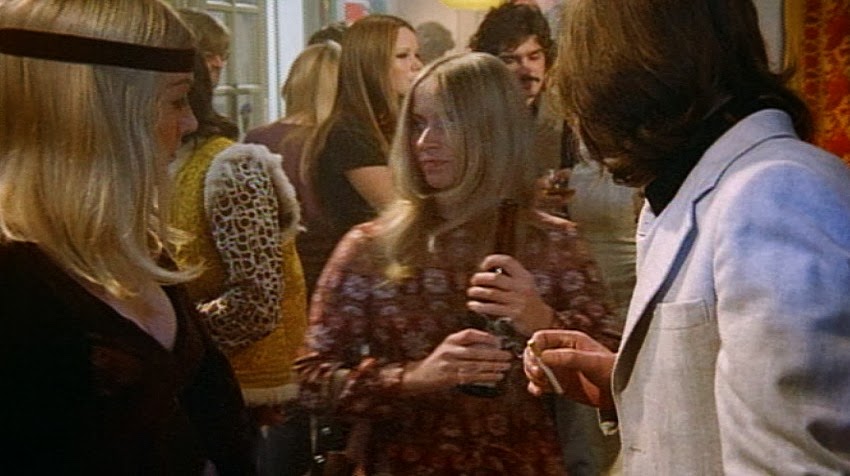
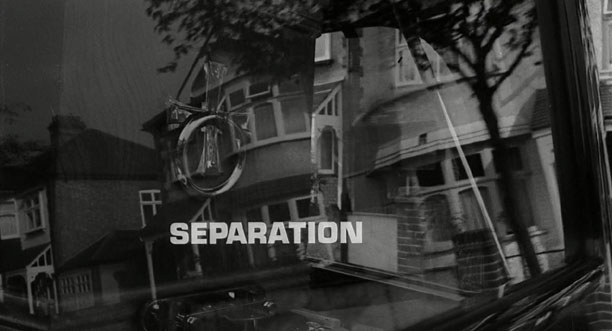
Probably one of the more divisive films for me in this series, but Separation managed to still have some great virtues of it. This review will probably show me becoming more admiring of the film if I was to see it again. It'll probably be like The Otherside of the Underneath (1972), the sole, single directorial credit for Seperation's main actress Jane Arden, another difficult experimental film uncovered from British cinema history I will have to ruminate on.

Review Link - http://www.videotapeswapshop.co.uk/15730/s-is-for-separation-%E2%80%93-1968-director-jack-bond/

From http://s3.amazonaws.com/auteurs_production/images/film/separation/w448/separation.jpg?1289466373

Saturday, 31 August 2013

R Is For... Rabbit (2005)

From http://www.animateonline.org/stillsfull/rabbit01.jpg

Dir: Run Wrake

Another short. I remember learning about this one from a television program which showed clips from various British made short films, mostly all animated in some form to my memory. If there one good thing about the British film culture, short films, while not getting enough attention they deserve, do still get some. They are/were shown on non-cable TV, are available online, and in some cases are shown before films at certain cinemas. What they need now is some sense that they can be just as significant and powerful as feature length films, and this already existing structure would help bring a potential renaissance in short form animation and live action works. The quality of the shorts themselves  depend on each short individually, but the following from the late director is a great example of what they can be like.

Review Link - http://www.videotapeswapshop.co.uk/15835/r-is-for-rabbit-2005-director-run-wrake/

From http://pivot.glenbow.org/wp-content/uploads/2011/09/Rabbit-3_2005-Run-Wrake6.jpg

Saturday, 17 August 2013

Stoker (2013) vs. The Stepfather (1987)

From http://itsblogginevil.files.wordpress.com/2011/10/stepfather871.jpg

From http://zombiehamster.com/wp-content/uploads/2013/06/STOKER-4.jpeg

Dir. Park-Chan Wook/Joseph Ruben

So many coincidences take place in life that surely it happens in your film viewing too. I finally caught up with Park-Chan Wook's American debut one night, then the next night I saw the cult horror film The Stepfather. In the first, after the death of the father, the unknown uncle (Matthew Goode) enters the remaining family only to reveal a sinister side of him that startles the daughter (Mia Wasikowska), a girl who herself has a potential dark side. In the later, the daughter (Jill Schoelen) suspects that her stepfather (Terry O'Quinn) is more than he says he is, obsessed with having the perfect family. Unlike Stoker, it's made upfront that there's some psychopathic behaviour being thrown about in the first few minutes. One high prestige film from a South Korean alumni, one love budget Canadian film. It's amazing Stoker can be traced back to the later...and that its completely pretentious and barely watchable in comparison. Neither is good, but at least The Stepfather has a lack of strained artistry.


Both films involve a revelation taking place for the young, female protagonist near the ice cream freezer in the cellar. Both involve the sexualisation of them in the shower. In The Stepfather its brief nudity that could be either an establishing shot or an abrupt moments of titillation in a film that is only adult in its occasional gore. In Stoker it's a scene linking sex, death, and death fantasies through masturbation that, depicted with all the subtlety of a sledgehammer, made me want to punch Park-Chan Wook and scriptwriter Wentworth Miller. Both replications perfectly describe the films together. The Stepfather is lurid genre cinema that yet is completely relaxed and comfortable with what it is. Stoker protracts these moments found in other genre films like The Stepfather, and strains so badly to be "high art". Both depict a conventional nuclear family - mother, daughter, a new father figure - after the passing the original father and being replaced by a surrogate who is an invading parasite of masculine and patriarchal ideals. In The Stepfather, the desire for the peaceful, quaint happy families of magazines and fifties America. In Stoker, mental and psychological disconnect and sociopathic desires. In Stoker, there is nothing profound in its dialogue to support its excessive stylisation, hollow and without tension, and without any gravitas. The Stepfather is a generic horror film, but it has so no sense of pretention whatsoever.

From http://s.mcstatic.com/thumb/7613400/20760803/4/flash_player/
0/1/the_stepfather_1987_attacking_stephanie_part_2.jpg?v=4

From http://thatfilmguy.net/Pics/Stoker.jpg

To The Stepfather's advantage, it has charm. While with a type of recluse anti-social young adult character who exists in reality, Wasikowska is completely unlikable and uninteresting. Completely overdone in being anti-social, and because of the complete lack of good characterisation,  she's also completely vacuous. The depiction of her growing dark side just emphasises an uncomfortable and childish fetish for violence, that shower sequence representing its nadir. It also causes me to worry about rewatching some of the Park-Chan Wook's earlier films, especially Oldboy (2004) and how violent and twisted in its plot it gets. With Schoelen in The Stepfather, you get a character, while one dimensional, who is charming, likely because the real actress was off-set. It's a generic character, but she's allowed to smile, isn't stuck in an overwrought, unoriginal take on Expressionist set design or with violence taking place every minute around her. Her mother is charming despite her one note nature too and has more interaction with her daughter. Nicole Kidman in Stoker shows what happens when a Hollywood actress feels their prescience is enough when it doesn't, making me wish all her films were like Lars von Trier's Dogville (2003) where she was forced to actually act. In the surrogates, O'Quinn is far more interesting than Goode. O'Quinn could be seen as hammy, but his character's obsession could have made a fascinating black comedy around how he acts the role out. Goode comes off as a bad version of what Casey Affleck does so well in films like The Assassination of Jesse James by the Coward Robert Ford (2007), an uncomfortably confident, quiet male who has the potential to be charming but is liable to snap as well. Even if I hated The Killer Inside Me (2010), Michael Winterbottom's controversial novel adaptation, Affleck did this type of role properly with real emphasis. And unlike Stoker, in The Stepfather the boys in the protagonist's school are not all potential rapists the moment you are alone with them. While I'm not a fan of a lot of eighties horror films, there was some sort of attempt in many at likable teenagers. It was only generic storytelling that failed them, not the actual characterisations.

Ultimately the coincidences prove an unfortunate truth that some films are completely identical to dismissed b-movies, and that they can be far worse and lifeless than said b-movies. I wasn't that fond of The Stepfather, but it has more virtues. It knew what it was, and had charm for that reason. The protagonist had some charisma, and a subplot involving her psychiatrist/councillor invokes a brief but tantalising moment when he gets to examine her stepfather's mind. And while I've forgotten Stoker's score, baffling consideration it was composed by Clint Mansell, the score in it is the cheesy synths that I've developed an un-guilty love for. Stoker becomes the poor man's b-movie in that it tries to think its above one but doesn't have the material to judge itself even next to one. Prolonged gore with no weight and a po-faced darkness. The casual lack of seriousness to The Stepfather turns out to be the more artistically mature attitude to making a film because it's a b-movie that knows it's one and just tries to entertain.

From http://farm5.staticflickr.com/4050/4583515050_68f8892046_z.jpg

From http://www.moviefancentral.com/images/pictures/review29390/matthewgoode-nicolekidman-miawasikowska-STOKER.jpg?1367185181

Saturday, 10 August 2013

Mini-Review: Death Line (1973)

From http://4.bp.blogspot.com/-9zHzzN8rENI/URCW4q9bvuI/
AAAAAAAAD6s/Z-vs1hDNBDg/s400/DEATH+LINE+-+Silver+Ferox+Design.jpg

Dir. Gary Sherman

Death Line is undermined by its slightly disjointed structure. Not much threat actually takes place when you think about it. And yet this is why, before this problem arises, why I found this a lot more interesting than other British horror films. At a certain underground railway station, people are vanishing, a subterranean being preying on the unsuspecting public, the ordinary man to a lord which kicks off the police enquiry by the eccentric Inspector Calhoun (Donald Pleasance) to investigate what is going on. It's also amazing how violent and nasty the film actually is. It's not a gorefest, or able to match up to films from the period let alone now, but with its rotting corpses, head trauma, and a central idea I won't reveal because its only introduced part of the way through, it's amazing how lurid British genre cinema got in the period. Films like this and sleazier works managed to exist despite how severe British film censorship was at the time, and to encounter these films is a shock. It's a very low budget movie, a small cast consisting of a couple, an American student (David Ladd) and his British girlfriend (Sharon Gurney), Pleasance and one of his detectives (Norman Rossington), and one or two characters. Christopher Lee makes a cameo but unfortunately is in only one scene, and despite the promise of Lee and Pleasance onscreen, it's clear they may have been filmed separately, speaking directly to the camera as each one is cut to-and-from in their bitchy dialogue to each other. The prescience of Lee emphasies how radically different a film like this is from a Hammer production. Contemporary, set in the scuzzy streets with strip clubs and the underground, the old architecture of the turn of the century, bringing in the failures and greed of our great-grandfathers being responsible for the creature in the abandoned tunnels, against the then-contemporary locations and culture, British but also American with youth radicals and Jimi Hendrix posters. There is some nasty gore, decay and Pleasance mouthing "fuck" in disgust at Lee, the idea of Lee himself even saying a mild curse word, or existing in a non gothic or classical horror film, outside of the image he has, and furthering the split this film makes from the older tradition of British horror.

Pleasance, pre-Halloween (1978), is so drastically different from his Dr. Loomis persona. Either it's a put-on accent or his real one exaggerated, complaining about the tea, taking tea bags out of his cup with a playing dart of all things, and more than twice, and stealing the film with his complete lack of care for other people's thoughts or following procedure. It's a great thing to see a vastly different performance from him, and the film itself is just interesting. Its failing is that it's a slight film, not going any further with its small cast. The central idea is interesting, of a being lurking underground, like us but through a radical, decades changing effect causing them to be a drastically different being whose only understandable words is a phrase used in the subway lingo above. Its great I didn't have to put up with all those crassly lazy plot tropes usually set upon you viewing most horror films - that people aren't believed, that the police are incompetent, just liable to get drunk the night before in this and suffering from hangovers, and having to wait for events to happen. It structure does sadly undermine any sense of a great finale, ending with somewhat of a whimper, but that could have been prevented with better writing. It looks good, has the ideas, and has probably one of the technically applaudable moments in a genre film like this, a long continuous camera turning around numerous times and examining an environment that, even if hidden edits were used, is still exceptional. It's a fascinating example of how British horror can have teeth, but could have been made better.

From http://hotdogcinema.files.wordpress.com/2012/03/rawmeat-dp.jpg

Friday, 10 May 2013

Videotape Swapshop Reviews: The Wicker Man (1973)

From http://voiceofcinema.files.wordpress.com/2010/05/wicker_man_poster_01.jpg


Dir. Robin Hardy
UK

This will be the last of the Videotape Swapshop review links in a while until next month. By then the three months of summer will include links to numerous reviews I am doing for that site. The film here today, back to now, is the original version and one of the best British films ever made. The Nicolas Cage version requires an entirely different set of criteria to write about it, so I will stay with this one at this time.


From http://24.media.tumblr.com/tumblr_m0s46vvN1q1qaun7do1_1280.jpg