.jpeg) |
| From http://upload.wikimedia.org/wikipedia/en/6/6a/Sleepless_(2001_film).jpeg |
Dir. Dario Argento
 First of all, after Opera (1987), my viewing of the films
of Dario Argento has been spotty with
a few gaps. Yet to see Mother of Tears
(2007), haven't seen Trauma (1993),
The Phantom of the Opera (1998) and Dracula 3D (2012). Aside from this,
I've seen all the important films of his. All there is left, beyond those
mentioned above, is the obscurer works. If a drop of quality has taken place, it's
not the horrible downward spiral that I've heard others describe his career as
having become. Instead it's a wider issue, beyond even Italy's genre cinema
having declined taking its toll on his aesthetic rigor, but horror cinema in general
being underused. This issue is in fact part of cinema in general, regardless of
there being a climb or decline within it. If you can make a film fully through
how you desired it to be, it'll be a miracle. A director with films under their
belt are not safe from outside factors. Less budgets, cheaper camera, popular tastes
that'll date films etc. Argento is a
working filmmaker, in a profession first, that involves for more production
costs than other mediums, and is an auteur secondly through the fans and
critics, us, that see his films. And there are also times when the audience may
have missed something that wasn't an outside influence or necessarily bad
either. Once having found quite a few of his films, on the first viewings,
dull, which I openly confess to having thought before rewatching those specific
films, I've had a more complicated experience in my admiration for the
director's work, able to see his major work at least twice. Argento has always skirted the schlocky
and absurd in his prime era of giallos and supernatural horror - hockey plots, out-of-the-blue
plot twists, obvious special effects. His films are legitimately great because
of his style and that he can take these potential flaws in any other director's
work and clearly embrace them in a baroque tone intentionally. And it's clear
how deliberate it can be as well.
First of all, after Opera (1987), my viewing of the films
of Dario Argento has been spotty with
a few gaps. Yet to see Mother of Tears
(2007), haven't seen Trauma (1993),
The Phantom of the Opera (1998) and Dracula 3D (2012). Aside from this,
I've seen all the important films of his. All there is left, beyond those
mentioned above, is the obscurer works. If a drop of quality has taken place, it's
not the horrible downward spiral that I've heard others describe his career as
having become. Instead it's a wider issue, beyond even Italy's genre cinema
having declined taking its toll on his aesthetic rigor, but horror cinema in general
being underused. This issue is in fact part of cinema in general, regardless of
there being a climb or decline within it. If you can make a film fully through
how you desired it to be, it'll be a miracle. A director with films under their
belt are not safe from outside factors. Less budgets, cheaper camera, popular tastes
that'll date films etc. Argento is a
working filmmaker, in a profession first, that involves for more production
costs than other mediums, and is an auteur secondly through the fans and
critics, us, that see his films. And there are also times when the audience may
have missed something that wasn't an outside influence or necessarily bad
either. Once having found quite a few of his films, on the first viewings,
dull, which I openly confess to having thought before rewatching those specific
films, I've had a more complicated experience in my admiration for the
director's work, able to see his major work at least twice. Argento has always skirted the schlocky
and absurd in his prime era of giallos and supernatural horror - hockey plots, out-of-the-blue
plot twists, obvious special effects. His films are legitimately great because
of his style and that he can take these potential flaws in any other director's
work and clearly embrace them in a baroque tone intentionally. And it's clear
how deliberate it can be as well.
He would have seen having his protagonists
be amateur sleuths in trying to solve murder cases, over the police, as
fantastical in nature, but it's clearly done on purpose and I cannot help but
think of the suspense of disbelief that exists in genre, especially crime
stories. Unfortunately the virtues of suspending disbelief and embracing the
clearly unrealistic has been lost on me for some time before now. It's also
been lost in a lot of genre cinema. I blame the desire for realism and logic in
narratives for having done this, even though both of them are mythical
creatures in films purporting to be documents of reality. To embrace suspension
of disbelief, which finds its biggest reservoir within the pulpiest of works,
knowing flagrant in realism, is to intentionally enjoy films (or books, games
etc.) that play within their own made-up realities. Even The Bird With The Crystal Plumage (1970), Argento's debut and most restrained work, has absurdities within
it. Then he eventually went as far as having a monkey welding a razor blade in
a film a decade later and likely knew how ridiculous it was. The Bird With The Crystal Plumage and The Cat O' Nine Tails (1971) were films
I liked on the first viewing, and the likelihood was that they are the most
streamlined and less-tangent filled films by him. After ...the Crystal Plumage, the films became more and more expanded,
more tangent filled and clearly breaking to pieces the narratives they had on
purpose and probably from the haphazard nature of many Italian genre cinema of
the time. The most obvious example of this, was Deep Red (1975) and its extended screwball comedy sequences with David Hemmings and Daria Nicolodi; the fact that most of it was removed from the
shorter English language release of the film more than likely altering how viewers
would react to his film, not seeing how tongue-in-cheek and peculiar he
actually was. Plots in his films were lurid and not logically rigorous, more
inclined to the spectacle of pulp, Four
Flies From Grey Velvet (1971) getting its title from a scientifically
impossible concept to catch the killer straight from sci-fi or Victorian gothic
literature. If there was a peak for this expanding and divisive excess it was
undoubtedly the eighties. Inferno (1980)
is the most abstract film of his, Opera
pulls the carpet under its viewers' feet, and Phenomena (1985) is clinically insane. And that's not discussing
the use of Iron Maiden and Saxon in the mid and late eighties films.
 |
| From http://projectdeadpost.com/wp-content/uploads/2013/10/Sleepless2.png |
A film like Giallo (2009) still carries the hallmarks of this auteur. As does
The Card Player (2004), The Stendhal Syndrome (1996) and, returning
to the film of this review, Sleepless.
I don't see a sudden damnation in mediocrity to the pit of the worst of cinema
fans have proclaimed it to be with him. Filmmaking, even from an outsider who
hasn't picked up a camera, is such a chaotic, arbitrary bastard of a career to
be an artisan in when public taste, money and resources are variable and have such
a drastic effect on the final product. Those who've been championed in horror
cinema especially have been just as effected by this - see John Carpenter, Wes Craven,
Tobe Hooper, George Romero and so forth. Add European directors like Jess Franco, whose career was a roller
coaster. Or go further, and beyond just horror films, like with Takashi Miike, a self proclaimed working
director who, at one point making five films in a year, is clearly dependant on
making films to live and has to do so by following what he will be able to work
on, which is something I am having to accept with my disappointment with his
later mainstream films. Auteurs or people with unconventional ideas are a pain
in the arse for producers to work with, and as new talent exists, older
veterans have ended up being ignored. A director who can keep a rich
filmography usually works with whatever their budget is, even if its low, and
is the equivalent of the mad lord isolated in a tower by themselves, sustained
by those who've cared to listen to them. Yes, Argento and many director are countable for some really bad ideas
in their weaker films - Adrian Brody's
wonky accent(s) in Giallo for starters
- but it's probably hell to get these productions off the ground let alone with
little compromise. We forget as viewers it's a job, which can be as arbitrary
as any other job we have, paid or unpaid.
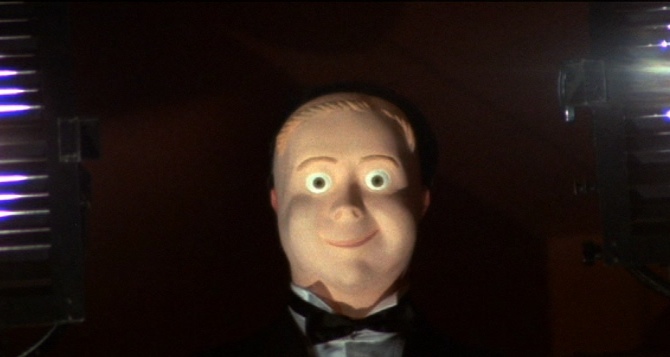
A series of murders from 1983
have seemed to begin again many years later. The killer was said to have been a
man with dwarfism, yet the fact that he apparently committed suicide, and the
newest killings follow the originals' traits exactly, suggests that this was
likely wrong. The son of one of the original victims Giacomo Gallo (Stefano Dionisi) is brought back to
Turin, reacquainting himself with a crush of his past and intending to find out
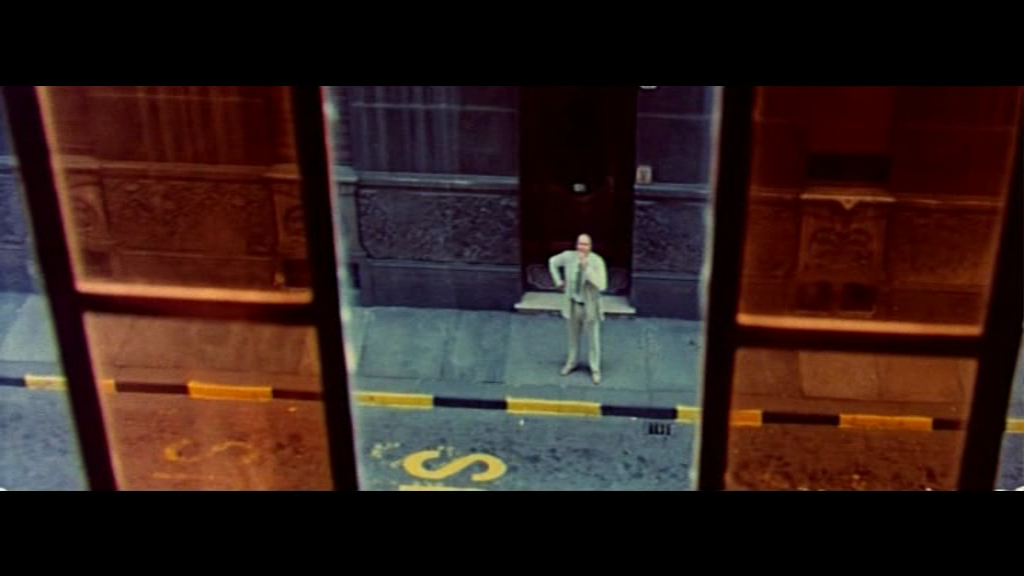
who actually killed his mother. Also brought back in is the original detective
of the case Ulisse Moretti, played by the legendary Max Von Sydow, long retired but bringing himself into the case
again as memories and his desire to close it too returns to him. The film's a
throwback to Argento's first giallo films,
less about who the killer turns out to be, but the labyrinth of the plotting.
Giallo are more inclined to the notion of spectacle - the effect of the
plotting, throwing its protagonists in the deep end, the gory deaths. It's a
nasty film when it wants to be, a strange balance of cruelty and the absurd.
Absurd is the right word. Argento has
a clear bombastic ridiculousness to his work, sincere but winking. The same
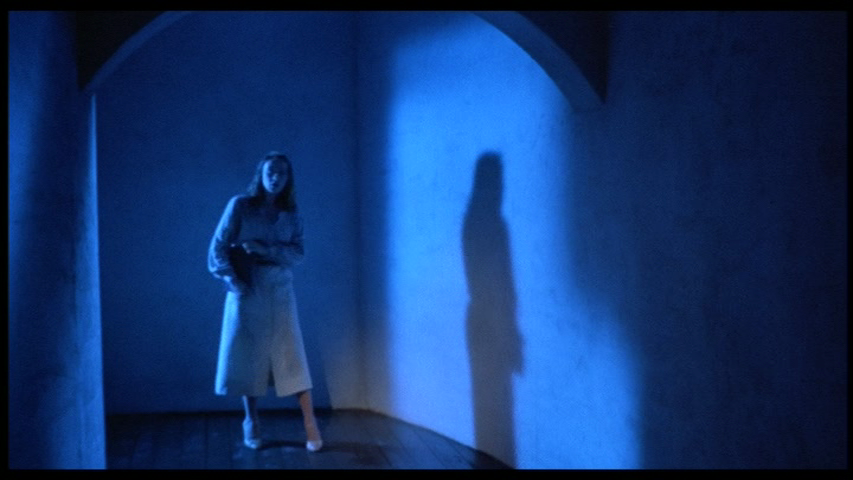
here. The spectacle of the first act, where a prostitute inadvertently gets
involved with the killer and an incriminating blue file, shows the director's
virtue of the elaborate. A prolonged set piece on a train. Two women involved.
An inherent creativity to Argento
that, dare say it, was found up to Giallo
for all its failings. This is of course the film where Goblin, the Italian progressive rock band that created haunting
scores for Argento's most well known
films, came back together in some form to create another. The title theme sends
shivers up the spine with the guitar lick that carries it, but again it proves
great metaphor for an intentional, mischievous pomposity in Dario Argento's work. Music to shake the
ground with but embracing excess like a starving man to food.
 |
| From http://www.mondo-digital.com/sleepless2big.jpg |
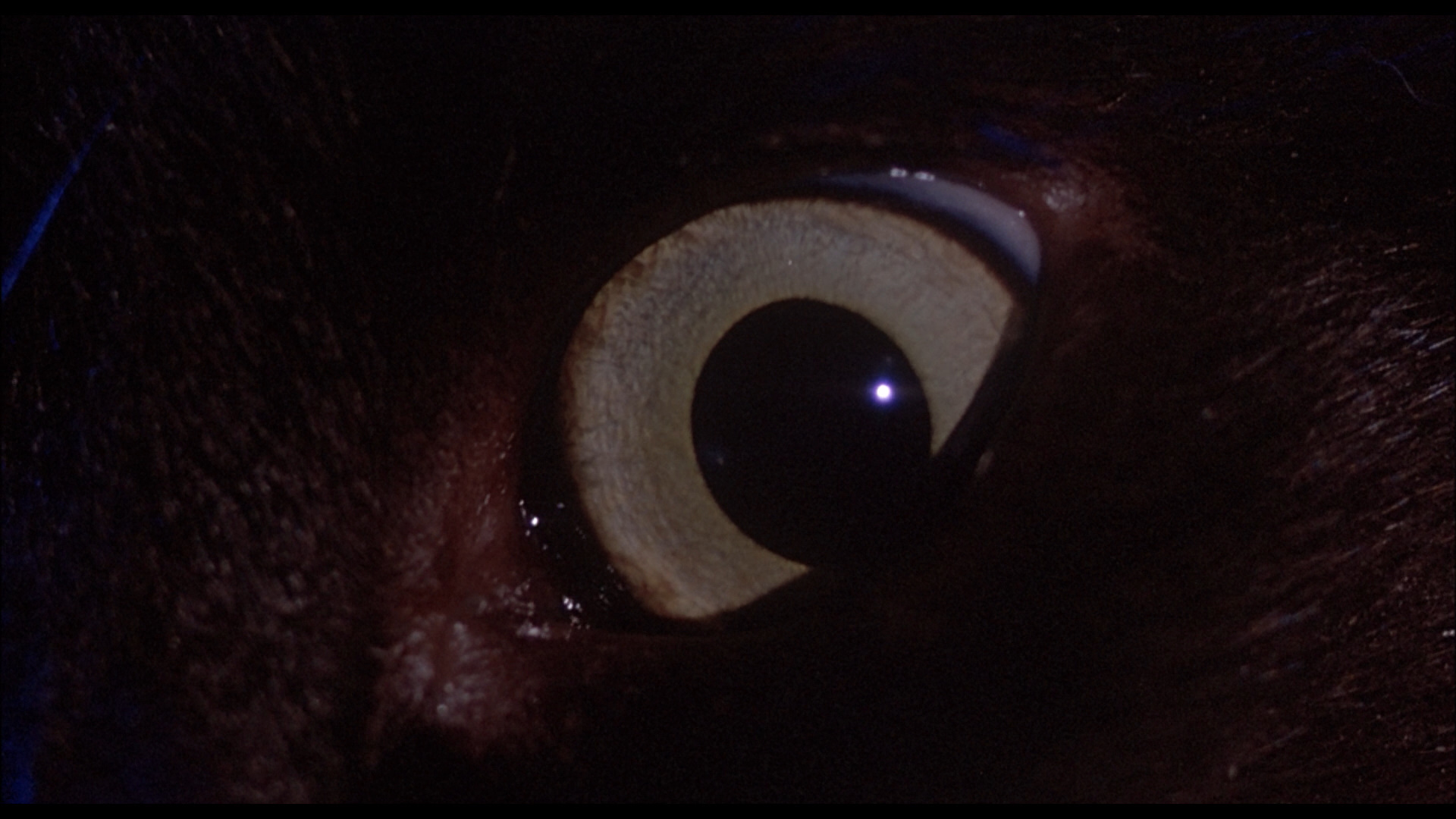
The problem with Sleepless, if any, is not to do with
the film's story or structure. His best work, including Suspiria (1977) and Inferno,
is full of lengthy dialogue scenes and expedition. Odd tangents with no
connection to the main plot. My original boredom with a lot of his films was
because he got more excessive with this sort of thing, which I didn't go in
expecting when I wanted lean, taught thrillers. The implausible nature, the
lashings of said exposition, all the tangents, and it's clear, especially here,
that Argento is in adoration of this
as much as making the most stylish or tense work possible. I cannot but
suspect, as we have scenes of Sydow
by himself and his pet tropical bird figuring out old information on the murder
case, explaining it to himself and us the viewers implausibly, that the
director adores and fetishes the junky, over explained tones of a pulp
paperback as much as their heightened tones and the mystery. Once you jettison
the conventions of "good" narrative writing, it's obvious Argento loves the clearly implausible,
the pointless, the all-the-sudden, the inane, and far from a detraction, it
actually here is shown to be one of his best auteurist traits once you embrace
it.
The real problem with this film
is seeing how it occasionally looks daub visually. Thankfully this film has the
style of the older films. But I have to get through the obvious flaw that, from
around this point, and The Stendhal
Syndrome, something was clearly an obsacle he put up as a director or
outside groups forced upon him where his films lost their lustre from the past
films. Not surprisingly it mirrors how horror
cinema became more and more obviously treated like the fast food of the medium,
which effected many of the old auteurs' films. Yes, films were churned out in
the days before I was born, but its feels even more obvious within the last few
decades when directors known for distinct personalities in their work are
minimal. Moments in this film, there are the troubling signs of how cheaper his
films were becoming at least in look if not budget, clearly a compromise from
the films of decades before. When you're a director known for style and
elaborate camera movements, a restriction in making the films is not a good
thing. The good news is that, while it would unfortunately begin to really undermine
his films from The Card Player*, the
style of the earlier films is still here, such as a lengthy tracking shot
following along a carpet to an event that is magnificent. What has to bared in
mind is that, when he started, Argento
was working with Vittorio Storaro as
his cinematographer, who the same year as The
Bird With The Crystal Plumage did the same task with Bernardo Bertolucci's The
Conformist. This is the same in other areas of the film's production, with Ennio Morricone as the composer. The
older eras of horror cinema had a fluidity between actors to technicians
switching between art and pulp cinema, particularly with Italy and Japan,
without bias against either. Unfortunately Argento
has to work with what he has now. With this film though he was still able to
make material that shines. Considering the cinematographer for this film, Ronnie Taylor, shot his film Opera, it makes sense for the style to
be there still. And of course, speaking of acting, there's Von Sydow. Sydow can
leave any film with his stoic dignity shining through, as a great actor able to
be good in even an awful film, as can be proved in seeing him in Judge Dread (1995) with Sylvester Stallone. The transition from Ingmar Bergman to his later films is
surprising, but to bring his gravitas to this film was inspired, and in seeing
him add conviction to the sillier aspects, proves why he's such a good actor.
In fact no one is bad in the film in a jarring way to be honest. The cheesy
English dubbing is far from the worst I've seen and still adds a lot; I'm
endured much, much worse.
 |
| From http://hotdogcinema.files.wordpress.com/2012/04/sleepless-backstage.jpg |
The modus operandi of the story
is how a pretty nasty nursery rhyme penned for the film by Asia Argento, the director's daughter and actor/director in her own
right, and from the very Grimm end of children's literature, infects someone
enough to carry out a series of murders inspired by it against women. It's
bizarre, but Argento has revealed in
the bizarre plot ideas for four decades or so now. Taken seriously, as a
director criticised for his violence, the notion of a work corrupting someone
both returns back to the plot of Tenebrae
(1982), and the result here becoming a playful nod to the more exaggerated
of stories that does nonetheless reflects on this issue even for a lurid plot
thread. Argento did consider the
notion of the dangers of a piece of creative art at least with his work. The
dwarf character blamed for the original murders becomes more of a tragic
figure, ostracised for what he looked like when, frankly, the killers with the
exception of Phenomena have been
normal people hiding corrupted minds. And, without spoiling Phenomena, even that film is a lot more
complicated, for an intentionally silly film, on that matter too. It says a lot
of where the director/co-writer's heart lies in his preferred stories when this
character is said to have been a pulp thriller writer who read aloud his latest
creations gladly to the neighbouring children, the mix of the sick and the fun
apparent especially here in Sleepless.
Length and structure wise, the film does feel stretched, but it escalates
quickly and, surprisingly, closes out its epilogue with end credits playing
over the footage. Abrupt defiantly, but at the same time, it befits the material
as much that it ends with the macabre jolt and soon after finishes so that it
stays in mind.
It's unfortunate Dario Argento's work has dropped in
quality over the years, but it's somewhat of a parody that, the further a
director's career is, the more divisive and in danger of compromise it is. Its
less that directors loss their creativity, too variable in individual cases for
me, and I'd argue that with Argento,
though he may be guilty in his compromise, that clearly the effect of less
resources have plagued these films too. The circumstances to get these films
made were likely to have had a drastic effect on what we would see. It's clear
here as well that the intentionally silly and fun side of the man, even for the
sadistic violence, was made more pronounced in a film like this. Maybe Giallo, with Adrian Brody sucking a whipped cream can nozzle at one point within
it, was actually meant to be a comedy, and Argento
wasn't covering his tracks? I'll see Dracula
3D when it's possible to acquire it, and be baffled by why a giant CGI
mantis was included, but unless he has completely gone mad, I can't help but
think he must have found that mantis people were able to see in a leaked
production trailer to be funny as well as what he wanted for the scene. It
comes apparent that, as well as the potential problems in making these films
that is inherent in the industry, the knowing absurd of the man's work that has
always been there has made itself more obvious as the films continue. As fans
we've probably taken Argento's work
too seriously in tone when they may have been ultraviolent romps in plot twists
and abrupt surprises as Sleepless
is. It makes complete sense of great moments from his first films that were
nonetheless strange. He started with an extended dialogue scene whose punch
line was that someone was sustaining themselves by raising cats to eat, and that
should remind us of this side of the director that we've ignored, and realise
its been in all the films he made afterwards.
Note: * Which makes no sense since Benoît Debie, of Spring
Breakers (2013) and Enter the Void
(2009), was the cinematographer. I'm baffled by this despite actually liking the
film.
 |
| From http://www.dvdactive.com/images/reviews/screenshot/2009/7/sl2.jpg |


.1.jpg)


.jpg)


.avi_snapshot_00.54.40_%5B2012.02.22_22.43.47%5D.jpg)




.jpg)