Showing posts with label Actor: Nicolas Cage. Show all posts

Sunday, 9 June 2013

Mini-Review: Rumble Fish (1983)

From http://perhapses.files.wordpress.com/2011/06/mbreigns.png
Dir. Francis Ford Coppola
USA

From https://blogger.googleusercontent.com/img/b/R29vZ2xl/AVvXsEh9jviTYzZGFIteWqxTanwWxcWQTCXv5M7eCwVRdV1JK0RN98w3iDcHgXhID5O6NntV2I0NYiLohjAGCegEOv1J3JakqevZwX2QNW31T5WfedhR3PxTfrnWDpNBQEjWyqINv0bNzhCwixuc/s1600/rumble-fish-1983-mickey-rourke-matt-dillon-pic-3.jpg

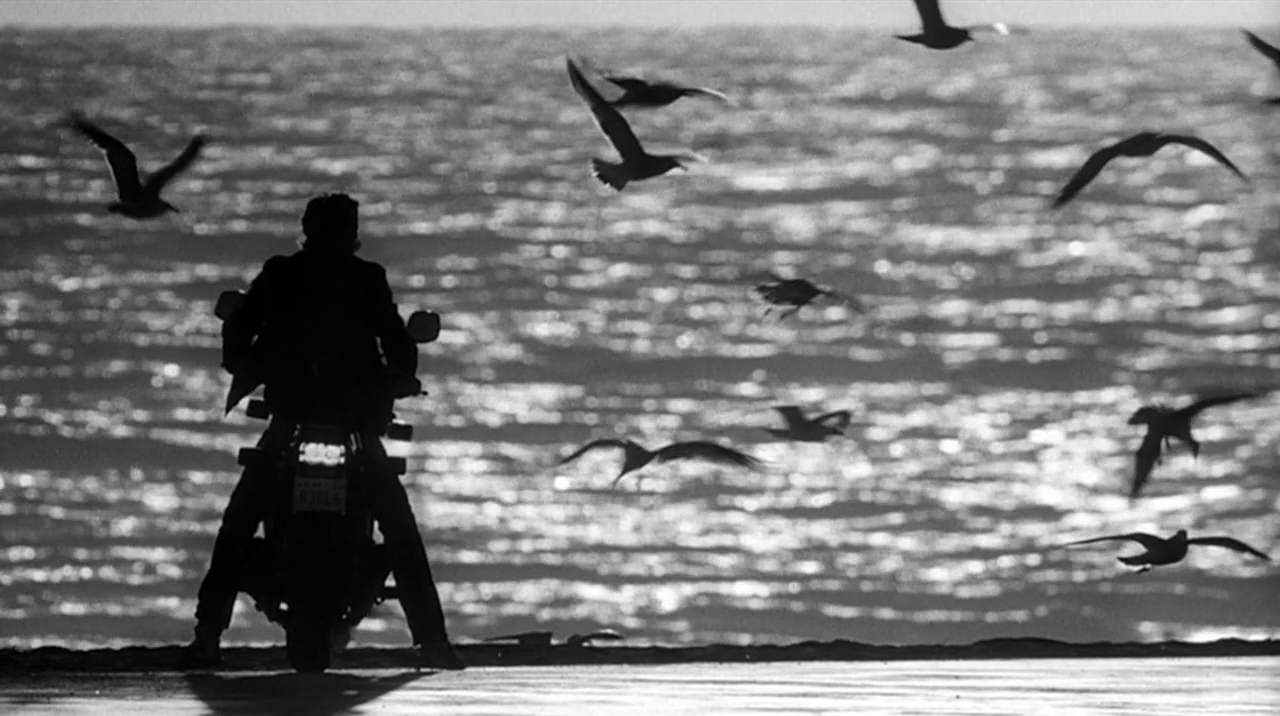
Rumble Fish manages to tackle a great deal in only ninety minutes. One of its director’s most well know film, The Godfather: Part II (1974), is over three hours long but he is able to make a film just as rich that is half the length or more. Many films procrastinate, but Rumble Fish both feels long in scope yet physically is brisk. This befits a film of adolescence and how short it is even if it feels long for the youths. A young man Rusty James (Matt Dillon) idolises his older brother, the quiet voiced Motorcycle Boy (Mickey Rourke), but when he returns he is shown to be unable to, without “the smarts” of him and within a period where he is completely adrift. The monochrome clouds move rapidly above him and others in fluid rich swathes and time peters, Tom Waits behind the counter of his diner expressing how none of the youths realise they have little time, shot from the angled perspective of the wall clock looking down on him too. Days go on but for Rusty James he is nearing a drastic change in his life. His relationship with Patty (Diane Lane), youthful exuberance, who he obsesses over in classes rather than pay attention to the lessons, is precarious. His life is going nowhere and his father (Dennis Hopper) is alone and stuck in an alcoholic dependency. The Motorcycle Boy, and his younger brother’s view of him, is not who he thought he was despite the graffiti of “The Motorcycle Boy Reigns” on street corners.

From http://perfectionofperplexion.files.wordpress.com/2010/07/rumble-fish-1983-hdtv-720p-english-and-russian-mkv_200502.jpg


Never does Rumble Fish become pretentious despite the options that could have lead it there. It is too simple and clear in its thoughts to confuse them. It is cool in rich black-and-white with echoing post-synch sound. It has Dillon, Rourke, Waits, Lane, Lawrence Fishburne, Nicolas Cage and Chris Penn onscreen. Even an adolescent Sofia Coppola in a small role as Patty’s little sister, making the lambasting of her performance, older, in The Godfather: Part III (1990) overdoing it even if it was justified. But beneath the timeless veneer, motorcycle jacketed rebels against arcade machines, it’s about the restlessness of youth. Aimless, not connected to adult life. The violence, Rusty James continually battered and experiencing an out-of-body experience in one such incident, as much the pent-up desires of the males asserting themselves as the desire for sex with girls their age. The fighting fish of the title, bright colours, are trapped and feel the need to assault even their own mirror images. Coppola is controlled, nuanced in every moment angled and lit in an interesting way, but he is as much obsessed with his characters meaning a lot for himself and the viewers. His characters are trapped in situations against their own wills and have to make their way out of it, drastically changing by the end. Gene Hackman against his paranoia in The Conversation (1974). Martin Sheen in Apocalypse Now (1979). Michael Corleone and his divine punishment by the end of The Godfather trilogy. Mina Murray and Dracula in Bram Stoker’s Dracula (1992). The protagonists of Tetro (2009) and Tim Roth, against his superhuman burden, in Youth Without Youth (2007). Like them all, Rusty James is not in control of what happens to him, barring the final decisions, having to decide after it’s too late what to do next. The music, by Stewart Copeland, is precise as clockwork and as varying and changing as a heartbeat. It is cool but weaves with sincerity. Filtered through dialogue by S.E. Hinton, author of the original source novel, Rumble Fish is cool but never aloof, as varying as the drama changes even in its style. Its end is at the ocean and the route to it is justified and felt. In only ninety minutes you are there for characters like Rusty James and the Motorcycle Boy and feel everything that happens. Even if I am distant from their lifestyles and older than them, a young man like myself cannot help but feel, through this stylish film, how my youth is fresh and running quickly on the clock too. 

From http://25.media.tumblr.com/tumblr_mczdxyTtBT1r4c8axo1_1280.png

Friday, 7 June 2013

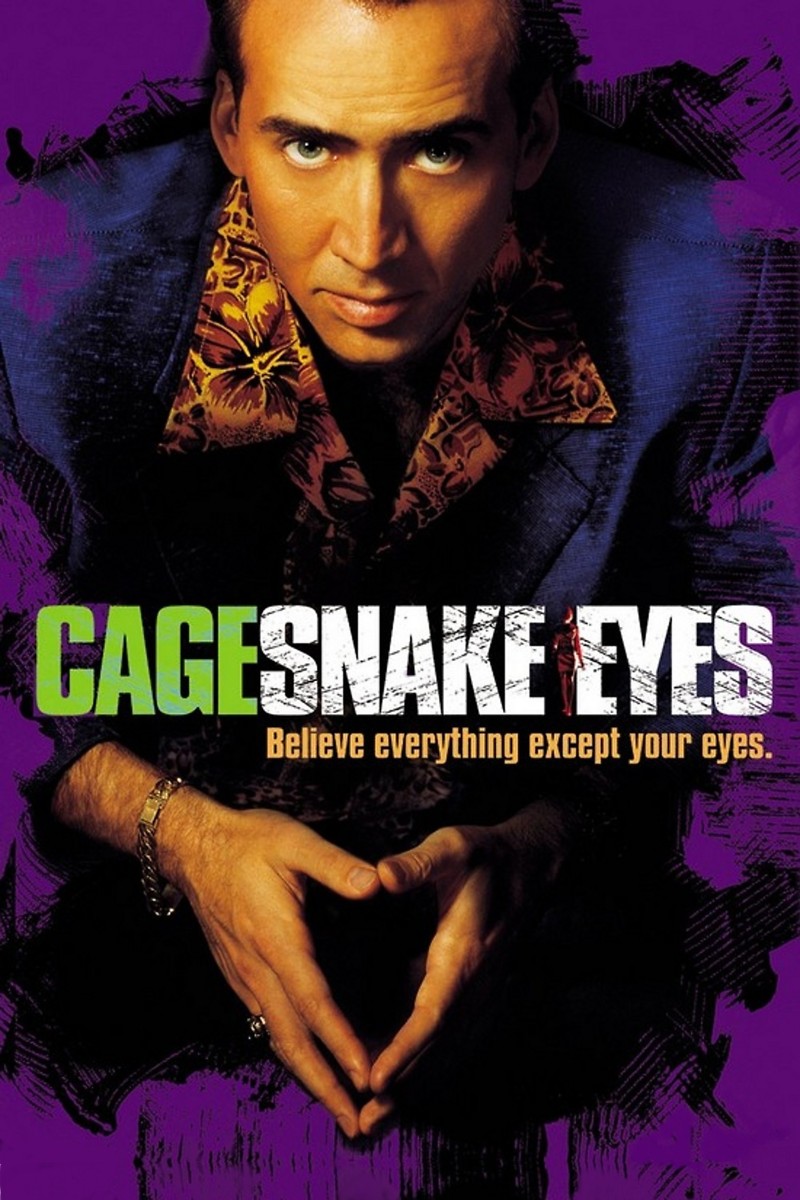
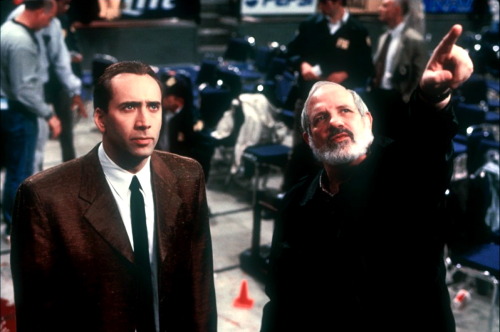
The Nicolas Cage Project Link #5 - Snake Eyes (1998)

From http://www.dvdsreleasedates.com/posters/800/S/Snake-Eyes-1998-movie-poster.jpg

Dir. Brian De Palma
Canada-USA

The final link for the Nicolas Cage Project series of reviews. It will not be the last one though as I will probably be covering more of Cage’s films on Videotape Swapshop. There are plenty to choose from and at least a few where he’s allowed to go for broke like a lunatic. Captain Corelli's Mandolin (2001) could be covered even if the justification for it will be lost on my co-writers of the site.


From http://25.media.tumblr.com/tumblr_lxkblce5QV1qisxvio1_500.jpg

Monday, 3 June 2013

The Nicolas Cage Project Link #3 – The Wicker Man (2006)

From http://www.dreadcentral.com/img/reviews/wickermanpic4big.jpg

Dir. Neil LaBute
Canada-Germany-USA

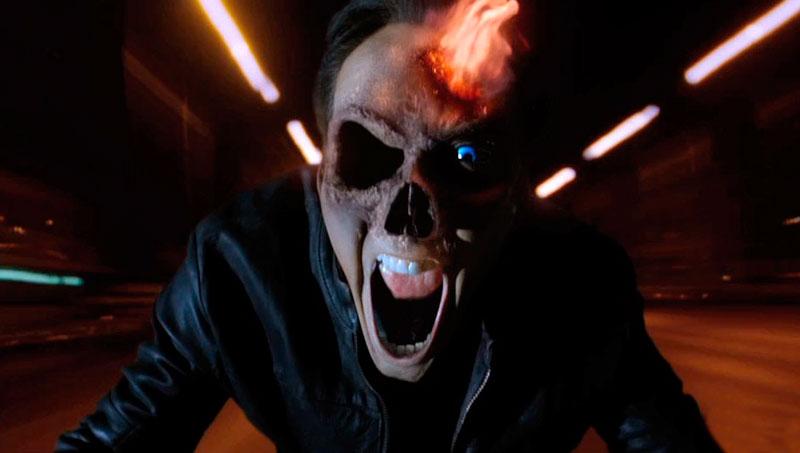
I wish I could avoid following the same consensus as most people with this remake...but there’s no way around it. On the plus side, the following screenshot immediately brings up one of many phrases which will be remembered in pop culture lore and will (thankfully) be made separate from the film. Don’t tell you weren’t thinking of a particular one looking at the juxtaposition above.

Sunday, 2 June 2013

The Nicolas Cage Project Review Link #2 – 8mm (1999)

From http://www.dbcovers.com/imagenes/posters/asesinato_
en_8mm_1999//asesinato_en_8mm_1999_9.jpg

Dir. Joel Schumacher
Germany-USA

Part 2 of the Videotape Swapshop Nicolas Cage retrospective and this is either an example of never judging a book by its cover or further proof that I am insane in my defence of Joel Schumacher. Take your pick from the review below. Also worth mentioning is the jaw dropping spike over 500 views that I discovered with the first of these Cage Project links, far more than any post on this blog. Apparently a hoax saying Cage died on June 1st took place and that may have been how this spike happened. It really does show that, even now, Nicolas Cage is still such a well loved actor and is an amusing reminder of how coincidences can take place now it’s clear it was just a hoax. It’s the first time I’ve managed to stumble into something relevant and on the pulse of my fellow man, by accident, in years.

Review Link - http://www.videotapeswapshop.co.uk/15119/8mm-%E2%80%93-1999-director-joel-schumacher/

From http://cineplex.media.baselineresearch.com/images/377579/377579_large.jpg

Saturday, 1 June 2013

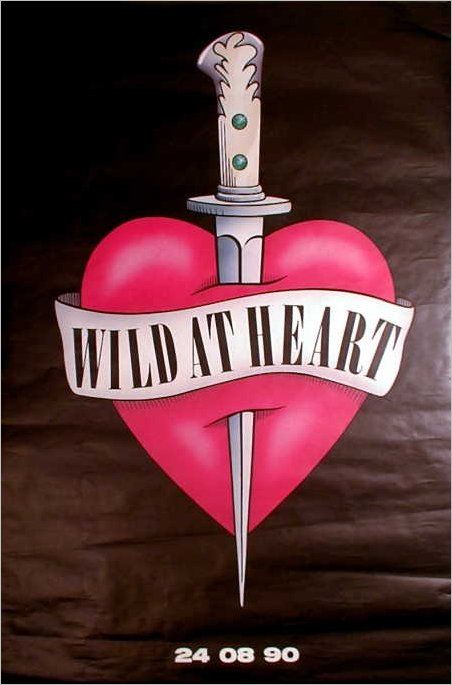
The Nicolas Cage Project Review Link #1 – Wild At Heart (1990)

From http://www.impawards.com/1990/posters/wild_at_heart_ver7.jpg

Dir. David Lynch
USA

For Videotape Swapshop, I recently did a short series of reviews on films by the now (sadly) maligned actor Nicolas Cage. I did once trash Drive Angry (2011) on this exact blog, but for me he is still one of the most interesting actors working and his contribution to the films of David Lynch is a great example of this.


From http://www.davidlynch.de/zeit1.jpg

Sunday, 31 July 2011

I Would Rather Write About Something Else Than Drive Angry (2011) But...


Dir: Patrick Lussier
USA

I was going to write about the Nicolas Cage film Drive Angry (2011), since it was recently released on DVD in the UK, as a full review but it is not worth it. I feel I should post as much as possible, but the lack of interest even in a negative way for the film makes it difficult to continue discussing it unless I post it in this way instead.

It all went wrong the moment - when the film starts and a CGI car slams through the gates of an inflamed, CGI necropolis of Hell -  the voiceover starts using the phrase ‘bad ass motherfucker’ in a serious way that is also supposed to sound ‘cool’ to the viewer’s ears. My heart sank and nothing in the film for the whole 100 minutes was able to raise it. The use of the phrase caught me onto the issue with the film immediately – it tries so hard to be exploitative, with its swearing, nudity and luridness, but it felt like a cynical attempt to amplify these aspects with no sincerity to it. There have been many other films including those made merely for money – from Takashi Miike to Neveldine/Taylor – which for any flaws they have had the virtue of sincerity to their sleaze and transgressions. It felt legitimate and fitting for their stories (or lack thereof). Sincerity in the copious gore and adult content in a film improves its qualities; it feels not only rawer, but can be used to craft said exploitation into an artistic power as well. Sincere mature films tend to also be legitimately insane and bizarre, which Drive Angry attempts to be as well and fails to, which is why one-off films like Ichi the Killer (2001) and Crank: High Voltage (2009) have their audiences while the likes of Drive Angry may not. (It’s fitting for this thought of mine that it is a Nicolas Cage film too; no matter how ridiculous his acting or hair piece is, it cannot compare to his performances in David Lynch’s Wild At Heart (1990), or even something like Con Air (1997), where there is a sincerity to his weird pronunciations or visual appearance, whether the director pushes him in that direction or, unlike Drive Angry, he is doing it unintentionally and not trying to hard too mug for the camera). Drive Angry slips into an admirable but failed group of films spearheaded by Quentin Tarantino’s Death Proof (2007) and Robert Rodriquez’s Planet Terror (2007) [I haven’t seen the original Grindhouse (2007) yet] which attempted to replicate the exploitation films of the 1970s and 80s but felt for me over priced in terms of budget and hollow. (Some may argue that the Kill Bill films may be the first films to do this, which may be true, but the amount of filmic influences on them from different time periods and styles causes this to be questionable too. I also loved the first one). Since Grindhouse, despite its failure at the American box office, there has been at least a more pronounced amount of films like Drive Angry which attempt to celebrate their influences by acting like them. The problem with Drive Angry sadly is that it is trying to be a ‘sincere’ in its exploitation synthetically, trying to play up a sleaziness than just going forward in its plot as a sleazy film. Even though they were sold on sex and violence, these aspects were not at the forefront of the many older films I’ve seen but merely an additional decoration to them to sell cinema tickets. The Jack Hill film The Big Bird Cage (1972) for example is concern with giving the viewer nudity and attractive women firing machine guns, but it is not consumed in trying to make it look edgy to the viewer and is more wrapped up in its women in prison plot in the jungle. Drive Angry on the other hand spends all its time trying to make itself look legitimate as an exploitation film, all the while compromising itself. There is also a sense that, for all its grandeurs of sinking into the gutter, it suffers from a political correctness streak that causes it to sit on the fence and become cinematically inept as a result. The best (worst?) example of this is with the main female actress Amber Heard. Not only is she completely sexless for a female character, both in a film with no issues in having other actresses do full nude scenes and in terms of being a female character with no sense of charismatic beauty to her, looking like a plastic doll in baggy clothing on screen, but the film’s attempts to make her a strong character is actually far more offensive than to have had the actress parade naked on screen like the others. Political correctness is a truly dangerous concept because, instead of tackling the real issues of gender and race in humanity’s psyche, it sidesteps them and compromises in a way that is mechanical, and artistically and intellectually bankrupt. Exploitation films and transgressive cinema can only start to succeed if it either enters the sewers of the human mind or/and is subversive; if the writers of this film really wanted to have a strong female lead, they needed to write a real human being within a genre film than have Heard swearing like a sailor and punching other women. I could go on about the other actors and aspects of the film but to honest I feel that all of my problems have been expresses in what I have already typed, encroached by my complete disinterest in the film.

This sense of compromise exists throughout the film and makes it difficult to sympathise with films like this. If this is the best of these sorts of films Hollywood can up with, then we should stick with the one-off directors or the journey men and women - the later going into (economically) commercial cinema and ending up with a cult film or two in their filmographies - to provide interesting exploitation cinema instead of forcing them into creation. Whenever there are attempts to artificially create certain aspects of film within the medium of cinema, it usually fails, and it does even more so with something as ‘vague’ as the cult or exploitation film which is effected by the environment and time it was made in, and the multiple factors surrounding its creation and its viewing. Something like Drive Angry is just a dull and sanitised attempt at these sorts of films which failed miserably in the first minute of its runtime.