Showing posts with label Country: Germany. Show all posts

Tuesday, 10 September 2013

Y Is For...You, The Living (2007)

From http://www.videostoreonline.it/portale/upload_pc/film/12630.jpg

Dir. Roy Andersson

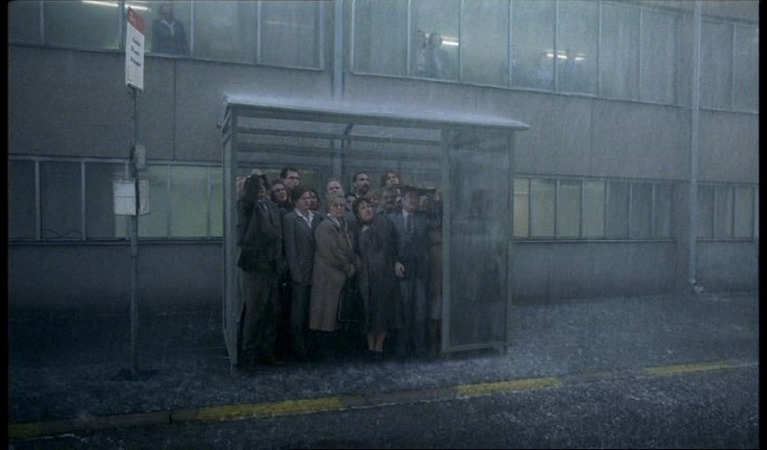
Now its time for some tragic absurdity. When the elevator's full before you get to it, the road is jammed with traffic, and your dinner party trick not only fails but will be something you completely regret afterwards. I'm still waiting for Andersson's next film A Pigeon Sat on a Branch Reflecting on Existence (2014?), the film to close off the absurdist trilogy that started in 2000, but rewatching You, The Living showed how rewarding it was itself.

Review Link - http://www.videotapeswapshop.co.uk/16078/y-is-for-you-the-living-2007-director-roy-andersson/

From http://www.dvdbeaver.com/film2/DVDReviews39
/you%20the%20living/you%20the%20living%20PDVD_015.jpg

Sunday, 8 September 2013

W Is For…Wax, Or The Discovery Of Television Among The Bees (1991)

From http://sharetv.org/images/posters/wax_or_the_discovery_of_television_among_the_bees_1992.jpg

Dir: David Blair

I will openly admit my gratefulness for the internet. The director of this film has, thankfully, released a hypertext version of this film on his own site, but the original feature film version of Wax... is difficult to find. I confess I am grateful for the internet for making it possible for me to view and review this film, hoping that one day a version is released more commercially for more people to be able to see it. Its the kind of film you want to discover and talk about on a film blog, and even if its a small review, I hope this encourages more people to go out and track it down. Maybe if enough people are interested Wax... could get a great reappraisal from attention like this.


Review Link - http://www.videotapeswapshop.co.uk/15720/w-is-for-wax-or-the-discovery-of-television-among-the-bees-%E2%80%93-1991-director-david-blair/

From http://b.vimeocdn.com/ts/123/541/12354136_640.jpg

Friday, 6 September 2013

U Is For...Underwater Love (2011)

From https://blogger.googleusercontent.com/img/b/R29vZ2xl/AVvXsEjgGOBQe-cOqUkxT1FKOnFtiAz8RrTMTqkXW8tHtELj7_3ExQ1K1xVZABPK5Km-8nTFkdBEfqbaA7lcIO7lbXqt80Y31wmN-KP1cKramnsTwdwOPYw2jc7vf-3tOBQ3SEaXqgD53u60Q5U/s1600/Undlo.jpg

Dir. Shinji Imaoka

Something a little pink, a little tasty, and fun. Erotica is worth covering and worth viewing in general, but its good to see one that was just fun and light. Admittedly its release in the UK from Third Window Pictures was a limited release of a certain amount of copies, but I'm grateful for it and the bonus soundtrack CD of Stereo Total's score in the same case. It will be interesting to see where this area of Japanese genre cinema goes when I dig deeper into it. Some of it I am hesitant about viewing. Some it will hopefully be great. Some of it will be incredibly well made and good looking. But I will gladly look into more of Shinji Imaoka's work at least.


Review Link - http://www.videotapeswapshop.co.uk/15609/u-is-for-underwater-love-%E2%80%93-2011-director-shinji-imaoka/

From http://fantasiafestival.com/transfert/2011films/Underwater%20Love%201.jpg

Saturday, 31 August 2013

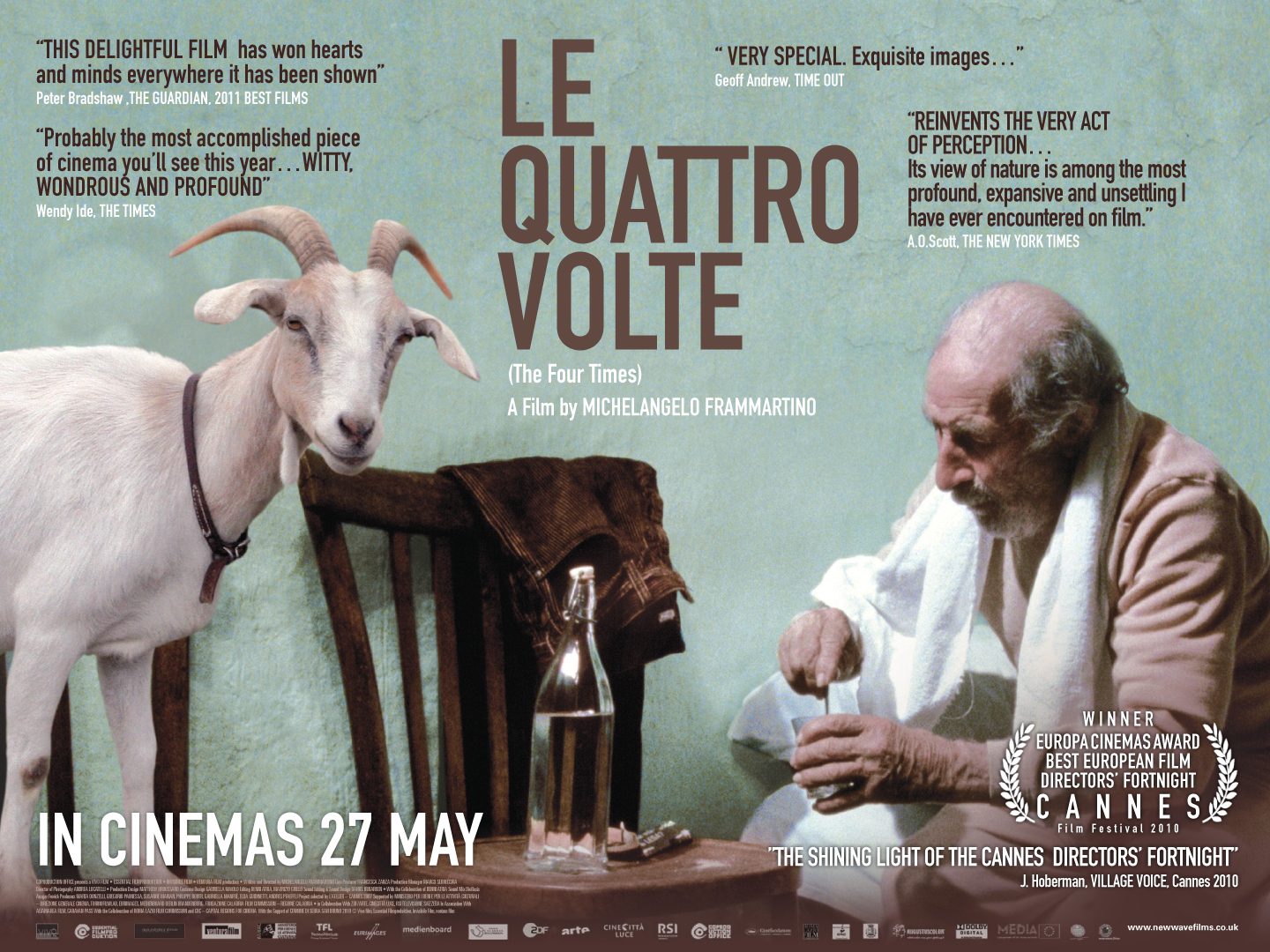
Q Is For… Quattro Volte, Le (2010)

From http://www.newwavefilms.co.uk/assets/directory/49/Le_quattro_volte_quad_vs5.jpg

Dir: Michelangelo Frammartino

I have fond memories of viewing this the first time. I was lucky enough to see this at the cinema at the Showroom in Sheffield. Unfortunately my geographical location means that I have to watch most of my non-mainstream cinema at home on DVD. The availability of this sort of non-studio cinema outside of metropolitan areas or large, middle class cultural centers is disappointing. It has probably forced a lot of film viewers living out of these areas to have to find these areas through DVD, streaming, import or even illegally, thus denting the potential cinema box office for these films. And it could seem snobbish to say this, but in most cases the best films are even not the blockbusters, or even the indie American films released by the studios but the films like Le Quattro Volte, which means that unfortunately people couldn't say that their best films for that year where seen on a big screen. 

Thankfully, despite the prices and time that have to be dealt with for me to go to the Showroom for one day, I've managed to see some great films there. In fact nearly every film has been great, the rarity of going there meaning I go when I desperately want to see something, or has been a memorable moment. I saw Harmony Korine's Trash Humpers (2009) there. This has even more importance to it since, viewing it with an older brother who doesn't watch art cinema let alone knew what he was expecting, we had a lengthy debate all the way back to his apartment that, even if he was offended by the film, was constructive and led to us bonding over the idea of someone, somewhere, humping a bin in the city at the same time. I saw Uncle Boonmie Who Can Recall His Past Lives (2010), the film this post is about, Holy Motors (2012), and at the beginning of this year, Bullhead (2011). Its also where I've had my only experience of a film festival, seeing two films at last year's Sheffield Documentary Festival, one of which was where I saw Planet of Snail (2011). Not only a great documentary from South Korea, but the experience taught me an important lesson, when shaking the director Yi Seung-jun's hand but baffling him with my thoughts on what I saw, that the viewer can over interpret a film or a creation when the creator's view on it was so much more upfront in it already. This causes one to ask whether film critics have the same problem, and the realization, alongside given me a hilarious anecdote I can look back on fondly, really helps with viewing cinema even as a hobby without having to write an amateur review about it. Even if all the other films I saw were terrible, this moment would make those rare trips to the Showroom completely worth it.

And with that, it adds a great deal of fondness to viewing this film over and over again. But Le Quattro Volte certainly holds up incredibly well even if these memories were separated from it.

Review Link - http://www.videotapeswapshop.co.uk/15966/q-is-for-quattro-volte-le-2010-director-michelangelo-frammartino/

From http://2.bp.blogspot.com/-6dkR9rBSSdw/TaOEyB943bI/
AAAAAAAAIFI/RS4dXYmN1Sg/s400/lequattrovolte2.jpg

Thursday, 18 July 2013

This Is Not The Trip I Wanted... (Dr. M (1990))

From http://images.moviepostershop.com/dr-m-movie-poster-1990-1020483925.jpg

Dir. Claude Chabrol
France-Germany-Italy

From http://deeperintomovies.net/journal/image10/drm01.jpg

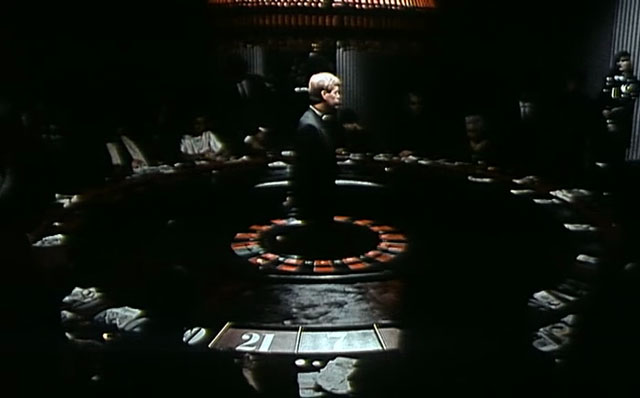
I've only started digging into the films of French New Wave director Claude Chabrol, loving his take on the thriller and murder stories within the context of human behaviour and ordinary home life, but Dr. M is the least expected film you could think of to exist in his career. A reinterpretation of Fritz Lang's legendary Dr. Mabuse films, to which I confess I have never seen, I can still, from this point of a lack of knowledge, see how ill advise this final film turned out to be. In a futuristic, but still contemporary West Berlin, a suicide epidemic is taking place that is frightening the entire population. With the only form of escape from the panic being a holiday club which is swarmed by the general public, Lt. Claus Hartman (Jan Niklas) believes that the suicides are connected together and goes out of his way to prove it, a mysterious individual with malicious intent watching on through their minions.

From http://s3.amazonaws.com/auteurs_production/images/film/dr-m/w448/dr-m.jpg?1289460338

English language debuts from established auteurs from non-English speaking countries can be mixed. Some directors can be incredibly comfortable with the switch, juggling both sides or becoming part of Hollywood, but others critically stumble and create odd tangents in their filmography. Some films need time to be reflected on - as someone who first felt disappointed with Wong Kar-Wai's My Blueberry Nights (2007) only to find much to love about it later on - but the problem with Dr. M is that it feels so compromised from presentation to story. The English dialogue is off with actors like Niklas speaking in a secondary language in a German setting with German text but actors of various nationalities in the cast - yes, Berlin in the Cold War era would have been a mix of languages and cultures, but it feels wooden at times here - but it would be possible to pass this if Dr. M had more to it. I would be willing to see a film from the late Chabrol that dropped his usual trademarks to try something very different if it created something very inspired, but this film is horrifically predictable. Niklas is the tough cop with a barely detailed tragedy in his past who no one on his police force believes when he comes up with the idea of a conspiracy with the suicides, and when we're shown how right he is, it's done in the most obvious and unoriginal of ways. Following a woman Sonja Vogler (Jennifer Beals) who is the advertised face of the holiday club, they develop a romance that leads to an late eighties/early nineties sex scene that cuts between moving bodies. The only difference is that Chabrol splices real life images of death and atrocity between the cuts, making for such an inappropriate juxtaposition even if this was the point.

http://deeperintomovies.net/journal/image10/drm06.jpg


Chabrol, despite being clearly influenced by Alfred Hitchcock, is rarely as showy as he was visually, very subtle in his use of the camera and what's onscreen. The film's setting however, between the real city and sci-fi sets, is lacklustre to say the least. Whether it's the streets or a secret nightclub where punk youths, dressed almost all in black, spasm around on a glass floor to a metal-dance song hybrid, Dr. M is characterless, not dated enough to be compelling in a visually surreal way, or distinct to suck you in. Good moments of subtle camera work is choked by how pointlessly long the film is, at two hours, and that Alan Bates is wasted despite his importance as a character. It's a film lacking in tension, humour or auteuristic touches. You know from the beginning what's behind the mystery and are forced to wait two hours for the film to catch up with you. What makes it worse is that I could have envisioned Chabrol making a great science fiction film. His obsessions with the films I've seen have been taking genre related tropes and placing them in real life environments with complex morals; this dialogue heavy drama could have been translated to a new genre here. Jean-Luc Godard was able to do it with Alphaville (1965), his intellectual and visual manipulation ideas fully mixed with an interesting sci-fi pulp story, and on the side of the French Left Bank the late Chris Marker, known mostly for his essay films, made La Jetée (1962), science fiction as interpreted entirely through still images. Dr. M could have become this, but sadly doesn't. Instead it's a dull Euro-pudding of a film instead of a gem or a fascinating failure.

From http://deeperintomovies.net/journal/image10/drm09.jpg

Monday, 3 June 2013

The Nicolas Cage Project Link #3 – The Wicker Man (2006)

From http://www.dreadcentral.com/img/reviews/wickermanpic4big.jpg

Dir. Neil LaBute
Canada-Germany-USA

I wish I could avoid following the same consensus as most people with this remake...but there’s no way around it. On the plus side, the following screenshot immediately brings up one of many phrases which will be remembered in pop culture lore and will (thankfully) be made separate from the film. Don’t tell you weren’t thinking of a particular one looking at the juxtaposition above.

Sunday, 2 June 2013

The Nicolas Cage Project Review Link #2 – 8mm (1999)

From http://www.dbcovers.com/imagenes/posters/asesinato_
en_8mm_1999//asesinato_en_8mm_1999_9.jpg

Dir. Joel Schumacher
Germany-USA

Part 2 of the Videotape Swapshop Nicolas Cage retrospective and this is either an example of never judging a book by its cover or further proof that I am insane in my defence of Joel Schumacher. Take your pick from the review below. Also worth mentioning is the jaw dropping spike over 500 views that I discovered with the first of these Cage Project links, far more than any post on this blog. Apparently a hoax saying Cage died on June 1st took place and that may have been how this spike happened. It really does show that, even now, Nicolas Cage is still such a well loved actor and is an amusing reminder of how coincidences can take place now it’s clear it was just a hoax. It’s the first time I’ve managed to stumble into something relevant and on the pulse of my fellow man, by accident, in years.

Review Link - http://www.videotapeswapshop.co.uk/15119/8mm-%E2%80%93-1999-director-joel-schumacher/

From http://cineplex.media.baselineresearch.com/images/377579/377579_large.jpg

Tuesday, 19 February 2013

The ‘Solid But Flawed Film’ of Cinema [Cutthroat Island (1995)]

From http://wallpoper.com/images/00/35/65/27/cutthroat-island_00356527.jpg


Dir. Renny Harlin
France-Germany-Italy-USA
Film #31 of The ‘Worst’ of Cinema

From http://www.fernbyfilms.com/wp-content/uploads/2011/12/cutthroat-island-1995.jpg

Fantasy and pulp storytelling, the kind that existed before cinema and comics in literature, is a vast ocean, not to create a pun, that I have only sunk my toes in into but has provided a vast amount of imagination and sincerity that is still effecting even to someone like me from this century. Cutthroat Island was clearly an attempt to evoke fiction from the past through pirate fantasy, and it immediately brings up this fact and reminds me how all of this entertainment fully connects together in a web. It starts with mythology, once worshiped as actual religious belief from the Greeks to the Vikings, and is now at the point of superhero films in dozens in the summer season. One has to wonder however if the mass audience is aversive to films that draw on classical storytelling for the adventure genre – not coloured by current fads, no hot celebrities, no cool new band doing the soundtrack or McDonald’s tie-ins – with only the Indiana Jones, and to an extent Pirates of the Caribbean, films being the exception. Considering what happened with John Carter [Of Mars] (2012) last year, which I did see at the cinema and quite liked, it is surprising that a film like that failed miserably at the box office. Cutthroat Island has major flaws, but to think that this died so badly at the box office as it did, ending the production company Carolco Pictures through bankruptcy*, and was critically mauled is baffling. We get successful historical dramas, but pulpy, rollicking adventures with the few exceptions seem to be financial poison.

From http://g-ecx.images-amazon.com/images/G/01/dvd/lionsgate/Cutthroat_1_lg._V219329200_.jpg

After her father dies, the daughter of a pirate captain Morgan (Geena Davis) takes control of his ship and goes on a journey to collect together three pieces of a map that will locate Cutthroat Island and the hoardings of Spanish gold hidden there. It is an exceptionally lavish production; barring some obvious (and horrifically dated) superimpositions of actors falling from large heights, which seems an odd mistake to have in the film in hindsight, this feature stands up in terms of technical and visual quality onscreen. One wishes this sort of production still existed even, with elaborate stunts and constructed sets like pirate galleons for the actors to fight in and around. It is the kind of craftsmanship that feels lost in a lot of mainstream cinema now, and it is regrettable that this sort of production value was easily dismissed back then. Great looking films are still made now, but there are many that look poor in comparison, bland, grey and/or digitally touched up. The only film I’ve seen that used current aesthetic tools properly was John Carter and that did a swan dive theatrically. If there is a major failing with Cutthroat Island, which was clearly a passion project for Renny Harlin and his wife Davis in how hard both of them work, it’s that the adventure in the film does not have enough friction or suspense to it to fully engage. This is a more realistic take on pirates – still a romp, but it doesn’t have a giant Kraken or an undead crew – and while the heroes are elaborate in their look or personalities, Davis as a strong female lead and Matthew Modine as the potential love interest in a relationship where she carries the sword, there is little threat to them to work from. While he has played two of the most evil men in history, Skeletor and Richard Nixon, Frank Langella is not given a lot to do as the evil pirate captain also after the treasure, and neither his crew or the British colonial soldiers after Morgan are much of an opposing force. Without the supernatural tone of the Pirates of the Caribbean series or the dramatic incidents every page from a good piece of adventure literature, Cutthroat Island cannot completely sustain one’s interest in the narrative.

From http://thisdistractedglobe.com/wp-content/uploads/2009/01/cutthroat-island-1995-frank-langella-pic-5.jpg

Nonetheless it has more virtues to it than its reputation has suggested. The sense of quality to the film is still there regardless of its imperfections. It feels sad to think that the epic yarn, rather than the historical epic that usually does well at the box office still, rarely succeeds when a new one is made or ends up being compromised to reach a wider audience. This is even more a problem as, thanks to audio books, I’m acquiring a sweet tooth for this type of storytelling but there’s few cinematic equivalents to feast on. It also feels like a perfect film to end this season on as it shows that what can qualify as the ‘worst’ can also be damned not necessarily for bad quality but because it is not in the current taste of the audience of the time, shows the follies of marketing and budget spending (I was going to cover Heaven’s Gate (1980) for this final review, but that can wait another day), and the fickleness of what succeeds and what is savaged in reviews. I am not suggesting Cutthroat Island is a great film, and I’ve yet to see a film where Renny Harlin goes beyond being a solid filmmaker and punches up into great vulgar filmmaking, but this whole season has felt more like a prodding of old pop culture to try and see what people were thinking about with cinema even in a decade (the nineties) I grew up in as a child. With Cutthroat Island it’s probably the lesser of two evils when put against some films that are far more worse, and were likely covered on this blog even outside of this season; at least Cutthroat Island has some production quality to it while I have seen some utterly unfortunate films even in my day-to-day filming habit.

*Releasing Show Girls (1995) the same year probably didn’t help either.

From http://images6.fanpop.com/image/photos/32500000/Cutthroat-Island-geena-davis-32511931-1200-802.jpg

Wednesday, 9 January 2013

The ‘Mediocre’ of Cinema [Son of the Mask (2005)]

From http://uk.movieposter.com/posters/archive/main/26/MPW-13254


Dir. Lawrence Guterman
Germany-USA
Film #9 of The ‘Worst’ of Cinema

From http://www.shotpix.com/images/39174514907499294677.jpg

If there is an example of how, even with all the set design, animation and costumes in one’s access, a film can still collapse to pieces if the story and creative decisions are incredibly poor, Son of the Mask, while far from the worst thing I’ve seen, shows this and was one of the worst reviewed films of the 2000s to prove it. Many reviews of this critically infamous sequel to the Jim Carrey vehicle The Mask (1994) slammed the CGI effects, especially for the titular baby of the film’s narrative, as being gruesome and dismissed the bodily function jokes, but at least these parts have a cartoonish edge to them that is engaging. A convoluted and trite script is something difficult to make good. After acquiring the mask of Loki, the Norse god of deceit and trickery, aspiring animator Tim Avery (Jamie Kennedy) ends up being promoted at his workplace and an expectant father after wearing the mask for himself. Unfortunately, Loki himself (Alan Cumming) wants his mask back, and his son, born from the mask, is a being able to manipulate reality and himself in inhuman ways and has no love for his father when his mother (Traylor Howard) has to leave for an extended period for work.

From http://www.hotflick.net/flicks/2005_Son_of_the_Mask/005SOM_Bob_Hoskins_001.jpg

What partly makes the film redeemable is the percentage that becomes a live action animation. It is a grotesque one because of the computer animation used, as Avery’s dog Otis ends up wearing the mask and, in his devilish Wile E. Coyote form, desires to get rid of the baby taking away his owner’s attentions, but its anarchic tone in those skits are refreshing and do their best to pay tribute to the classic cartoons, like the Looney Tunes, that are shown in the film itself and replicated. Whether I could put up with ninety minutes of this kind of CGI cartoon is unforeseeable, but the period when the film becomes this, it’s potentially off-putting nature, mixed with super deformation of reality from a Chuck Jones animation, would have been subversive against other cookie cutter family films and an admirable attempt at something fresh. The first scene in the film, where Loki unleashes his rage in a museum, gives a lot of promise to the film, with its intentionally fake computer effects, even if it wouldn’t be for everyone. The look of the film – the garish colours, oversized plastic items, the crash zooms and swirling camera, and prosthetic effects – are actually good, combining the world of American cartoons with the kitsch of children’s theme parks and toys that would have had the potential to be memorable if the content written within them was actually any good.

From http://www.awn.com/files/imagepicker/1/bielik01-SOTMdog.jpg

Unfortunately, the script is terrible bar the few golden moments of what could have been, and the poor creative ideas are cringe inducing. It says so much, of how ill advised some of the decisions made for the film truly were, when the first time, out of only two, Avery wears the mask his antics descend into a terrible musical number where Kennedy has to attempt to rap and also sing like a stereotypical country singer and Elvis in the same disastrous moment. The horror I encountered viewing Dude, Where’s My Car? (2000), of the dated pop culture of the time that still clings to us still in some areas especially in music, rears its ugly head in the poor Adult Contemporary, rap and R&B songs in the film and attempts to be ‘down’ with a youth audience by the creators that comes off as embarrassing. And in comparison to Jack & Jill (2011) and its notoriety with its product placement, there is a straight-to-the-screen shot of a Gameboy Advance and Mario Kart that even detractors of Adam Sandler would find far too gratuitous for him to have in any of his films. For children, their parents who took them to see Son of the Mask at the cinema, and someone like me who would have preferred a more slapdash version of Who Framed Roger Rabbit (1988), this attitude in the film’s tone alienates everyone. Outside the segments with the dog and baby replicating a live action Tom and Jerry short, the humour is erratic, sometimes visually inspired with maybe a flaw to it, other times soured by poor writing or never funny in the first place. For every striking piece of visual and production work, there is so much of the film that is underwritten badly. The plot itself, including Avery’s anxiety with become a father, has been seen in many movies, but still could have worked especially in such a hyperactive and cartoonish film, as with a scene where Avery images a nightmarish hospital scenario that is fittingly ghoulish and amusing, but the writing relies entirely on trite plot points and pop culture at that time that hasn’t dated well. That the conflict of the story with Loki could have been resolved, removing a large chunk of the film out of existing and an unrecognisable Bob Hoskins as Odin from existence, if he kindly asked Avery for his mask back.

From http://www.hotflick.net/flicks/2005_Son_of_the_Mask/005SOM_etc_013.jpg

It also seems a shame that the film feels as lacklustre as it is as Alan Cumming clearly realised what his performance should be like for the material. Some viewers may see him lowering himself in his performance as Loki, but going through numerous costumes and props, Cummings tries his hardest to fit the tone of a live action animation even when he is handed terrible lines of dialogue and a spiked haircut that has been thankfully left in the early 2000s. Son of the Mask is general is a film that tries its hardest like Cumming but is handicapped by a script far more unpleasant in its clichés and poor writing than the CGI characters smacking each other about.  The violent tones of the pratfalls at least have a chaos to them that is cathartic, which cannot be said for the mistakes in the script. It’s a film where the production staff, costume and sets designers do everything asked by them, and do their hardest, only for the script their work was based on to let them down.

From http://i1.fc-img.com/fc03img/Comcast_CIM_Prod_Fancast_Image/14/137/1318020203763_rovi-SonoftheMask-Still2_2x1.JPG_Overlay_640_320.jpg

Friday, 19 October 2012

The Upflow of the Earth to the Sky [Vampyr (1932)]

From https://blogger.googleusercontent.com/img/b/R29vZ2xl/AVvXsEg_GXwsNRDjjqAfl08aiBAkkQ8ilr0wT3dzZXl-icIscbENZ6WcxX8FW8RhDvIDM6V-wgoaDlWY_v8NxtlJE2-1N9ChngFhLiaVf3yJajDBsh8_0JCbawrCl5NLo6e5UEKQV9ENqptoq6r4/s400/vampyr1932poster0829398.jpg

Dir. Carl Theodor Dreyer
Germany
Film #18, of Thursday 18th October, for Halloween 31 For 31

I don’t want to kick Vampyres (1974) any more while it’s on the ground, after doing so in the first review for the whole season (here). One cannot help though, as the only other film yet to be mentioned in these reviews to deal with the myth of vampirism, to admit that comparing it to Carl Theodor Dreyer’s Vampyr is to compare a plain, dull sky, regardless of my thoughts on the other film, to a cosmic total eclipse. I was curious how such an emotionally charged, spiritual director like Denmark’s Dreyer would have tackled pure horror cinema, an inkling to it through Day of Wrath (1943), where witchcraft is portrayed in as a real tangible entity by the end of its drama but subtly within the characters’ behaviour. With Vampyr I encountered one of the least conventional and original horror films I have seen.

From https://blogger.googleusercontent.com/img/b/R29vZ2xl/AVvXsEh-GFrxvPkpgNTFV8fhJz84I_Kg95YADC_-8TY_LYnvmkMqQZRbRgU8dbWwCpGmcDt91xXpd9MiTUT3rw-2SjWFfoq8cMBfft3Hmk7tWjF6y4_AGEIT039N0qO0pv3YFShhzeKxrTYP0aI/s400/vampyr6.jpg

A traveller Allen Grey visits an old inn only to encounter evidence of the supernatural. Everything beyond this is the breaking down of a horror story into an almost purely visual abstraction, compiling together the short stories of J. Sheridan Le Fanu's In a Glass Darkly in one single work, in which Grey, a figure who mostly watches the proceedings around him, is faced with the effects of a vampire and her human minions. The work of Dreyer decided to take with this is the complete opposite of the films I have seen of his in tone – his later, minimalist evocations such as Ordet (1955) – influenced by Un Chien Andalou (1928), the projection of spiritualist and the eerie nature of horror fiction played out without the hesitating plot structures that still undermine films today. This first viewing is still one of immense surprise at the results of what I have seen, to which I intend to rewatch this film as soon as possible for my benefit, but without leading into pointless vagary Vampyr felt like a full, perfect construction rather than a failed one.

It took until near the end of the film for me to realise and ‘get’ its design, a film of intentional tangents and loose ends where we are in the middle of the ever changing events as Allen Grey is, his mind hallucinating images of death, including the most startling of horror cinema involving a casket. From a stripped down story, Dreyer instead attempted to convey it as a purely visual work, the scenes of the bodiless shadows that Grey sees move on their own free will establishing his intentions early. That the film ended up having dialogue, to concede with the push for sound cinema in the era, creates a further air of the abstract; a film that feels like a silent work in its emphasis on the visuals, and because of its dialogue being post-dubbed into multiple languages, creating an state of half-life and half-intangible reality to the whole picture. Attempting to explain the rich, dreamlike state of films like this, especially when only viewed once, is difficult but there is at least a sense I can grasp that Dreyer wanted to push the idea of art – clear as he directly took inspiration from painters such as Francisco Goya – that by using visual motifs and space on his ‘canvas’, he could encapsulate the terrors of the unknown in the viewer through this indirect evocation. Shadows are not only individual beings but also flux in shape and pass through the narrative without being involved in it, the sets are decorated with objects to illicit emotion and are filtered through three dimensional shape, and the camera follows its own course in and out of the world on its own whim. So many plot strands and images are completely unexplained, and there is too much information for me to try to understand now, but it is the same as Kenneth Anger’s Inauguration of the Pleasure Dome (1954) in that, unless one starts to dissect and decode the pieces slowly, one has to describe the immediate reactions one feels as you view it instead. Visceral imagery usually denotes gore or car explosions, but it probably closer lies to films like Vampyr.

And thinking about Vampyr it fully links to Dreyer’s films from what I have seen, not just for the potential religious ideas – and yet there are no crucifixes in the film, completely remove a basic tenement of vampiric lore – but that from this to his last film Gertrud (1964) he believed in portraying emotions in their fullest depth by what he used light and visuals and dialogue for and how, a specific style of his which could link to Ingmar Bergman as fellow Scandinavians but clearly following a quieter and subtle expansion of thoughts opposite to Bergman’s more literary and full-front expansions of the emotions. Even the upfront and stylistically bold Vampyr is quiet and subdued to what Bergman would do in films like Hour of the Wolf (1968), and other baroque horror films and experimental work in the ages, directing itself to tackling the concept of unknown fears methodically as a film like Gertrud and its view on the pains of wilting love. And the more I realise it too, despite the vast contrast, the more I see how striking and rich the later minimalist films are visually but through different ways, only in them the changing expressions of the actors’ faces being far more emphasised as being as deep as the settings around them. I wonder as The Passion of Joan of Arc (1928) finally is available in the United Kingdom by the end of the year, how the silent visual techniques of Vampyr and the emotions of the human face meld and I can finally see Maris Falconetti’s Joan and her face in its fullness outside of still images. This year has been, amongst other bookmarks in my cinematic interest, the one where I properly introduced myself to Dreyer’s work, outside of seeing Ordet years ago, and the backwards drift into his silent films will build the foundations from how Vampyr and Getrud can exist in his same crafting hands as they already have been proved to be.

When I finally ‘got’ Vampyr it also became a true horror film, my heart pounding and a sense of unnerved energy to the film taking over. Dreyer just want to make a vampire film because he could, and the idea of a future auteur praised by critics willingly, and with great interest, stepping his toes into a much spat-upon genre and working at his hardest as with his later dramas is a wonderful image. That it is made by Carl Theodor Dreyer at his most experimental means that, even if the characters are surface level only, most of the baggage that ruins genre’s purity is obliterated as he instead provides a full depth to the proceeding’s images. A talented director of light and space, the environments fill in the depth just as much, the continuation of what Robert Wiene did in The Hands of Orlac (1924) (review here) in using places around the human (or unhuman) figures and making them as much part of the characters. Like German Expressionism, I cannot fathom a Dreyer film in colour even if it could be exquisite. In beautifully startling black and white, the damage and scratches dealt to Vampyr by history and terrible fate, only surviving in German and French language prints, does not stop its visuals from being overwhelming. Said damage could also add to the film; its mist and fogged atmosphere the result of an accident with the film that inspired Dreyer to thread the choking greyed look of the film. Again, this first viewing is clearly not enough for me to fully comprehend what I saw, but I feel that it’s a film of true worth, certainly for the season of written reviews the kind of discovery one hopes for as well as the reliable favourites you rewatch. I will have to deconstruct and enjoy the film further and see if I will write a deeper review another day down the line.

From http://s3.amazonaws.com/auteurs_production/images/film/vampyr/w448/vampyr.jpg?1297748544

Monday, 15 October 2012

Hands of Fate [The Hands of Orlac (1924)]

From http://data.sueursfroides.fr/affiche-the-hands-of-orlac-1231.jpg

Dir. Robert Wiene
Austria-Germany
Film #14, of Sunday 14th October, for Halloween 31 For 31

The Cabinet of Dr. Caligari (1920) still stands up as one of the best horror films ever made, 90 or so years later after its conception, above many others, dwarfing them under its shadow. I first encountered Caligari in my Film Studies classes in college, part of a brief overview of German Expressionist cinema alongside Nosferatu (1922), and was transfixed by it. Distorted and abstract sets, less the architecture and setting of its tale but the cracked worldview of someone’s mind, and human beings portrayed as unstable forms with stiff, choreographed moments. Years since I first saw Caligari, I have not seen any other of director Robert Wiene’s films. None of the others to my knowledge are on British DVD, but with the exception of one whose only full print survives in a single copy preserved by a Munich film archive, Wiene managed to amass a grand filmography despite only making films between 1915 and the mid 1930s. This review starts a slow crawl through them.

The Hands of Orlac, reuniting Wiene with Caligari star Conrad Veidt, Cesare the gaunt and spectre-like somnambulist, is an adaptation from medical-horror novalist Maurice Renard, whose work I would gladly investigate after this film. When his hands are removed in a train accident, concert pianist Orlac (Veidt) has them replaced with surgically donated ones, only to discover they are those of an executed murderer, causing him to feel his entire body and mind slowly coil in on itself from revulsion of the evil within them. More of a psychological thriller than the stereotype of visceral horror, it nonetheless soaks itself in an uneasy and implied gruesomeness as the first part plays out like a twisted domestic drama, Orlac unable to play the piano, even give affection to his wife, as his horror of his hands’ origin paralyzes him from the outside world. Then his mental coil tightens when he feels the hands drag him further to commit crime, and the former owner returns from the grave.

Unlike The Cabinet of Dr. Caligari, the sets are more real world settings, but the use of lighting confirms it as a German Expressionist film. A great influence on Film Noir of the 1940s onward, Expressionism almost revelled in darkness to suit its dark subject matters, The Hands of Orlac almost always set at night or with scenes drowned in shadows. The other aspect of the subgenre, which remained interlocked with it, is that moments of extreme emotion are conveyed and acted through unnatural, choreographed gestures and movements more befitting an avant garde dance piece, completely unrealistic but amplifying the sense of unknown horror the characters feel or exude. German Expressionism was a product of `1920s Weimer Germany, a time of great creative artistic freedom but beset by economic poverty, political strife, and the rise of the Nazi Party in the 1930s which would destroy the artistry in favour of anti-Semitic, atrociously kitsch, nationalist art. In such a worldview, the briefly exiting German Expressionist movement, not just in cinema, attempted to mirror the reality around them with works as unreal and shadow clogged as it was, as much as its potential American grandchild Film Noir was a product of strife and uncertainty after World War II for the Americans.

Veidt, if you take into account the style of acting in silent cinema and the intentionally artificial movements of German Expressionism, is brilliant, still as gaunt as in Caligari but allowed to express and twitch like a man who looks disgusted and horrified at his predicament just from his eyes. The lack of dialogue except for that shown in title cards does not stop his fully expressive face from conveying all the emotional weight needed to show a man growing slowly insane every minute. One scene where he is trapped and almost on the edge of screaming reminded me of how Edgar Allen Poe’s The Tell-Tale Heart would play out cinematically; Poe would have probably taken a lot from these German Expressionist films and admired them. Veidt and the cast are helped further by the art direction and Wiene, the artificial sets of Caligari replaced by claustrophobic or light swallowed areas onscreen. Even if the use of the camera is usually static, flourishes in the look of the film help the sense of dread to the scenes, particularly the use of pushed-back shots of the rooms, further back than the conventional mid-or-stage-set distance scenes that are usually are in silent cinema, subtle touches adding to the vivid content.

The only real issue is that its final act feels forced against the rest of the film. The Cabinet of Dr. Caligari has an ending so repeated, even in television infamously, that the mere suggestion of it instantly destroys the final product a little or completely for viewers. In most cases, this is a just opinion, as this type of ending usually is an utter failure on the part of the film, but as one of the first (if not the first) films to do it, and within the context of its unstable world, it worked perfectly and actually adds to its power. The Hands of Orlac’s ending sadly feels a little abrupt and too clean for its own good, not well set up when it would have worked fine on paper. It does not detract from the rest of the film however, as it is still rife with a tone and mood that is palpable and stunning. Its lack of a British DVD release is sad; the kind of film Eureka’s Masters of Cinema label would be perfect for. Kino Video in the US of A however, who are specialists in silent cinema even above Criterion in terms of the size of its back catalogue, did release it on DVD and everyone should look into that release.

From http://img829.imageshack.us/img829/663/orlacshnde.jpg

[Additional Note – The version I saw had a score composed by Paul Mercer. As someone who is not a fan of the conventional piano score synonymous with silent cinema - generic and not approaching the moods of films at all unless I was to hear a great musician or view the film in the right context - his work on the version of the film I saw was wonderful, appropriately sinister when needed and with a depth suiting the visuals. If silent film scores on DVD are like this constantly, I will be happy.]