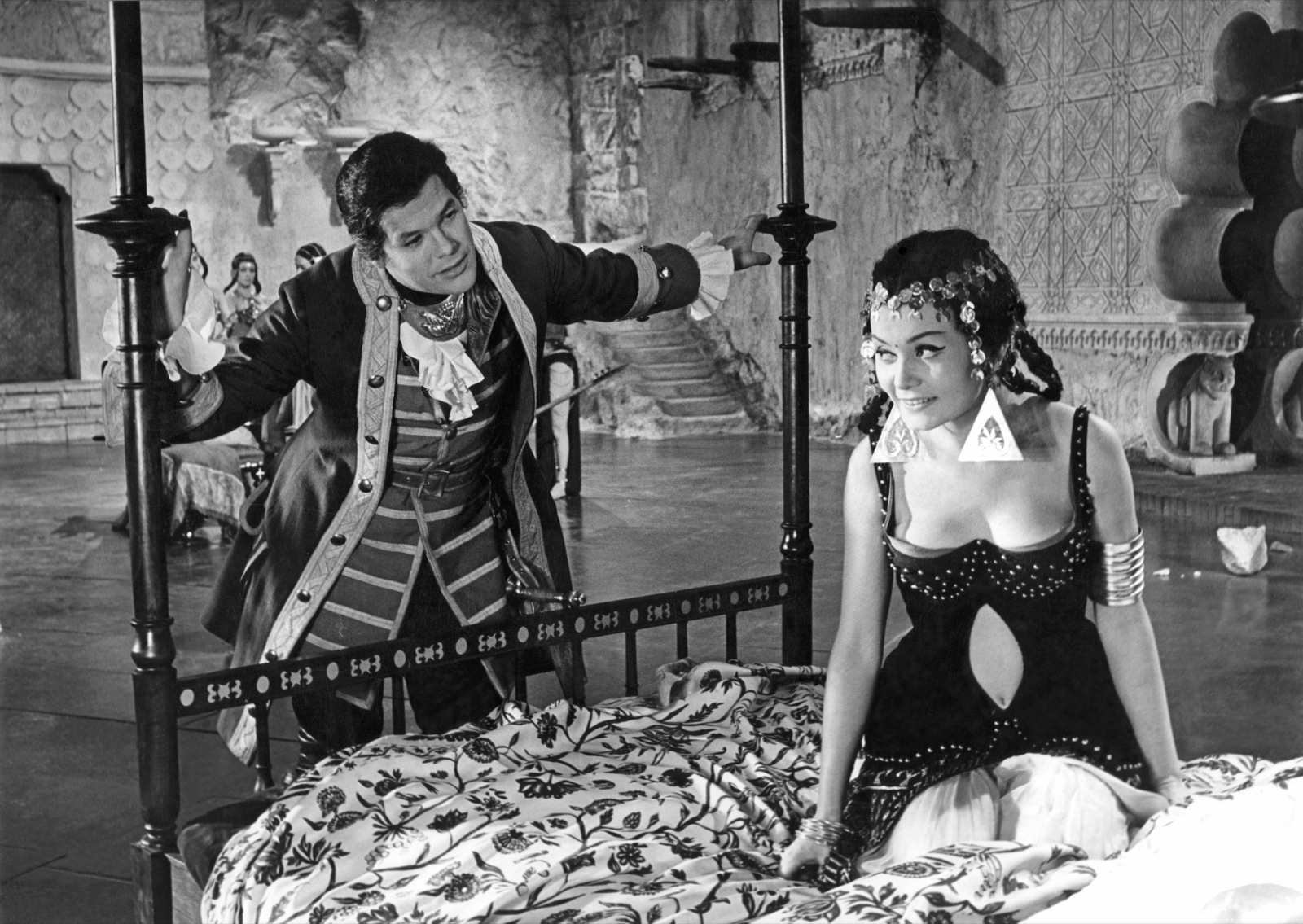
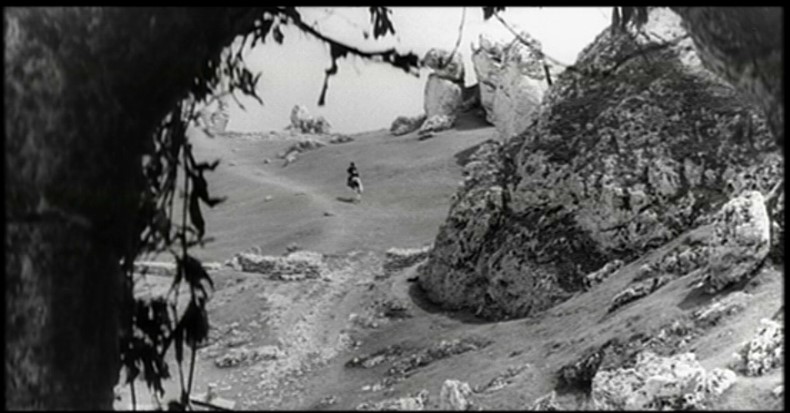
Showing posts with label 1960s. Show all posts

Tuesday, 11 March 2014

Going Through The Motions Only To Realise The Rules Are In A Completely Different Language: Branded To Kill (1967)

From https://cinecube.files.wordpress.com/2012/06/ieenappuxkzv4kracgu9nlybhpj.jpeg

Dir. Seijun Suzuki

Having talked about its granddaughter, Pistol Opera (2001), its befitting to talk about the grandfather Branded To Kill. It's been a very long time since seeing the film for the first time, back when, getting into cult and world cinema, I delved into films like this through LoveFilm but was unable to appreciate a lot of them. I'm only just now at least six years later getting to quite a few of these films again, obscurities and regarded gems, after once only viewing them under the notion that only cult and non-English films acclaimed the most by mainstream film magazines were the zenith of cinema. If you believe they are still, I'm happy for you, but it became apparent the dismissed ones, or those occasionally brought up in a feature of "masterpieces you've never heard of" were the really interesting examples of cinema. Branded To Kill was that film that got Suzuki barred from making films for Nikkatsu after working for them for many years, when the studio's then-president saw this film and hated it. It was the product of extreme boredom with the type of projects the director was stuck with, as "overrated" directors like Shohei Imamura got the prestige projects, and worse, had Suzuki's work be the b-films to his and other prestige a-films. Sick of churning out conventional gangster films over and over again, with a team of fellow minded people in the studio helping him rebel against this repetition, Suzuki in a film like this and Tokyo Drifter (1966) decided to completely undermine the tropes of the scripts he was stuck with, creating artistic, farcical endeavours and actually being able to get away with them until this film! I cannot help but think of what Martin Scorsese, in A Personal Journey with Martin Scorsese Through American Movies (1995), talked about when he described some American directors in the Hollywood studio system as "smugglers", hiding messages and subversions against the norm in their work, the b-pictures especially because of their low cost and purpose just to fill up cinema programmes gave them greater freedom, even with the production restrictions, for more bold personal ideas to come through. Suzuki with a film like this showed the fullest extent to what such a freedom could be. It was unfortunate the outcome of how Nikkatsu reacted to this film meant he only made a single feature length film throughout the whole of the seventies.

Like Pistol Opera, the world depicted is one of assassins who are set up in rankings. (Strangely, while I confess to only knowing of them, not playing them, the idea would decades later exist in the videogame series No More Heroes where colourful assassins are part of a secret organisation and have ranked positions. How far has Suzuki and this film influenced Japanese pop culture?) The film seems to start off normally. Drenched in beautiful monochrome cinematography, elegant and cool in tone, jazz in the score, as we follow the ranked No. 3 assassin for an organisation, Joe Shishido whose character in this would appear as a secondary character in Pistol Opera. He is an accomplished, in-control killer of the highest order despite only being no. 3 in the ranks, talented in a task that starts the first quarter of the film helping protect a man, more so when a former member, banished, a taxi driver and an alcoholic, is placed against him. Unfortunately a freak accident, a split second failure, compromises No. 3 and has him pursued by his own group. In fact the No. 1 assassin, who is viewed as a chimera, a non-entity with presence, may be sent in to take Shishido's assassin out. (And again, instances including a rift on that freak accident were replicated in Jim Jarmusch 's Ghost Dog: The Way of the Samurai (1999) in homage, asking how far Suzuki has influenced Western pop culture too.)

From https://s3.amazonaws.com/criterion_images/current/current_brandedfg.jpg

Having only seen a few of Suzuki's films, I can nonetheless see that his work feels closer to performance art than directly with literary and dramatic styles. It is work where the world and everything within it - the colours or monochrome, the costumes, the movements and actions of the characters - are as much of importance as the plot, and even then, in a film like this one, Suzuki wasn't really interested in plot. It's here that my lack of knowledge of Japanese culture, despite my enthusiasm to learn of it for the last six years or so, is not as strong as it should be, as moments in Branded To Kill feel like each scene is an individual set that has been influenced by countless mediums. In using plot conventions it slowly becomes more and more distinct per scene that comes along. I wish I knew more of the various forms of Japanese theatre, as especially as the two later films I've seen, Pistol Opera and Heat-Haze Theatre (1981), have stages that are sets and some scenes played out as theatre. I wonder if he was influenced by manga at all, more so when I know he has an anime feature film in his filmograpy, part of the iconic Lupin the Third franchise. I wonder of what carnivals, circuses and festivals he might have seen over his nineties years that might have inspired him in these films. And also I wonder how western and non-Japanese culture may have influenced this film, as Branded To Kill can qualify as mukokuseki, borderless and existing in its own world, with that jazz score, western suits and a potential femme fatale played by Indo-Japanese actress Mari Annu, distinct in her appearance and large, deep black eyes. Even before the film goes off the rails into a complete disruption of this tone, what starts off as a conventional film still has the mark of being outside from traditional tropes and presentation.

In contrast to Pistol Opera, and the film's reputation as being deemed incomprehensible by the studio that had it made, Branded To Kill actually has a plot that is expansive and doesn't need to be soaked in as with Pistol Opera's to get it clearly. If Suzuki had no interest in the plot, he still uses its structure here more than that later film to be able to go through the digressions and tangents he wants to have. Even before No.3 fails a mission that could cost his life, the ranked assassins are already trying to kill each other, and the entire tone is of an edgy, scintillating, sleek crime film. But as it goes along conventions start to fall over as the lurid aspects turn in on themselves. Joe Shishido, even though his infamous cheek implants gave him peculiar "chipmuck cheeks", is calm, calculated and strikes a mean pose as an assassin. His fetish that he can only get an erection after smelling cooked rice forces you to realise from the beginning that something is amiss in the film's conventions. It forces to realise all that is not presumed in the first half, as how decades later Takashi Miike would in his yakuza and crime films play with absurdity amongst the conventions. But the Shishido character is still a hard boiled archetype, still having the air of an elite master of his craft. As the film goes along thought, credit where its due to Shishido's performance, the unlikable nature of the character at times is followed by him becoming more exasperated, panicked and falling to pieces as his control of the situation is lost. By the end of the film, the archetype of the stoic assassin is completely undermined by Suzuki's film, probably both a required purging of all the films he was stuck making, and a desire to prod at the notions of a male lost in a wider labyrinth. By Pistol Opera, while given a moment of glamour with an old flame using wine glasses as target pratice, the character is a comedy figure, while the new female protagonist asserts herself against all the assassins she has to face without fear. In Suzuki's hands, the notion of tough crime pictures are distorted with sexual oddities, absurdity and farce-related moments.

The film is at its best playing off the conventional clichés. The meeting of assassin No. 1 is a conventional confrontation, played perfectly out into a psychological battle in a boxing ring at the end, but before this the absurdity is heightened when, using fear to unsettle No. 3, the two literally become conjoined at one point so they can keep the other in sight. The result of the film's origins, despite rejecting of the skeleton it made out of, is that, perversely, it's a damn fine crime movie as well as good in its later transgressions, Suzuki in the right place to be able to decimate the tedious plotting and explore ideas in the same way a performance piece would take place. As it goes along, more and more the abstract and the surreal takes place, but also the exceptional use of sets and images to emphasis this. The famous set for Mari Annu's apartment, with butterflies in mass pinned onto the walls. The blackened, shadowed boxing ring of the climax. The abrupt use of animation to depict the protagonist losing his grip of the environment around him. The continuous use of falling shower water, falling water in general, glass windows and stair cases, a layering effect used to give a greater depth to everything. Tokyo Drifter pushed boundaries in terms of aesthetics, and the two later films I've seen are testaments to how good Suzuki, and his collaborators on those individual films, were, creating distinct, visually rich works.

Revisiting this film, the emphasis on how much its style, its genre dissection, its oddness are all interconnected to effect one another is more obvious, my realisation over reviewing Pistol Opera twice for the site was that the apparently disconnected pieces, even if some were merely improvised or by themselves, had an inherent reason to be together. Every flourish and streak in colour or symbolism was done in a way that it directly effects what is taking around these inclusions. A director like Tarsem Singh (of The Fall (2006) and Immortals (2011)) is praised for his visual style, and he deserves credit for choosing individuals, especially in costume design, who create incredible pieces of art, but his style is mere surface gloss. The style doesn't directly affect the foundations of the films like they should. A film like Branded To Kill, while based on clichés acting within a disjointed universe, uses its visual, cinematographic and structure flourishes to effect the narrative that plays out. Instead of a conventional work with a shiny lick of cinematographic paint, the result here is closer, for analogy, to the a theatre set where the set itself and everything on it have a direct effect on the material too. The standard story is manipulated into its own deconstruction of itself. I hesitate to use the word "post-modernism" because the word gets used far too much in the wrong contexts. Suzuki with this, and the few films I've managed to catch, are hyper fantastic rather than ironic. Instead its willing to take this narrative seriously...but the plot is instead how a movie assassin is a perverse archetype, rice fetish and all, who with his idol looks still unravels when backed into a corner. The ending is that he doesn't win, but paradoxically he's technically won. Watch the film to see what I mean.

From http://2.bp.blogspot.com/-Ysfylx8RO94/TyjUeH_rAyI/
AAAAAAAABFo/abim-viOzm8/s1600/BTK03.jpg

Sunday, 16 February 2014

Videotape Swapshop Review: Django Kill… If You Live, Shoot! (1967)

From http://www.videotapeswapshop.co.uk/18672/django-kill-if-you-live-shoot-1967-director-giulio-questi/

Dir. Giulio Questi

Mentioned briefly in the current series of all the films I liked watching from last year, which I promise is going to get finished at some point, I've became a lot more fonder of this film than (the still positive) review that you can read here stated. The tone of the film is not comparable to a lot else in the spaghetti western sub-genre I've seen, the mixing of the politics and the bizarre not common at all. The only thing it really compares to is the director's giallo film Death Laid An Egg (1968) that, for you the reader, you can read a review of here too. The fact that Questi didn't make a lot of feature films, and that barring Django Kill..., the others are not available to see is disappointing. That he's making short films completely by his own for the last few years or less though is something to be happy about however.

From http://www.screenslate.com/wp-content/uploads/2012/06/060312-DjangoKill-Post2.jpg

Saturday, 23 November 2013

Videotape Swapshop Review: The Awful Dr. Orlof (1962)

From http://wrongsideoftheart.com/wp-content/gallery/posters-a/awful_dr_orlof_poster_07.jpg

Dir. Jesús Franco

Another Videotape Swapshop review, and more Franco. Like a reliving high, I can jump back to reviewing another of his films and always find something of interest. Only my own inconsistency with using Jesús and Jess for his first name is going to give me grief one day if I don't get a consistence first name moniker for him in my writing, especially when I'm LONG before ever getting through a quarter of his work. I was thinking about starting on another director, next year, that I felt I had barely seen work from and wanted to compensate for the embarrassment, but I had to choose a director whose filmography is over the hundreds as the first, meaning I'll be with Franco for a while at the same time. Its damn great to be watching his works which is the thing I'll be going to in my mind every time I think this, and I only wish I started becoming a fan of his while he was still alive. But as I watched this early work of his, I can say fully that he left a vast library of work that expands when you think you've pinned the late Spaniard down fully in tropes.

Review Link - http://www.videotapeswapshop.co.uk/18154/the-awful-dr-orloff-1962-director-jesus-franco/

From http://www.mondo-digital.com/awfulorlof4big.jpg

Thursday, 10 October 2013

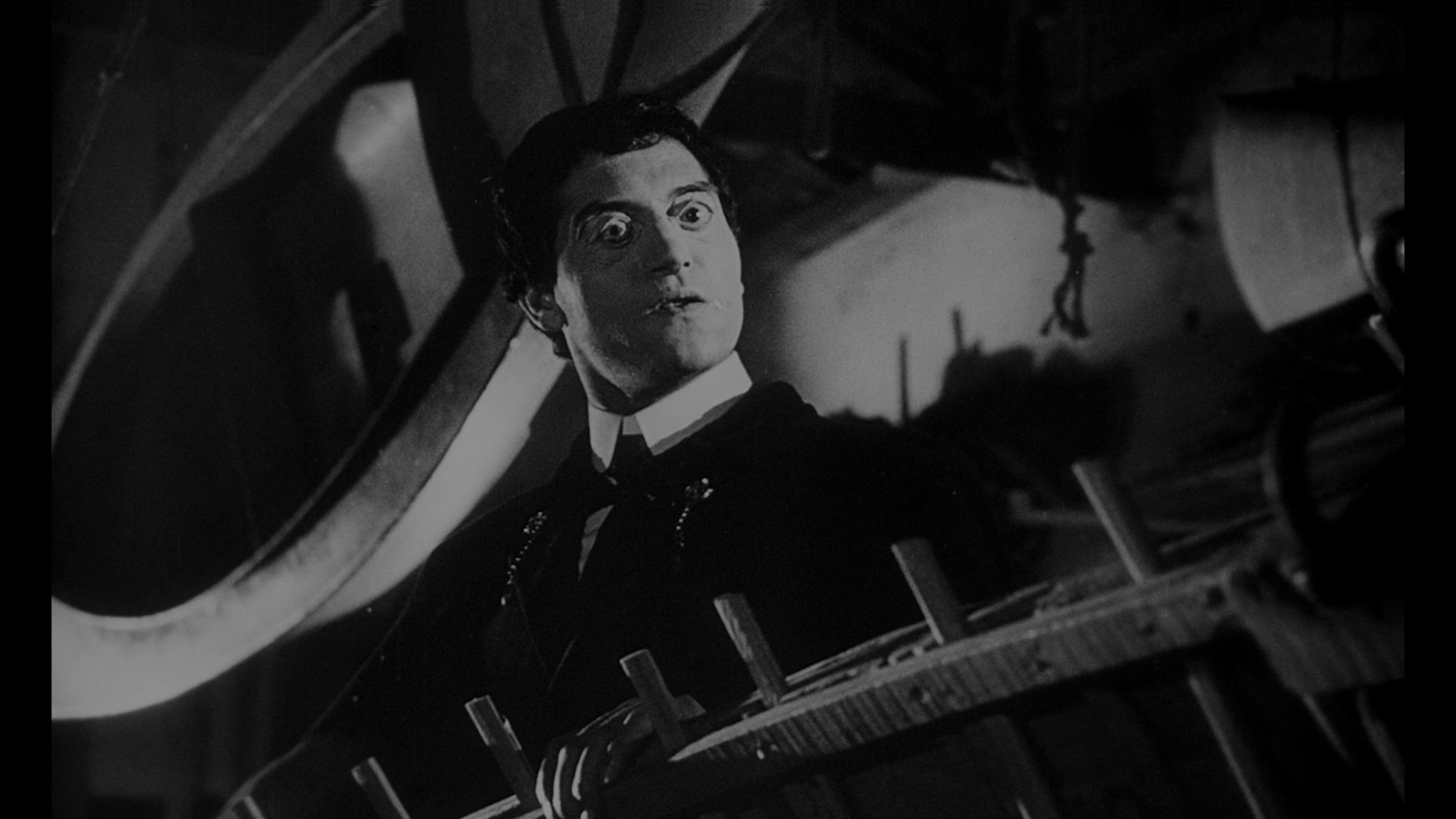
Representing Czechoslovakia: The Cremator (1968)

From http://www.nzbmovieseeker.com/images/poster/0063633.jpg

Dir. Juraj Herz

A cremator Kopfrkingl (Rudolf Hrusínský), already disconcerting in his attitude and strive for "goodness", becomes more unhinged when, as the Nazis invade Czechoslovakia, he is pushed to become a "greater" citizen, more so when a friend and Nazi party member points out the restrictions that would be put on him for marrying a Jewish woman and having children with her. The Cremator is a disturbing, disturbing film, further proof to the incredible filmmaking that grew out of Czechoslovakia/Czech Republic, creating films complete different in cinema from any other nation. Existing in its own world as well as ours, jumping forward in time continually as we see the world through Kopfrkingl's worldview entirely, The Cremator shows the worst in humanity, in a man who is only obsessed with the incineration of dead flesh and sees no difference next to the living, through an expressionist, abstract style. Like a lot of Czech cinema, there are so many types of flourish used, from fish eyed lens to cut-out animation opening credits, that it's difficult to list it all in a short, cohesive review. It straddles a fine line whether its technically a horror film or not, but the foreboding dread one feels pounded my heart, watching it for the first time, in ways far more powerful than mere jump scares.

From https://blogger.googleusercontent.com/img/b/R29vZ2xl/AVvXsEjUSl0DU6qGjVZfH2-Fw0OBHk3737vsQdoq-7hf2Y3kA144OWuM2n4YfEtVr40w8GyzSXZNzXgAo2J-mt7kk4ZEEbPtUuhyivIWiFP6qlhs2sq0YfCJ96dqQQJZCpmSkGYfdeLjfRLQ5QKb/s1600/vlcsnap-2012-09-09-18h10m00s198.jpg

Just listening to the protagonist's first words, close ups of his body, his wife's body too, alongside close ups of caged zoo animals, chills the spine. He is someone who doesn't even doubt his own words. His desire to free souls through cremation forgets the concept of life's existence itself, the innocuous nature of his behaviour even more disturbing than if he was threatening. If studying Nazism in college history taught me anything, it was the perceived notion, through the Hitler Youth movement to national sport events, that the leaders were normal people who believed they were merely providing something positive for their people that allowed the ideology to gain mass support, and offers a frightening mirror of how malleable people are if any idea hides its true nature through messages of healthy living, family values and positivity as a collective that cannot accept negative criticism. Kopfrkingl, brought to life fully by Hrusínský with his baby round face and immaculate comb over, does what he does under the belief of selflessly helping others and being a role model. He is a teetotaller, doesn't smoke, believes in being there for others, and caring for his family and friends, and is intellectual, but he does so with a morbid lack of humanity where he is the centre of the world and always right. Yet he is still secretively malleable when accused of not being enough of a model citizen, his perceived kindness foul and above others, and his wisdom distorted. He can make excuses for blood, Slavic to Germanic, being different but sees human ashes, after cremation, being the same. He is two of the worst aspects of humanity in one person - he who justifies any action, and someone who perceived themselves to be educated and enriched, but who is actually more trapped in the society by embracing it. A mysterious, raven haired woman is only seen by him continually, a possible way of salvation ignored as he presumes to have his independence by helping free souls under a new Nazi state. Stuck in his continuous thoughts and dialogue, the actions and conversations of one scene starting the next, disrupting time, it is both sickly humorous but gruesome in viewing. It is horror at its fullest by imaging how many people actually act like Kopfrkingl in small pieces in real life. Housed in such a vivid, highly creative film of visuals and moments, realism against the abstract scored subtly by Zdenek Liska, it's a terrifying parable that still has a lot to say about humanity.

From http://3.bp.blogspot.com/_AjnduKa6j48/TIcYnJyt3HI/AAAAAAAABU4/
pgboNkfPlSc/s320/The+Cremator+(1969).avi_snapshot_00.26.15_%5B2010.09.07_05.10.32%5D.jpg

It means more for the fact that this film, black comedy, Expressionist horror, is about the Holocaust and never neglects this fact. It never neglects the uncomfortable truth behind its strange tone. It also never becomes unsubtle, paradoxically so off-kilter, lavish in its style, but never hammering its message. A film like The Cremator distils familiar ideas of human corruption with great craftsmanship and impact than most films don't, and that it was a low budget, small film causes me to realise how a real "great" film stands up and are so different from anything else.

From https://blogger.googleusercontent.com/img/b/R29vZ2xl/AVvXsEh3FB4CGVOT9RAx8m6FOw2IPWBjr2WVrVAde028JtgLSUS20Zd_lOw1nHFSt1_KWiOet56d0xS6WPJmqUZKHDNkloCsS9HQVvIu_7GgoR0R4GVQCJBD9VnHm1-MFj0uc5FbqMHsDILN4_U/
s1600/screen024%2BFeb.%2B05%2B23.53.jpg

Tuesday, 8 October 2013

Representing The Soviet Union: Viy (1967)


To quote a user on YouTube, Viy is not a horror film, something I am guilty of viewing it as too all these years being enticed by its existence. It's really a mixture of comedy, the supernatural and a moral tale based on a short story by Nikolay Gogol, (who've I've been pleasantly introduced to in September of 2013 through Dead Souls), which is based on Ukrainian folktales. It just happens to have a flying coffin at one point though, more than enough to qualify it for such a series with the rest of the films covered. Viy very much plays out like a short story if it was transferred through the cinematic medium of film, adjustments to the vastly different art forms taken into account. Its brisk at seventy or so minutes, no fat on it and with a clear goal structure to each part of the plot in contrast to the more complicated areas a full length novel would reach with its length let along having more plotting and/or text. Viy's favour is that it never feels pointless nor wasting time, and baring in mind seeing a Soviet supernatural film from the Sixties is inherently catnip for a cineaste like me, it's pretty special in how not a lot of films can be compared to it. A philosophy student Khoma (Leonid Kuravlyov) finds himself caught up within a series of unexpected events. A student that is learning at a monastery, he's forced to use his religious education for once when the dying daughter of an important landowner requests him, to the surprise of everyone, to do her funeral rites for her soul's salvation. Even when she dies before he gets there, Khoma is forced by her father to pray for her soul, for three consecutive nights until the crack of dawn, locked in the church her body is laid in. Things are not that simple by the context of this being including in this season of films reviews about strange, potentially gruesome things happening, and in that, to reference Dead Souls despite being different in tone, no one can succeed in having a truly meaningful life unless you're prepared to be selfless and willing to deal with such hard tasks, something Khoma is clearly not willing to do. And finishing Dead Souls, it's also clear that while Gogol strives for inherently moralistic, nationalist values that rejects pretension and celebrates rural, ordinary life, he had a tendency for his characters to make things difficult for each other and themselves, already a problem before you would have to deal witchcraft and a flying coffin as Khoma has to.
It's amazing to thing, while Viy is so different than them in many ways, that the film managed to evoke Evil Dead II (1987), A Chinese Ghost Story (1987), and Sergei Parajanov at the same time. It's clear that Viy must have been made as a spectacle for its day in its simplistic presentation and its bombastic practical effects, but it feels completely different from being a mere shiny bauble to distract people. The effects have a real, crafted-by-hand magic to them, and even if the back projection and costumes are obvious, the noticeable flaws (unlike most computer effects) actually make the film better and more stronger, adding to their otherworldliness. The connective tissue to Parajanov is very obvious in just the fact that you're seeing something, despite being made in the Soviet Union, that is not really "Russian". The Iron Curtain housed many different nations, and as I'll slowly go through the cinema by all those countries, this'll become more obvious in terms of the drastic cultural differences. It's quite amazing that Viy is how it is in terms of depicting Christianity and folk law, considering how traditional culture and religion were frowned on by the Soviet State. Maybe in Viy's favour was that 1) Gogol is a celebrated author in Russia who influenced later masters of the country's literature, to the point tampering with his work would be seen as blasphemous, that 2) Viy is effectively entertainment, not a "political" film in the perceived idea of that type of movie, but placing neglected traditions through a palatable slice of genre filmmaking, and 3) even the central Soviet power structure would have had to let countries like Ukraine, which this film is as much a celebration of, be able to see their own individualist cultures onscreen, including those against modernist, "rational" socialism, to avoid cracks in the structure when animosity could have taken place. Parajanov, unfortunately attacked by the State and imprisoned for a long time at one point, nonetheless managed, befitting his cross-national upbringing, to make a series of films based on the individualistic cultures of nations within the Soviet Union - Armenia with The Color of Pomegranates (1968), Azerbaijan with Ashik Kerib (1988), Georgia with The Legend of Suram Fortress (1984), and the important one for this discussion, Ukraine with Shadows of Forgotten Ancestors (1964), Gogol born in Ukraine and drawing from Ukrainian culture for this story. The aesthetic seen - the clothes, the music, the colour - is drastically different from anything else as much in Viy as with a Parajanov film, and Viy adds so much to this type of cinema just because of doing this.
It's a fun film. Legitimately fun. Not a difficult one. You can take away its key idea, from the ending, but the spectacle of the fantasy is whole heartedly worth the viewing of it and its made very well. Instead of empty ideas cribbed from watered down myths, this is based original ones directly, and the sense of texture and creativity to them is more than matched by the film's virtues.

Sorry, I couldn't resist the GIF
[From http://www.20three.com/wp-content/uploads/2012/04/witch05.gif]

Tuesday, 10 September 2013

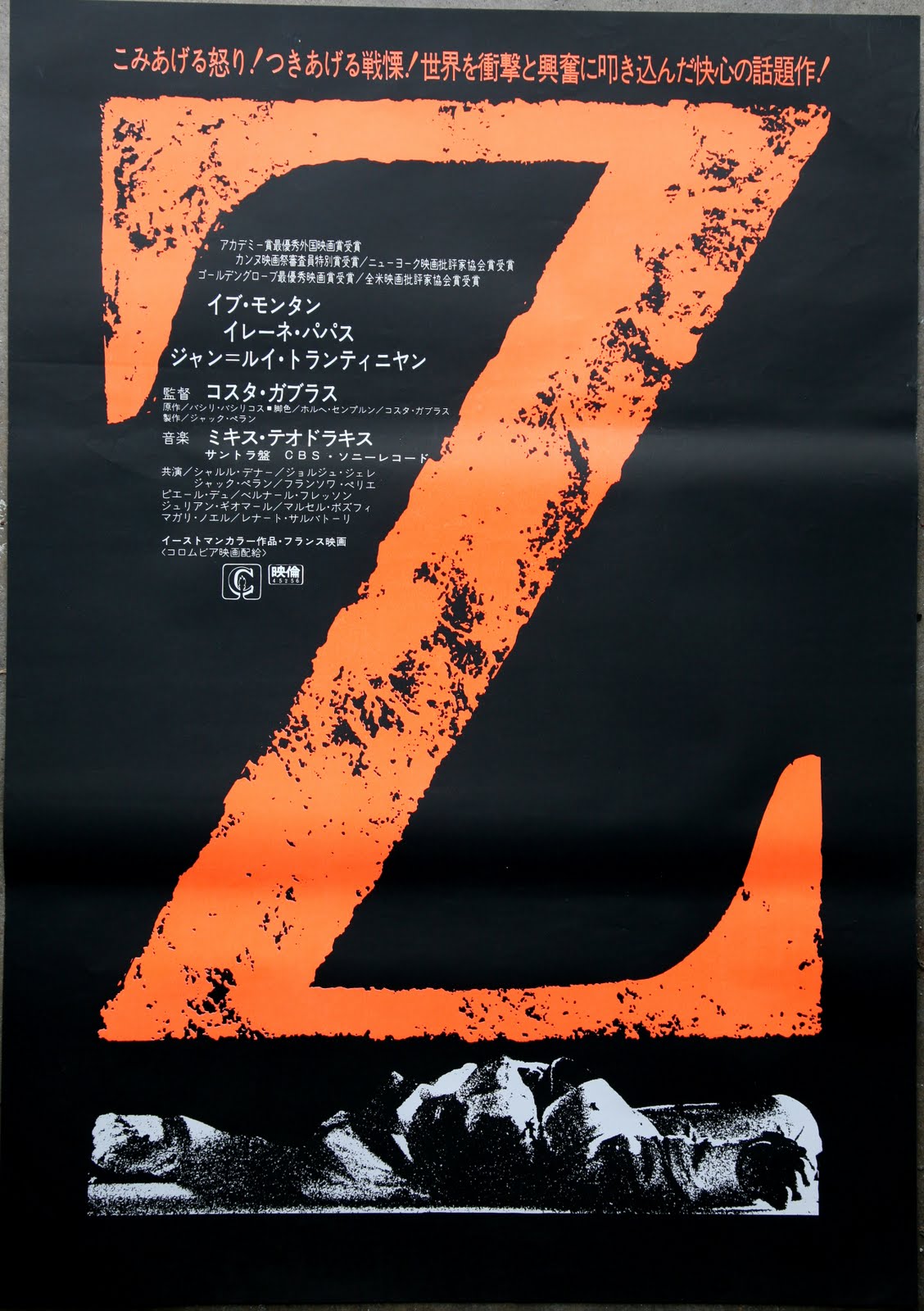
Z Is For...Z (1969)

From https://blogger.googleusercontent.com/img/b/R29vZ2xl/AVvXsEhfZHyaAqEiBaX8i9-JyFsQAp4biTlbELOSjwxb3jbE_6lkcjoizdecJrgLYKbB-IRS3SbLE9i4-iC71MSWpG_5fyXosgB1pJpTRWVRNZj9deyGEtVjX_-QNeM_gdXro_xWO7wk4cM2QaI/s1600/Z-poster-4.jpg

Dir. Costa-Gavras

The final film for this series. Hopefully you, the reader have gotten a lot from this. It has been a long, difficult project to complete; to write about these films required some thought and possibly more consideration than some that I have covered on my blog or Videotape Swapshop. The following choice befits the series, a reminder that this type of cinema also deals with the upfront, actual reality of the world it was made in and made to tackle. Its a reminder, as the film depicts the political turmoil of Greece in the early Sixties through hints, that the ability to have free speech is a tenuous one, that it can easily be lost. Art like the films I've covered could be lost. As much as I joked about this series being an antidote from Hollywood blockbusters at the introduction of the series, there are constant grim reminders that this kind of uncensored thoughts can be suffocated. It is not just war and political strife that can cause this, but also compliance and complicity, not just conservative but also liberal complicity, numbing of culture and a watering down of entertainment and art in favour of the insipid. The lack of courage, the lack of balls to be blunter, the lack of courage to be controversial, to take the easy way out. These films I have covered, even the ones made in the mainstream business of cinema, are not creations of pleasing the widest audience possible. They're not shrieking violets. They haven't been made to tick off checklists. They're not be made to please the troubling mindset of most cinema viewers now that it should be the equivalent of message porn, to make you concerned for the world only for a brief amount of time, like a perverse high from one's guilt, only to be able to push it to the side and not learn from it at all. Even something like The Holy Mountain (1974), embraced by cult audiences, is spiked with a mentality that, in the film, mocks the potential compliance of the supposed radicals, manufactured art, disco-shotguns and all. 

Films I considered rewatching for the series included Angel's Egg (1985), Begotten (1990), Un Chien Andalou (1929), Herostratus (1967), Neon Genesis Evangelion: The End of Evangelion (1997), and On the Silver Globe (1988). I recommend them all to you to see after those that were covered. I may review them all some day too. Films I wished to see for the first time for the series included Dandy Dust (1998), Mind Game (2004), Midori (1992), Pola X (1999) and X: The Man with the X-Ray Eyes (1963). I hope to still see them even if its not now.

Until then, I will be able to take a rest. Coming up in October is the next Halloween series. I will see you all then.


From http://magazine.ufmalmo.se/wp-content/uploads/2013/03/z21.jpg

Friday, 6 September 2013

Tuesday, 3 September 2013

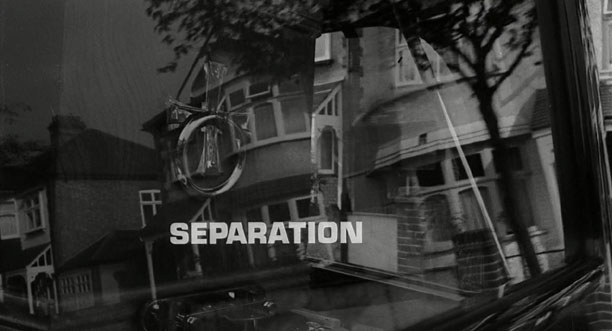
S Is For...Separation (1968)

From http://infini-tropolis.com/reviews/images/separationHEADER.jpg

Dir. Jack Bond

Probably one of the more divisive films for me in this series, but Separation managed to still have some great virtues of it. This review will probably show me becoming more admiring of the film if I was to see it again. It'll probably be like The Otherside of the Underneath (1972), the sole, single directorial credit for Seperation's main actress Jane Arden, another difficult experimental film uncovered from British cinema history I will have to ruminate on.

Review Link - http://www.videotapeswapshop.co.uk/15730/s-is-for-separation-%E2%80%93-1968-director-jack-bond/

From http://s3.amazonaws.com/auteurs_production/images/film/separation/w448/separation.jpg?1289466373

Monday, 26 August 2013

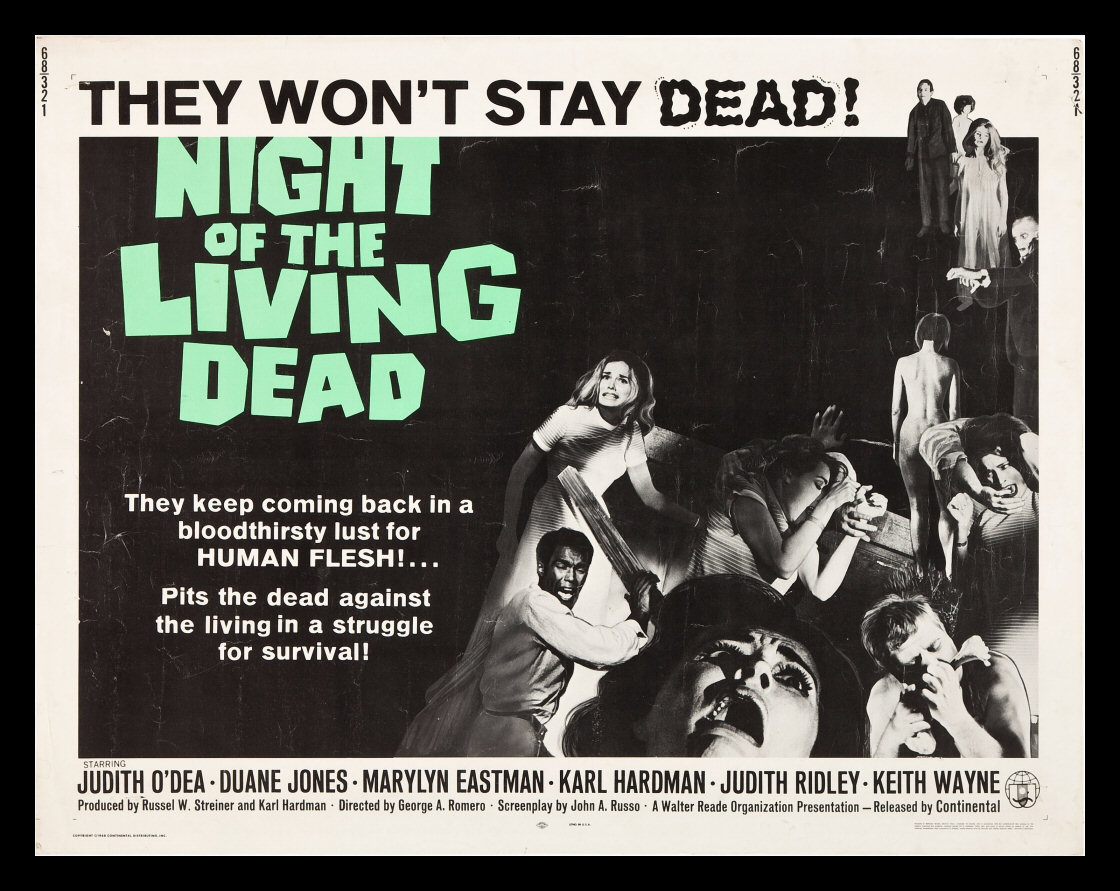
N Is For...Night of the Living Dead (1968)

From http://www.cinemasterpieces.com/92010a/night3.jpg
Dir. George A. Romero

A legendary film. And its amazing to think that its lead to zombie board games having their own stand in my local Waterstones bookstore when the origins of it is a film this sober and deathly serious. So much has happened in this form of horror cinema - Italian interpretations, porn versions, shot-on-video films in someone's backyard, and any profession being zombified - that to see its beginning is to see a film from an entirely different reality, something unique again when other films and pop culture have taken its ideas in such drastically different directions. For such a small movie, its done a lot for the history of the entirety of horror let alone cinema.

Review Link - http://www.videotapeswapshop.co.uk/16107/n-is-for-night-of-the-living-dead-1968-director-george-a-romero/

From http://johndodge.org/wp-content/uploads/2012/07/livingdead.jpg

Thursday, 22 August 2013

L Is For... Last Year At Marienbad (1961)

From http://th04.deviantart.net/fs71/PRE/i/2011/240/e/a/last_year_at_marienbad_by_mamamatrix-d486es2.png

Dir. Alain Resnais

Last Year At Marienbad has been an interesting film to rewatch. I wasn't fond of it on the first viewing, but was compelled by how fantastic it looked and how it was made as well as it was. Viewing it again for this series, I'm still trying to grasp it, but its elusive nature mixed with the gorgeous production value grows in virtue. It is certainly a film that is more about the sensation of viewing it than a clear narrative, and far from a feeble defense of it, this proves to be its greatest virtue. To make every scene startle you while still adding a deeper connection to the fact that no one onscreen may be able to leave the situation and have to continue it continually...


Review Link - http://www.videotapeswapshop.co.uk/15183/l-is-for-last-year-at-marienbad-1961-director-alain-resnais/

From http://lisathatcher.files.wordpress.com/2012/02/last_year_at_marienbad.jpg

Wednesday, 14 August 2013

F Is For... Flaming Creatures (1963)

From http://upload.wikimedia.org/wikipedia/en/thumb/d/db/Flaming_Creatures.jpg/220px-Flaming_Creatures.jpg

Dir. Jack Smith

The only issue, posting this link up, is that the films of the late Jack Smith are not in availability outside of rare screenings. I'm only lucky to see his most famous film thanks to it being legally streamed on UBU.com, but even if the original film was intentionally murky, its probably a VHS rip. From my small bit of knowledge, Smith was known for re-editing and modifying his cinematic creations, which would make collecting the official versions together on DVD difficult, but it would be great to see a full length version, in a good print, of Normal Love (1963) which is only a fragment on UBU.com as well. One wishes the right person was reading this and could click their fingers to make it magically happen.


From http://blog.calarts.edu/wp-content/uploads/2009/11/flaming-creatures-2.jpg

Sunday, 11 August 2013

Mini-Review: Half A Man [aka. Un Uomo a meta] (1966)

From http://upload.wikimedia.org/wikipedia/en/thumb/a/a9/Un_uomo_a_met%C3%A0.jpg/220px-Un_uomo_a_met%C3%A0.jpg

Dir. Vittorio De Seta

A man in a suit, with a briefcase, is laid down in the grass of a recreational park. With psychological issues coming forward, he asks why he is there, beginning a trawl through past traumas. They involve his family and a potential love that reveals the isolation, caused by him and willingly allowed by him, that he is in within his mind as well as to others. Halfway through the film, after seeing only fragments, we see how he became who is he is fully.

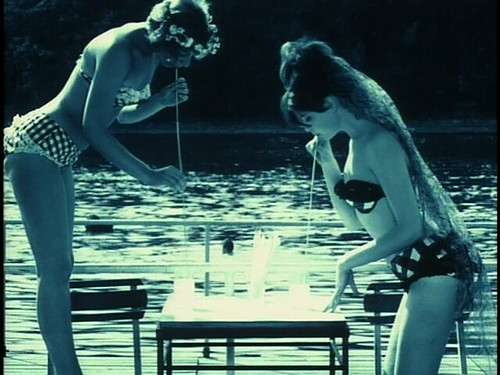
De Seta for me so far has only been a figure of short documentary pieces, so to see this was such a drastic change of pace. An abstract film which eventually opens more and more, it plays off with a languid tone as the viewer is drip fed new memories. Shot in black and white, it has a woozy poetic tone as it shifts between what is imagined and what is actually happening. The print quality of the version viewed was not great, but it's clear De Seta made a film that is intentionally alien in presentation, with slow motion and slow paced editing to create a dramatic effect. The sense of a documentary filmmaker is making the film is clear by how he makes sure the scenes do not feel artificial but environments and moments you are drawn into. Ennio Morricone, able to shift into varying types of Italian cinema, contributes one of his most avant-garde scores to fit the nature of the film, drones and atmospheric sounds that adds to the sense the film is from the main character's self-analysing mind. 

The central drama itself is immensely engaging. At times even unable to say a word, the protagonist is literally half a man, the past revealed to the viewer showing that he is damaged by his upbringing but as much the result of who he is as a person since he was born. The characterisation has been seen before in many other films - of the mother disappointed in her son, the superior older brother, the distant and antisocial younger son - but the tone of the film gives the drama more effect because the abstract tone forces you to engage with the drama more when its finally given to you. After abrupt images of birds falling out the sky in slow motion are first seen, the original context of such images later makes them even more striking when tied to a key point in the character's memories. It is a shame the film is difficult to find, as it is the kind of intense, minimalist drama comparable to Michelangelo Antonioni, that is far more rewarding in that it makes the route of the truths as rewarding as the reasons behind the characters themselves.

From http://www.ljplus.ru/img4/k/u/kuporo_s/Un-uomo-a-meta__125624_04-3.gif

Saturday, 10 August 2013

D Is For... Daisies (1966)

From http://farm6.static.flickr.com/5179/5520232436_5e0235d73f.jpg

Dir. Vera Chytilová

Is this one of the best films I've seen from Czeckslovakia/Czech Republic? I'll say yes, but I don't want to limit myself when there are countless films still for me to see that could be just as great. That's not including other films by Chytilová that I wish were released. If her films were more available, I would grab them when the opportunity would arise.

Review Link - http://www.videotapeswapshop.co.uk/15621/d-is-for-daisies-%E2%80%93-1966-director-vera-chytilova/

Sunday, 30 June 2013

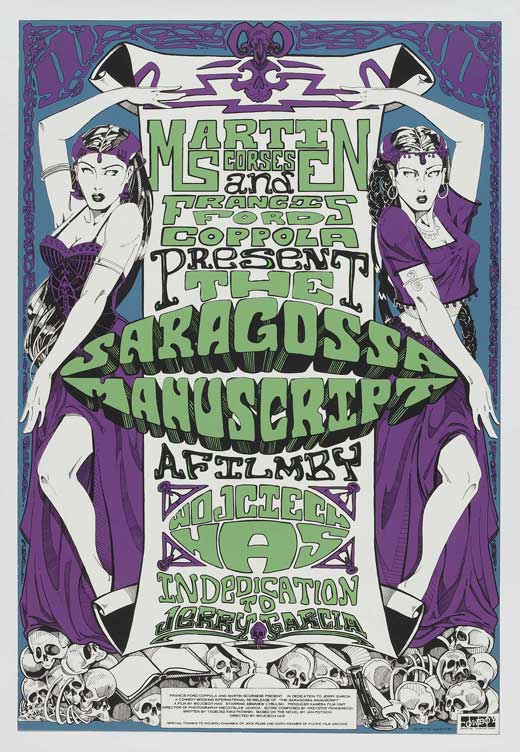
Wrapping Around Upon Itself By Its Tongue: The Saragossa Manuscript (1965)

From http://images.moviepostershop.com/the-saragossa-manuscript-movie-poster-1965-1020703017.jpg

We are like blind men lost in the streets of a big city.

Dir. Wojciech Has
Poland

From http://verdoux.files.wordpress.com/2011/05/the-sargossa-manuscript-still.jpg

Storytelling itself is inherently beautiful even if the story being told has no end. My younger self, admittedly only five or so years ago but a vast jump to now, didn’t understand this and only got a lot from films which explained everything about themselves. With exceptions that would eventually chop away at this mentality, most films that rejected or subverted narrative fully were pretentious and dull in my eyes. I found The Saragossa Manuscript to be boring, and as the dinglebat I was, got rid of the DVD version I viewed. Like the ghosts that haunt Alfonse Van Worden (Zbigniew Cybulski), an officer for the Walloon guard who travels to Spain and finds himself unable to escape from a continuing loop, all the films (so far) I once dismissed are creeping out the grave I put them in as some of the films I praised the most turn rotten and feel pedestrian and lacking. The discarded films prove to be more potent now I realised the virtues of dreaming, plotting structure by itself and throwing yourself into something without any idea what is exactly going on. Films like American Beauty (1999) are vacuous and insignificant while The Saragossa Manuscript, seen again finally after all these years, runs rings around it in content and presentation.

From http://www.dvdbeaver.com/film/DVDReviews11/Saragossa%20Manuscript/Saragossa
%20Manuscript%20dvd%20reviewPDVD_007001.jpg

The film is a celebration of storytelling, starting off with a framing beginning of the protagonist’s future ancestor, and the members of the opposing army he’s fighting about to capture him, becoming transfixed with the titular manuscript, a beautiful, giant tone (presumed to be) written by Van Worden and with evocative illustrations. It goes into the tale of Van Worden, unable to leave an inn and the area around it, stuck in a labyrinth that circles back onto its beginning point, whether it is two Tunisian princesses who want to marry him or the Inquisition after his hide who drag him back to the starting point. He becomes a minor figure in his own tale as everyone else speaks of their lives. The film becomes a story-within-a story-within-a story as it juggles these characters’ tales of cuckooed husbands, demonic possession, pranksterish attempts to marry two people and duelling injuries with figures of the film interweaving and entering others’ stories. The film even becomes a story-within-a story-within-a story-within-a story-within a story, topping the one moment joke of Detention (2011), a film I covered on this blog, by making this an extended, multi-layered tales within tales narrative that humorously admits to the absurdity of this structure at one point. Like dreams-within-dreams-within-dreams, pockets open up in the film’s existence which develops pockets of their own.

From http://deeperintomovies.net/journal/image10/saragossa6.jpg

The film is elaborate in tone, with clear nods to Surrealist art but also with a dense visual look of extensive sets and moving camera shots. From a source material that, from what I’ve looked into, is even more dense and full of more pockets in its obsession with tangents – a book I’m adding to my To-Read list at the top now – this layered and vast film manages to breeze past despite being three hours long, but the sense of joy to it all is fully felt and intoxicating. Despite its obsession with death – piles of skulls, hanged men, fencing duel deaths, rotting flesh and demons – it’s on the side of the macabre that is playful. The score by Krzysztof Penderecki, electronic noises and layered demonic yabberings over the Napoleonic Era setting, is anachronistic but adds to the unearthly nature of what’s onscreen. As the film progresses, it’s clear Van Worden will never reach his destination, permanently in this loop that, unless he is only dreaming it, will continue timelessly. Far from a bleak end, it suggests the sense of the Ouroboros, the snake that eats its own tale and keeps existing, that reality has always repeated itself, and in a place of these stories-within-stories, of gypsies, princesses, pranksters and merchants, Van Worden at least is somewhere which is vivid in its life and populous despite the insanity that he may end up in. The story could have gone for six hours, spiralling into further tangents and areas, and felt succinct with its long length making sense to the material. Van Worden is a figure in the middle of a storyteller going through their tale, the onlooker as it continues as long as the narrator can muster it. This richness vastly outmatches other films I once praised for their lack of this depth, like films like it I unfair have given premature burials of. Such a controlled stream-of-consciousness, The Saragossa Manuscript is a welcomed self discovery for me. If my reviews of films like this dangerous veer towards being identical in their praises of the work, it is only because they end up intertwining together in one form showing how movies can be both entertainment but open up one’s perception of their creation and form. If there’s a virtue to my dismissive attitude I once had, it means that now I’m rewatching these films with a new perception it feels like each one is a first time viewing with new eyes. The revenge of The Saragossa Manuscript on me for wanting to fall asleep in the middle of it once was justified but was good for me too.

From http://deeperintomovies.net/journal/image10/saragossa2.jpg