Showing posts with label 1990s. Show all posts

Saturday, 12 April 2014

Killer Barbys (1996)

From http://ecx.images-amazon.com/images/I/51G9788WMCL.jpg

Dir. Jesus Franco

Reviewing this, it may actually cause more damage to the film if I suddenly tried to use film studies glossary terms of 'style' to describe my enjoyment of it. This'll be a circumvention on myself since there is always a danger of defending one's enjoyments against imaginary detractors. Shame as it's called too, but there's no reason for it to exist. Can't I just admit I enjoyed the film? Why not for once? Admit to being turned on by the female nudity? I'm a heterosexual male so why not admit it? Admit to liking the goofy special effects and cheapness compared to other Jess Franco films? Yes, and say that it's still a Franco film despite this. There is of course this issue of celebrating something like this subconsciously to rebel against good taste, politically correct films. But taste's subjective, I've loved films both progressive and far more so than more celebrated politically correct films, and even the idea of what is politically correct is questionable when it doesn't always work in what it was intended to do. The only shame that exists for me is that the British DVD I viewed it on was English dub only. While its amusing, it's not seamless to the static noise of the original film, and is completely awful. Enjoyable so, but embarrassing for the film's sake. As for the film itself, I feel no shame enjoying it on this viewing. Honestly, while Killer Barbys is a drop down from Franco's best, is still memorable and considerably better than a lot of films like it from other directors.

(Real life) pop punk band Killer Barbys, name modified here because of Mattel, find their Mystery Van dying on them in the middle of nowhere. Their trademark are Barbie dolls tied up as van decorations, and on microphone stands, in improvised tape bondage gear, and the red haired, scantily clad lead female singer to wave a chainsaw around. She's the heroine, sometimes dressed in a Spiderman crop top. Two male members, the first with a beard and long hair, the other, the closest to another key character, with clean shaven features and has a higher pitched voice in the English dub. Both of them always go on about sex, the dialogue more ridiculous in the dubbing. The final two members, a male member and a female dancer, prefer to stay in the van and actually have sex continually rather than merely talk about it, to the point of seemingly staying the entire night there in coupling. A mysterious older man, who passes by the van, says he can get a toll truck for them by the next morning, and that they can all stay at the castle that he is servant of, that of a Countess who may be over a hundred years old or more. As established before the titular band are introduced, staying in this castle is probably a very bad idea, Lady Bathory reasons why it's so.

A very slim, simple plot - a common trait of a Franco film - the director concerning himself with mood, violence and sex. Mood, as with the best work of the director, is all encompassing. Characters, like the main heroine in this film by the end, find themselves wandering adrift in corridors and open areas, and very long camera takes are done that feel longer then they should be. This is my first from the winter period of the late director, divisive even amongst his fans, where it's said there was a considerable decline. A period, as co-funded European horror cinema was dissipating, where Franco was being helped financially by his own fan base. The lower production quality and, if translated accurately from the original audio track, dialogue do show this is a bit of a drop from Vampyros Lesbos (1971) or Succubus (1968). But despite these problems, it's a film like this that shows me how good Franco was. The band are picked off one-by-one, leading to the lead singer having to get out of the castle as the Countess makes her appearance. Along with the servant, there's another man living in the back, who prepares (clearly rubber mould) corpses for the Countess to drink the blood of and who has two dwarfs, both genders, as "children" who help and get the spoils, human ears to those dolls hanging up in the Mystery Van. The plot has very few twists and turns within it in terms of the events I've described going any further from this. What's more important is the content surrounding this thin plot. Sexual pleasure and blood are the main plot momentums, as is the case with other Franco films.

From http://www.imcdb.org/i292847.jpg

Some of his key trademarks are not at their best. The usually exceptional music score is replaced here by a funny but horrifically dinky keyboard sound - you'd think synthesisers from the seventies and eighties Euro horror films, ignored for nineties sounds, could've been relocated, dusted off and used but apparently not. Location use and creating environments from what he had for his films however is still strong here. Despite the small plot, what's really of enjoyment is a lurid journey from one moment of sex or horror to another, and the distinctness of the castle location helps make the film stand out. Using it as part of his usual dream logic, where characters are adrift in rooms and almost sleepwalking along predestined routes, it exists here too. Mist covered hill, near the river, are still powerful to see even in a weaker film like this. Creepy stuffed animals, with boggle eyes or made to be like people are lingered over as is the decorations of the castle's rooms. The abattoir at the back, despite the rubber bodies, is a sparse and messy space that's riddled with blood everywhere. When it gets to the point of the heroine finding out what's going on, the film fully becomes what I love about Franco as a she wanders the hidden rooms of the castle, a literal chess room with giant chess pieces and matching black and white tiles, to a room of various body parts and curiosities in jars. This doesn't last long, but from it the tone of the film is shown, even with the plot's junky schlock, to be a dreamy one of previous Franco films even if the style is not completely the same as the before ones.

Regardless of the film's failings, it's still in my thoughts as a memorable viewing experience. Once I get past the cheesiness, although I liked the (overused) songs by the band, I still felt an atmosphere that is shared with the best of Jess Franco's work and is rarely done in other horror films. The special effects for the blood and gore were absurd but befitting, the film never taking on a serious tone that would've been deflated by the obvious failings. The sexuality was honestly appealing too; admittedly I didn't find a female character running from a man with a scythe while completely naked titillating, instead seeing it as lurid on purpose, but the rest of the sexual nature of the film, while also schlocky, was enticing. And it's worth baring in mind that, for all the criticisms Franco has had levelled at him for this, the fact that the actress playing the Countess, when she appears to the band, is not just a beautiful woman but a beautiful older woman suggests that, perversely, Franco may have had a more progressive view of sexuality and gender than many other apparently 'progressive' directors. The luridness and the few failings are probably why I had to start this review as I did, although I give up keeping any un-biased mask on and admit to having completely enjoyed Killer Barbys. It could be argued to have a cop-out ending - that its revealed to have been merely fiction with an improvised music video for the band taking place - but personally it was an emphasis that this was Franco trying to make a fun film. And it was fun to view. He still had the talent despite the big drawbacks in production of this compared his sixties and seventies work. I could care less any more about trying to write intelligent, good taste reviews and I thank Killer Barbys, and my enjoyment of it, for reminding me that individual taste has completely influenced everything I've written on this blog. That I've covered many Franco films from before this pretty much says that I've really found enjoyment in his work even here.

From http://img.photobucket.com/albums/v517/richardsplash/blog6/killerbarbys_04_zpsa9a9067a.jpg

Sunday, 16 March 2014

Directly Through The Ribcage: Organ (1996)

From http://rkummer.files.wordpress.com/2013/11/organ_flier02.jpg

Dir. Kei Fujiwara

In the industrial outskirts, isolated from a social environment, a police detective - tall, swaggering and confident, even if it means breaking rules - with his partner awaits to burst an illegal organ harvesting operation. The environment is dark, run down and moody in the night-time darkness. Inside, a factory environment covered in plastic sheeting and dulled metal, the film shows a coarseness that feels rancid even before Organ's more gristly events. The bust goes badly wrong. His partner, seemed to be dead, goes missing. Without his limbs and with an infection growing on him, he is locked up in a secret room of a biology teacher's office. The teacher is the surgeon who was performing the illegal operations.  Slowly disintegrating, a repulsive pus-infected growth developing around the liver area of his stomach, he has the compulsion to kill the female students in his school, while a female member of the staff, a sultry woman who yet views him in contempt as a "hentai" (pervert), recognises that something is amiss with him. The surgeon, while hiding this cover, is struggling with his sister (the director Kei Fujiwara herself, medical eye path, long messy hair, bold facial features, the actor-director radiating a toughness that is far removed from a shrinking violet) to keep control of the organ harvesting operation from the yakuza who've hired them. The yakuza seem to feel that their lucrative business is being threatened, as the twin of the missing police partner, a youthful man, is searching for him, blatantly sitting outside their headquarters. The police detective, disgraced and on leave, drunk and intoxicated by guilt of what took place, abandoning his family to the wolves, stumbles around the wastelands of industrial Japan also searching for his partner.

The film is messy. Bloody and gruesome. Rust. Puke. Dilapidated buildings and public lavatories. Pustulating, rotting flesh. Cancerous even. Knife stabbing. Blunt force trauma. Beatings. Injection by syringe. Nothing in Organ as it escalates is clean, even the plotting. As each group or person try to gain control, the result is more brutality and icky body horror. In the police raid that sets the story plotlines up this tone is set up, the climax a ramshackle, desperate battle with participants writhing on the floor, and bottles and syringes being used, people kicking about on said floor and battering each other in an "operation room" with limited space and lighting. This tone continues throughout the film - chaotic and desperate. The lowest ebb in people's lives, the worse cases of isolation, neglect and madness. Even a struggle involving a samurai sword in an underpass is a scramble rather than a masterful Zatochi moment, beginning with a farce involving an old man, and descending in a brawl where a gun doesn't necessarily win a fight and a car is more effective. The messiness also comes from the oppressive tone. My original interest in Organ, many years ago, was because the director/co-star was the lead actress in Tetsuo: The Iron Man (1989), which, after some background reading, she worked alongside its director Shinya Tsukamoto doing the cinematography as well as acting with him on-camera. She only has two directorial features in her filmography, including this one and ID (2005), but it's still inspiring to see not only another female director who has a clear voice here, which is still something lacking even now in the apparently politically correct era, but doesn't make a safe stereotype of what a film made by female director should be. In fact, with its  electronic/industrial soundtrack, Organ stands out as one of those examples, alongside others such as Baise-moi (2001) and Trouble Every Day (2001), as films by female directors who push boundaries more so than many male directors attempting to make provocative films. Targeting themes that interested the creators and with no ground deemed too violent or sadistic to prod. Organ is just as oppressive as many a one by a male director, maybe more so than many. One where moments that this is a woman's view on this material stands out, how her character is just as strong as the males, and any sexuality is not titillation but something extremely provocative. Where the casualness of how someone, just after a traumatic event happens to them at their lowest, urinates on newspaper on the floor causes your gut to twist in itself in horror. The similarities with Tetsuo are there - the claustrophobic, muddily lighted sets, the decay physically onscreen in industrial and urban environments, and that aforementioned score, but there are clear distinctions as well. Tetsuo was a sonic assault, while this is a slow lingering death, which ends with a lack of moral lessons being learnt and pointless murder. Blood spilt, people abandoned, guilt felt by some, and evil not being punished. While Tsukamoto tries to address the nature of human people crushed by society, this is not even an attempt to address it but to depict this at its worse.

I confess, those years ago when I first saw Organ, I utterly despised it. Returning to it, while positively, I understand why. It is completely repellent in tone for most of its narrative, continually violent, nihilistic and lingering on disease and injury in a way more sickening than even some notorious Japanese gore films like the Sushi Typhoon works or even Takashi Miike's more extreme movies. The narrative and tone can also be choppy, erratic and floating between dreams and half-remembered quasi-psychic links to other events at the same time. The plotting is admittedly sparse and messy, which effected that first viewing, but the emphasis is on the images and they stand out. The message is likely, if one is to be found, about the prolonged effects of violence physically and mentally on people. The missing police partner becomes this, a symbol of regret as he takes at the same time the role of another character's nagging conscious. So are the surgeon and his sister who, told in flashback, were maimed as children by their mother, while the effects of the police bust in general leaves all devastated. The violence is gristly yet strangely compelling. Gristly - such as the bloodless yet painful scene of someone being pinned to a wall by a small truck. Strangely compelling - sexual gratification through disease and pain, and an incestuous dream of a butterfly woman birthing worms as she leaves her cocoon. The David Cronenberg sense of the physical disorders being as much representative of the characters' states of mind is obvious, though the nihilism is something idiosyncratic to it, more bleak and nasty than even Cronenberg's work. At times, it evokes Noisy Requiem (1988) - reviewed here - if it was a gore genre movie shot in colour.

The structure and the pace of the film is still suspect returning to it. It could be a case that I'm merely battling between the perceived ideal of a clear filmic structure and my growing adoration for the completely disruption of these rules by accident or purpose. I wouldn't be surprised if many find it off-putting in tone and content, as it ends with a bleak view of humanity. Its film's abrasive, low-res tone, set against content with the small, closed-in-on characters in a constant state of damage, is not palatable for people who cannot stand intentionally nasty material. In utmost respect for Kei Fujiwara this is a bold way for anyone to make their directorial debut. I want to see the other film ID and regret that's the only film that also exists, my view on Organ drastically different as I've come to embrace these chaotic and unsettling works now as an adult. I was willing to embrace Ichi The Killer (2001) as a young guy, still powerful and unsettling now, but with a style to its darkness, while this intentionally sordid creation was too far for me then and tested my patience. Now it's something legitimately good in extreme Japanese cinema. It's not surprising in hindsight Fujiwara made this film, she who starred in a film like Tetsuo: The Iron Man, and what happens to her character in it, and does to another character in a dream sequence within it too. She wasn't going into making Organ to present a stereotype of a female director but instead created something that leaves a nasty, and well placed, mark deep into the skin and eyes of the viewer. 

From https://blogger.googleusercontent.com/img/b/R29vZ2xl/AVvXsEiCl8z1Igi_qgbd_iAJYFiZ31qTuDvf8pe0viVXkgMkMRmJYoF1VTFe2bGQGZcsMsgl7mFJ51XQaxmMt0olWYS5K4w-6-qAq0qV8RQyvU5nm4vy1FYY4r53EXacwqhc7LnbwsXLXoRfP_E/s1600/Organ+6.PNG

Sunday, 26 January 2014

You're Under Arrest Specials (1999)

http://ecx.images-amazon.com/images/I/51AK9PM9B2L._SY300_.jpg

Dir. Junji Nishimusa

Probably one of the least thought about difficulties with being an anime fan is that franchises, even small ones, can be split up into multiple works - sequels, prequels, spin-offs, comedy specials etc. - from the successful (or well loved) original. We don't get most the merchandising or tie-in material to the original anime. In some cases we don't get the original source material said anime is based on. Franchises which have multiple continuations, if they're released separately, or only a piece is released, can lead to some problems with context missing. Or you can find a piece second hand in the store and are left to work with it only, like is the issue here for me writing this review. One result of this is that, if you continue with the franchise or not, you'll end up with an inherently different perspective on it from others because the fragments are connected together uniquely to you and/or the context was different in registering it. Or you could just evaluate the one piece by itself and see if it is followed to in the other parts if you look for them. One of the most peculiar examples of this is Sailor Victory (1995), which is the last two episodes of four, the first two a high school comedy drama, the last two a Sailor Moon/robot series parody with the same characters in new positions and contexts. Only those final two episodes were actually released in the West. To assess part of this franchise here, You're Under Arrest, I can only gamble and judge this material by itself as it's the first time I've been in this world.

Five episodes. Normal twenty four or so length each. Four segments per episode. From the same manga author of the famous Oh My Goddess! franchise, you follow two female traffic cops, Natsumi Tsujimoto and Miyuki Kobayakawa. Natsumi is as hot blooded as her red hair, with superhuman strength and compulsive in her behaviour. Miyuki, blue hair, a car obsessive and tech head with a disturbing ability to create security systems that use very violent methods to ward off potential thieves and trespassers. Two other female officers join them to create the main four person group of protagonists. Yoriko Nikaido, nerdy with glasses and black hair. Aoi Futaba, blonde, who is actually a man dressed as a woman all the time, not only accepted as a woman by her fellow officers, but is portrayed, with a female voice actor, as a very sexually attractive individual drawn to be beautiful. Thankfully a joke punch line that undercuts her femininity is dashed, and for the most part she's as sexualised as the other women when the episodes occasional do this. (In fact, in a work with very little sexualisation, she's the one that gets the most glamour shots, which is the one sole virtue of interest with the work for how this implies something very radical). Aside from these four, there are two males in the key cast, higher up in rank in the department including their section chief. All the sections of each episode are played for comedy. The scenarios are hijinks associated with the perils of the job as traffic officers, although its exaggerated and only occasionally has them deal with actual traffic related crimes like speeding.

It's pretty light hearted. At least in tone. Despite some mild titillation, the female characters, especially the main two, are allowed to play off each other as comic foils and being legitimate bad asses in their job. They are too good at their jobs, but it's always to the horror of their boss. Sadly the mini-specials are very lazy and bland. The first half really undermines this strong female prescience by having NEARLY EVERY IF NOT ALL the segments being about perverts, dirty photographers and numerous thieves of female underwear. One episode, if not more, every segment of it, is all about perverts and panty thieves. Its incredibly jarring in its laziness and willingness to do this for every part, not necessarily because of how questionable the attitude could be seen to be, but what it says about Japanese men if this is what is made for a (clearly) male audience. God, one hopes that there's not a level of truth to the amount of panty thieves seen in this, including one who steals them, rather than gets them from willing women, to make a blanket out of that, once he lays in, he claims will make him possess them! When it gets past this oversaturation, it's a breath of fresh air. Even then though, it's not a boost in the quality of the jokes or tiny stories anyway. There is nothing particularly in the writing that stands out barring the unique aspects of the four police women when they are allowed to breath, but no where do their personalities get written fuller to add up to a fully interesting comedy work.

The whole package feels average. It's very, very cheap looking, very obviously in the transition to using animation drawn on computers from 1999 onwards. I have a crush on dated computer effects, for their breaking of reality to the fantastical in their fake appearance, but not here or most of this transitional anime, when stilted animated buildings and cars in long shot jerk onscreen against the hand drawn animation. The pop songs for the opening and ending are annoyingly bad. Its milquetoast to an extreme. And despite some moments of good humour, this piece of the You're Under Arrest franchise, by itself for me, is a pointless quickie, which contributes nothing of interest aside from two things, a positive and a negative. A positive that, even if the franchise failed to do so if I get to it, the idea of two bad ass female cops, one super strong, the other a tech head, even as traffic officers, would make a cool pulp story. The negative is God's annoyance in me using His name in vain about how many times the segment stories were about men stealing women's underwear. A bored writer or two lead to me using religious names in irritated and baffled exclamations I may have to apologise for if the Christian afterlife actually exists. Thanks anime. 

http://www.dvdtimes.co.uk/protectedimage.php?image=DaveFoster/yuaminis06.jpg

Saturday, 25 January 2014

Knickers Up In A Twist: Colorful (1999)

From http://anime4ok.narod.ru/P/colorful-01.jpg

Dir. Ryutaro Nakamura

Over sixteen episodes lasting six minutes each, Colorful explores a situation that can be pretty awkward for heterosexual men, or awkward for the women depending on what happens. It can happen in any situation, but this anime concentrates on men obsessed with women. Sat across the other side, walking past, on the bus or cramp train. Sexual objectification is a potential issue, but it's as much an issue of code of conduct, and also how one reacts in such a situation too. The male notices the woman. The human eye has to see a person in their entire figure to make a picture of them, but it does so in fragments too to get a full image. Sexual attraction to the other person, male or female, could be involved. It also depends on one's reaction to areas of the human body that are considered sexual. And what one can image in your head when an image suggests it to that individual onlooker. The woman's legs are bare under a skirt or shorts. They may be voluptuous and/or wearing very revealing clothing. Is it okay to notice? Ignore it? Is it ok to look? Is what my sister once said, that a brief glance at a person's figure is okay, gawking at them too far, or is it more complicated than this? Colorful is about the even more potentially awkward situations. The main trope, although amongst others, is the accidental glimpse of a woman's underwear - sat or getting out of a car, at the top of jeans crouched, a gust of wind. There are other situations too - the sight of a person's bra, of their cleavage leaning over, accidentally brushing against them, a strained skirt button. Also in this series the men are flat out gonzo for these sorts of situations, or perverts, looking out for these moments like hawks. How, when the situation happens, they discombobulate with all the facial distortions of a Looney Tunes character, the absurdity of it revealed.

Anime is pretty notorious for its sexual pandering, especially now as it's taken to an extreme level, discomfortingly so at times as an anime fan as this sort of thing is now getting the front pages of Netflix and is becoming what anime is perceived to be. The near-nudie shot - ironically actual nudity not that prevalent despite the era of ultra-adult anime of Ninja Scroll (1993) - has been around for decades. The gag where a male character falls on a girl and has his hand on her breasts by accident, only to get his head kicked in has been bread-and-butter in sex comedy humour for as long. The schoolgirl with breasts bigger than the pumpkins you can get in supermarkets in October is getting nearly as old. The accidental exposure of a girl's knickers by various means too. The border between harmless sexuality and just crass sexism is up to debate in most cases, some shifting to the latter pretty quickly, and that's not including those that cause you to frown at how lifeless and just un-sexy they. How they make sexuality and erotic desire, in their lameness with these jokes, a commercial regurgitation when animation should allow for some of the wildest and imaginative sexual fantasies, and the most beautiful romances, to be depicted. Yet the clichés are still being used because, to use that old phrase, if it ain't broke, why fix it? I'm faced in the medium, as a fan, with how much this is a sellable commodity, for good and the truly abominable, the beautiful, sexy and fun with that which makes me find my male gender unsalvageable in their misogyny. Colorful at first is wonderfully hysterical in kicking this aspect in the teeth. A male sees a woman, or goes out of their way to see one in a compromised position without them noticing, and react in a way, whether they see anything or are thwarted, that is utterly comical in how rubber faced they are drawn in reacting. That and how they can be thwarted or compromised themselves in the various sketches, when the woman realises what's going on, if they're flying low, or claimed by a haunted lamppost.

http://mkmiku.files.wordpress.com/2010/06/clrfl4.jpg

Originally made for segments for a television program, the work is also presented as a series of abstract vignettes with reoccurring characters. Two male friends obsessed with women, particularly their English language teacher who does amazing things with her tongue when showing how to pronounce the letters "L" and "R". A female athletics student and her male coach, who views her with pride in her abilities and holding back his lust. An American tourist who desires to be a film artist and to see "the upside down Mount Fuji", which doesn't leave much to the imagination when I finally realised the metaphor after the viewing of the series. The tone of Colorful is abrasive structurally. Segments over each episode's six minutes involve repetitious and distorted imagery between them. Multiple animation styles and aesthetic presentations co-exist together, and the music is drum-and-bass and electronic. The series doesn't match at all to the director's more famous work Serial Experiments Lain (1998), but the willingness at improvising and mixing different artistic styles, while staying in a consistent tone, is there between them. The results in the first few episodes are rambunctious, bawdy and manic.

The major issue with the series is that even over sixteen episodes, that are only six minutes long each, less than two hours, it wears out its key joke and premise quickly, never going anywhere else with it. It stops being about the absurdity of heterosexual male sexuality but just an excuse to see hand drawn women's underwear with them not being a willing participant in the erotic side. Most are just one dimensional background for jokes, and the reoccurring female characters don't get to be in on the joke. There's also a lost potential in flipping this idea on its head and imaging a heterosexual woman taking the position as the voyeur that's never considered. The jokes, like those in the West about this sort of thing, also eventually get to punch lines that may be offensive to some or at least eye rolling depending on how you view what a situation like this would be like in reality. A male inadvertently eyes up a fat or old woman, and is viewed as a joke, whether its sexist not even needing to be touched upon because the joke is lame already. One joke even goes as far as a different type of person wearing women's panties, a lame joke before you even consider if its offensive or not. By some time, the abstract tone of the series sadly becomes repetitious as well - it plays with the same notes, never expanding them into more bizarre and imagining flourishes. Moments in the last episodes do shine. The reoccurring characters help, especially when the American's final segment, with a friend from his country, becomes an image within an image and a bickering argument, of accented Japanese that even namedrops Woody Allen you can only hear. Ideas fall into the best of psychotronic imagination, that was part of reason why I feel in love with anime in the first place, where the truly unexpected takes place and is used to its potential even if more to the idea could have been done. Such as a high school girl the size of a kaiju appearing from Tokyo harbour; the obvious underwear joke is there, but its more funny for the matter of fact tone and details like what happens when a phone the size of a monument starts vibrating. It's a shame that the series doesn't play in this sort of area more often and just continues the same joke over and over again until it become tasteless or unfunny.

The episodes were probably not meant to be seen one-after-another, but each time the programme slot was on in Japan, but the joke is still one note the more its repeated and the original laughs are lost. It's a fascinating curio, with some great laughs, but it really doesn't live up to its premise. An entire level of satire or goofball humour with the idea of the male libido that it doesn't take advantage of. You don't even see any actual nudity or sex either, which adds a strange note to this criticism. It teases, in the sex and humour, but eventual you call its bluff as somewhat repetitious and get a little bored with it.

http://cdn.static.ovimg.com/episode/619621.jpg

Monday, 23 December 2013

A Videotape Swapshop Christmas #1: We Wish You a Turtle Christmas (1994)

From https://blogger.googleusercontent.com/img/b/R29vZ2xl/AVvXsEizrPPwngKYkblVdYzTPMfBKzI1tQdIW76dVIucfiposVyr-KX8VzYKSmXQvr2Ux-bfgXeEgoWZFLLGREavMt9ZYiYHTG_pB1eAjpOwY_tY1nLm3hBJoeGuoIdQXp8AEicF4LuddPFfVwE/?imgmax=800

Dir. Larry Osborne

Christmas is nearly upon us, and all the cheer and magic of the season is reaching its highest peak. Unfortunately this is also the holiday which has the most and succinct abuses of its message, and when delving into Christmas and motion image entertainment, you can't really ignore it. Its better, out of two reviews I did for this year's season for Videotape Swapshop, to get the terrible one out of the way first. Its a spoiler for my opinions of the straight-to-video short, but when you read the review you realise why I've said that. Let the review be a warning of how Christmas is not used properly.

Review Link - http://www.videotapeswapshop.co.uk/18358/we-wish-you-a-turtles-christmas-1994-director-larry-osborne/

From https://blogger.googleusercontent.com/img/b/R29vZ2xl/AVvXsEizdgCdU691k74nNKZnKl5I5wWDpao47ahbkZw8n7_ZqEmSWnq9FrMoPhRofFmGoqJtPDj-VHhT0b7aPD30pywICtKGW3GgPxTMHzUCpcWUknu09QkY9I1lSjd6gXDEJ_yOD2pOdZGaeEA/?imgmax=800

Saturday, 21 December 2013

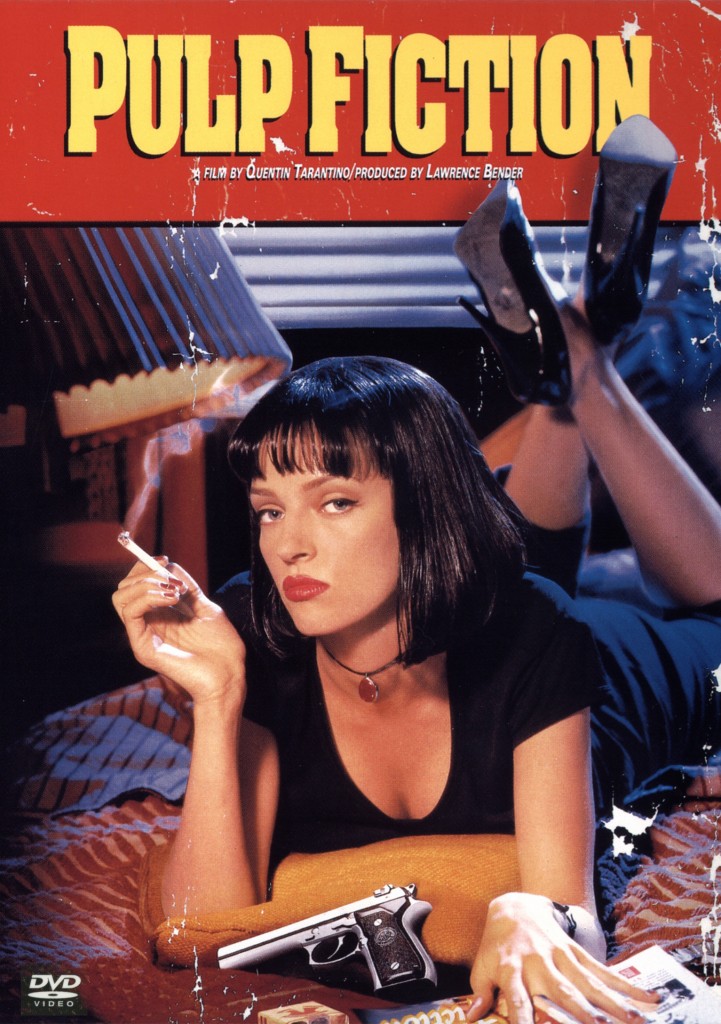
To Clear Through The [Re]Watch List #1: Pulp Fiction (1994)

From http://ahmedalkiremli.com/wp-content/uploads/2011/05/Pulp-Fiction.jpg

Dir. Quentin Tarantino

It's bizarre to actually watch Pulp Fiction. It's not a pop culture UFO everyone references and says is the best film ever made, let along made in the nineties, that people have only seen many years ago. You're not just saying "Royale with cheese" to yourself and imaging the film you watched in your adolescence years ago, a century almost for me now in how I've changes in my art tastes in only less than six or so years. You're actually watching it with near decades having passed, and with how Quentin Tarantino is now as a director, trying to reappraise it. It's amazing now that such a legendary film that, for better and unfortunately for worse in areas, drastically changed cinema culture and style was such a little film. Its effectively a slice of life indie movie...that just happens to use characters and plotlines from crime fiction and expand everything they do to pass the time into further importance at points. Rewatching this evoked the likes of Wayne Wang's Smoke (1995) and Jim Jarmusch as much as it did classic film noir and Reservoir Dogs (1992). Despite its length, the manipulation of time, and its cast, its far more concerned with imagining two hit man going to a drive-thru burger joint, even though this example doesn't happen in the film, and debating whether to get a cheese or Hawaiian burger between them. A former video store clerk who, in making Reservoir Dogs and Pulp Fiction, had completely sacrificed part of his memory bank entirely to cinema - flights of fantasy, sleaze, glamorous crime, which are purely fiction - but was as obsessed with how he and his friends would be sitting around shooting the shit eating Captain Crunch. The paradox still exists in his main auteurist flourishes now even though he's expanded the material to much more epic proportions now in his last two films.

My relationship with Tarantino as a director has been a complicated one. Like everyone, when I got into cinema as an adolescent, I was immediately drawn to Pulp Fiction and Reservoir Dogs. Then came the disappointment of Kill Bill Vol. 2 (2004), and my sole viewing of Death Proof (2007) was a painful experience to view its entire length, having such an effect that Inglourious Basterds (2009) would be a make-and-break on whether I would follow his films anymore. It was good but flawed back then, and Django Unchained (2012) was divisive for me back at the cinemas in January this year. Unfortunately the cult of personality that surrounding him, one that once encouraged people to find obscure genre and cult films, has become a plague on cinema in general, which would dampen your view of him unless you separate them from the filmmaker himself. By himself, Tarantino is becoming for me one of the few American directors whose actually an auteur, has the talent and makes films that are unconventional yet I can actually see in a multiplex because of how Britain embraced him from the beginning. Rewatching Jackie Brown (1997), I found an incredible film, and Inglourious Basterds has became ingenious in its ideas in its head on the rewatch. Pulp Fiction in comparison, is a minor work frankly, the transition from the lean Reservoir Dogs to the style that would be last to now, with failures, with stuff not as good as his later work, but a lot to love nonetheless. Despite potential issues with his style, his perceived glibness, he was touching on tics that were clever and underrated that he would expand on later.

From http://theartdepartments.files.wordpress.com/2011/03/pulp-fiction-144.jpg

What immediately becomes the key to seeing a lot of what Pulp Fiction is about is the Jack Rabbit Slim restaurant hitman Vincent (John Travolta) and Mai Wallace (Uma Thurman) go to. It's a place that's too cool to ever exist in real life - fifties b-movie posters on the walls, $5 dollar milkshakes that are actually worth the money - but it also comes off as a metaphor of having to reassess the culture of the 20th century, and even further back in history, and what individuals are faced with in connecting it back into something relevant. Directors have been heavy in their referencing of other materials long before Tarantino, especially with Jean-Luc Godard, but Tarantino has drastically changed the notion of doing this. However, even if he was to get a nosebleed and an erection just being in the proximity of a long unmanufactured brand of breakfast cereal, he was still able to step back and question whether there was any real meaning or point to how people assessed this kind of material in its littlest details. It's about the "little details" as Vincent describes being in Europe to his co-hitman Jules (Samuel L. Jackson), and in many ways their own existences, along with the others characters, is changed and affected by Tarantino by the little details he adds to them onscreen. It's cool for Tarantino to reference this stuff, but where is its place nearing the Millennium and onward? When everyone knows who Marilyn Monroe is but with context of her of an image, not as an actress let alone a human being. When no one has no idea who Mamie Van Doren is, more ironic when I've only discovered who she is within this year and have yet to see any of her films, except Vincent. That he also still says that the restaurant is a waxwork museum with a pulse despite digging it. The entire film, begun with a definition of what "pulp" is, is effectively trying to assess the place of these pulp characters - hitmen, gangsters, a bribed boxer, femme fatales, a pair of romantically together robbers - in a world where there's more concern about the meaning of giving another man's wife a foot message while a hit taking place is a per usual nine-to-five job. Its befitting in that definition of pulp he also includes the other use of it as a word to represent churned matter, as particularly in the nineties, an entire century's worth of pop culture seemed to collapsed in on itself in a concentrated mass, which asked the question of how one would use it from then on. It's not surprising Tarantino became the person to define this aspect in how he tried to work with it. Everything that he is obsessed with is reassessed in the context of what his day-to-day life outside of the cinema probably was like, and in doing so the concept of being connected to pop culture material was given to the characters within said material through his take on it.

And it is this that gives the film the best virtues, while the aspects that made Pulp Fiction iconic are, while good, of lesser interest or are even major flaws. The plot of hitmen Jules and Vincent is good, but suffers from Jackson feeling a minor character in his own pieces and a trite spiritual turn for his character later on. Yes, the Marvin (Phil LaMarr) sequence is something to remember, but the two characters have the best moments separate from each other. Jules with a word based standoff with Tim Roth and Amanda Plummer as lover robbers Pumpkin and Honey Bunny. Vincent with Mia Wallace. It's not the Ezekiel 25:17 speech which is the best dialogue for Jackson in that scene, it's that the use of language as a weapon, amplified the most as a concept for Tarantino in Inglourious Basterds, existed back then in the director-writer's work with Jules and the Big Kahuna Burger. It's not Thurman and Travolta dancing which is the best part of their plot, but their cute and awkward bonding. The dialogue is great from Tarantino, but for a man dismissed as not knowing when to stop talking, a lot of this film gets incredibly quiet and stand out immensely, especially one between Travolta and Thurman which leads to her talking about those "awkward silences". It's not the main plot about boxer Butch (Bruce Willis) on the run from mob boss Marsellus Wallace (Ving Rhames) that's the best parts of his story, but two quiet scenes with Willis and two actresses. With a taxi driver (Angela Jones) discussing what it was like to kill a man in the ring, and with Butch's girlfriend Fabienne (Maria de Medeiros) whose brief passage on how she wants a potbelly fills her out as a fully formed character in a single dialogue chunk and, for a director probably more obsessed at this time with Sonny Chiba films than romance, showed he could yet write emotional and passionate exchanges between characters. Even the music, which is a key aspect of Tarantino as well as his casting choices, is not the "trendy" music for casual tastes, but deep cut pop music for those who want to relax with something different. The rush of Dick Dale's take on Miserlou - quick, urgent, very short instrumental around what is effectively a quick, fast fingered guitar solo as a whole song -  over the opening credits is pitch perfect to get you quickly into the film. But the rest of the music, even with the iconic Urge Overkill take on Girl You'll Be A Woman Soon, is calm and lethargic. It's not aggressively cool music, but surf rock to ride waves on, bubblegum pop or very unconventional song choices that are great music, especially something like Flowers On The Wall by The Statler Brothers, but young adolescent fans of Tarantino would never give the chance to listening to. How he uses the music is completely against the image of cool soundtrack music, with characters just turning a radio or music player on to unwind, like Butch singing along to Flowers On The Wall while driving despite what has happened a few moments ago with him.  

From http://www.squabblebox.co.uk/admin/wp-content/uploads/2013/01/pulpfiction1994-3.jpg

The main issue within Pulp Fiction, even if it wasn't the one Tarantino intended in writing the stories contained in it, is what exactly to do with these fictional pulp characters he's watched countless times in films to keep them alive for the next few decades. By seeing what they'd be doing in their off-time. Literally what burger a mob enforcer would eat, and how'd he describe it, and far from a pointless discretion it forces you to actually think about these archetypes more thoroughly - in the plots, the dialogue, the switching of tones and all the pop references. Far from someone who just glorified violence, the violence is actually even more sickening because of being within the context shown onscreen, where even if you laugh at some aspects, the incident at the end of the Vincent and Mia Wallace segment is gristly. Far from shown as a blackly humorous as I thought it was, the rape scene in this is actually discomforting. It's just that Tarantino, in probably the only time he's ever had something legitimately weird in one of his films, still glorifies a samurai blade and makes the appearance of a leather gimp humorous around it. The film as a whole is flawed trying to be a pulpy genre film, because transitioning from Reservoir Dogs, he wasn't able to make it as interesting as in later films. But the important digressions from the plots is the virtue of the film, and when the two sides can co-exist fully, like Jules and the Ezekiel speech in the hotel, or Vincent and Mia Wallace's whole plot together, its seamless and vivid in character depth despite being archetypes.

The only real issue with this film, barring the flaws Tarantino would hammer out in his newly evolving writing and structural style from Jackie Brown onwards, is the issue of him using racial epilates in his dialogue that has been in criticism of his work for years. Immediately, the fact that I'm a white male means that I could be making excuses to defend something he should be taken to task for. But for me it's a lot more complicated than this. Both Reservoir Dogs and this film have very course language at times, but not only is it usually spoken from characters who exist within crime organisations and the underground, who would not be soft spoken and politically correct in reality or fiction, but it feels more like Tarantino was a very young guy too enamoured with edgy dialogue which he would transition away from. Django Unchained made me uncomfortable in its use of racial language, and its content in general, but that's a film intentionally making you uncomfortable and tackling American slavery head-on, meaning that Tarantino is at least now addressing these issues fully even while riffling on gory exploitation cinema. The only time he seems to step too far in Pulp Fiction by accident is the infamous "dead nigger storage" speech, which is made more unfortunate by the fact he's playing the character saying it, who suddenly from this aggression at Vincent and Jules tags along behind Harvey Keitel like a shadow for the rest of his screen time. The issue for me, and I understand I may be violently disagreed with in this issue, is that a white male is using terms like "nigger" in his scripts' dialogue but not in the context of a Oscar nominated film about racism.  But with characters using it in its various contexts as well as alongside edgy, pulp characters. I've encountered examples of this that I find far more controversial to me honestly -  the novel L.A. Confidential (1990) by James Ellroy is far and away more of a issue to digest, even for its virtues, because its the omniscient third person narration that is riddled with coarse language full of obscenities upfront. Here, Tarantino feels like a white man who listened to a lot of hip-hop and rap music, but may have stumbled badly in moments of Pulp Fiction over the context of certain words with loaded and complicated histories to them. But he improved drastically in this area immensely, where you can have Inglourious Basterds make an exploitation film surrounding the issue of the Holocaust, but not trivialise it and also make the film an issue about the nature of propaganda that ruminates on it. There are so aspects about the context that need to be thought about too. That Samuel L. Jackson and Ving Rhames are the kind of people who would not only flat-out refuse to act in a film they found offensive, but would have kicked said director's skull in. That Jackie Brown exists and Tarantino, adapting a novel, changed a white protagonist to Pam Grier. That more questionable material is allowed to be celebrated with a muted backlash to them - particularly in cinema where The Birth of a Nation (1915) is still seen as the beginning of modern American cinema. It's a debate that needs a whole term devoted entirely to itself. It needs writers and commentators of African descent to have the first words. I need to read up on it. But for me, Tarantino was a juvenile person writing Pulp Fiction, who would drastically grown up internally in Jackie Brown despite still wanting to make films like Kill Bill.

In its entirety, Pulp Fiction is a good film, great to return to. But it's a minor film. It doesn't make sense for this to be the best film in existence or even in the director's filmography. It's an experiment, a starting point for the directorial and writing style he has made his idiosyncrasy. Jim Jarmusch made better films than this. Tarantino's made better films. And unfortunately I have to wonder if an infantilism is involved here - a film you would encounter and dig as an adolescent, but you're unwilling to move on in your favourites of his in case it decimated your found memories of it. If someone has this as their favourite? I won't argue, good for them. For me, it's good, but its either Reservoir Dogs or a later film that makes him worth existing. This is a masterpiece only for the fact of its great individual moments, and that's taking into consideration I may become fonder and more appreciative of it on more rewatches. That he became who he is thanks to its success. Because this film is why I can see the director's peculiar and unconventional take of filmmaking in a multiplex for his last two films so far, at least giving me something different when everything else is not really interesting for me that week at the pictures.

From http://sgtr.files.wordpress.com/2013/11/pulp_thumb.jpg?w=590&h=378

Thursday, 21 November 2013

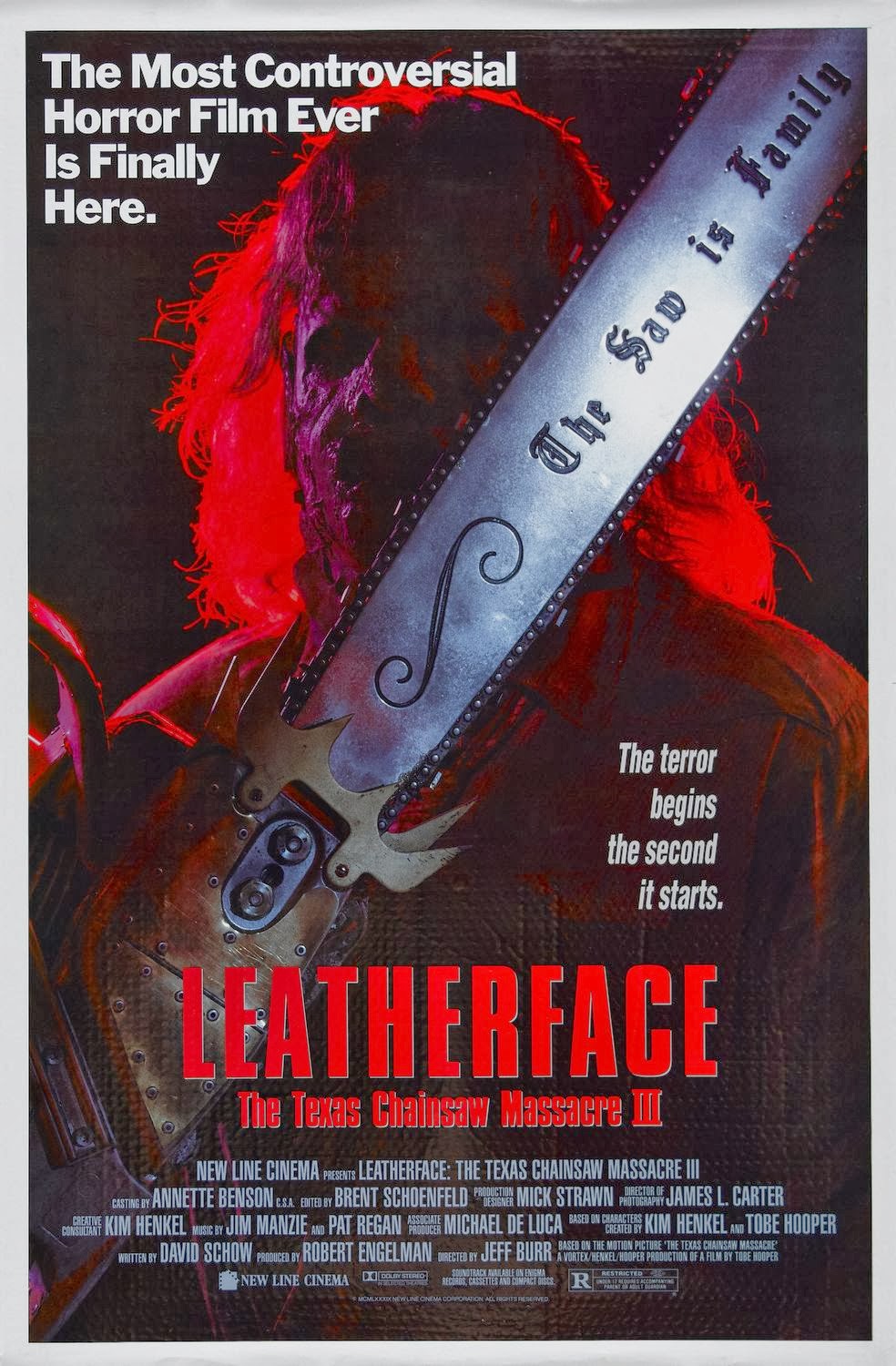
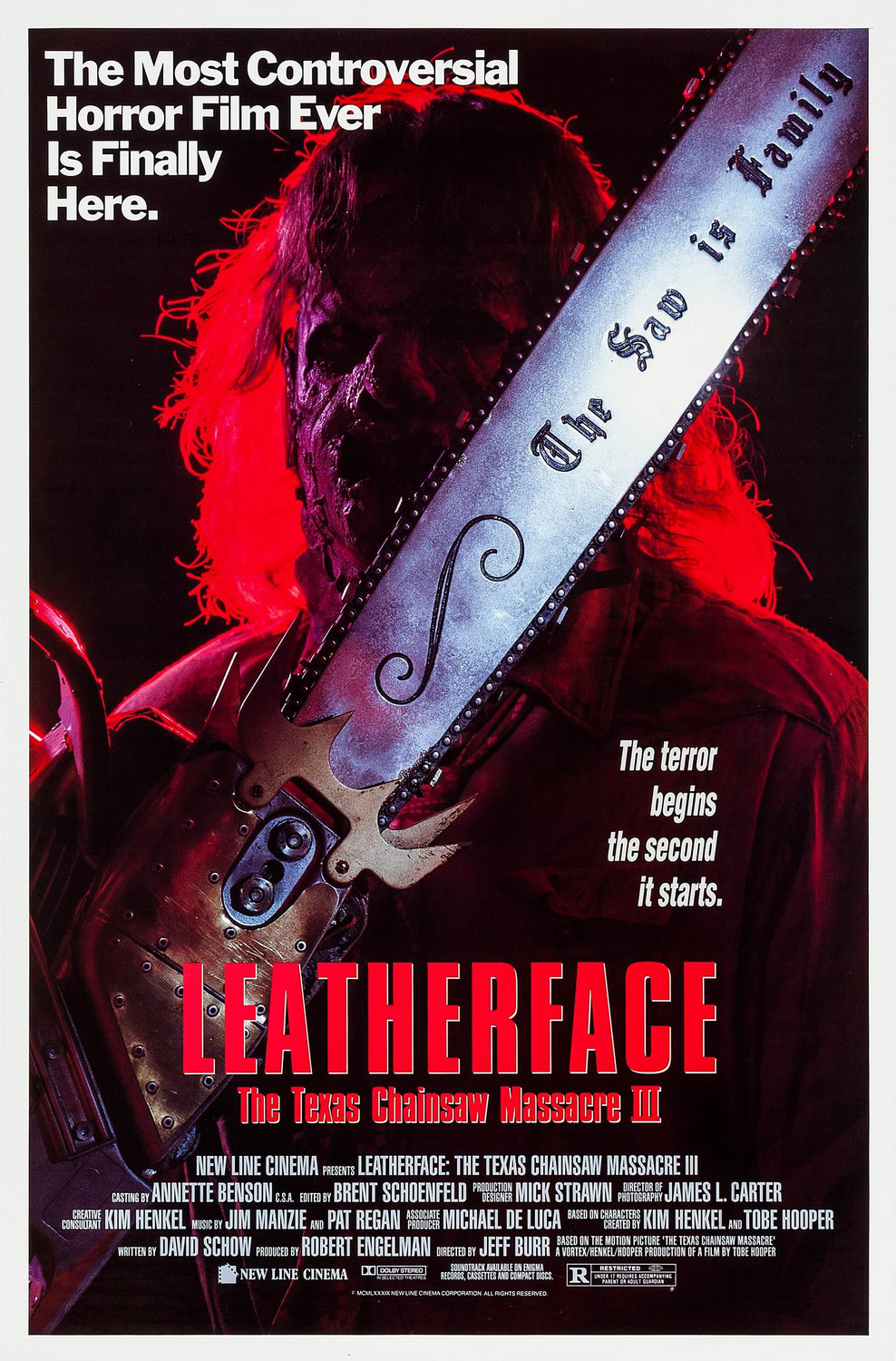
Videotape Swapshop Review: Leatherface: The Texas Chainsaw Massacre III (1990)

From http://www.impawards.com/1990/posters/leatherface_texas_chainsaw_massacre_iii_xlg.jpg

Dir. Jeff Burr

Another Videotape Swapshop review, and the other threequel I covered. Sequels are always a fickle concept. Any premise could lead to a justifiable sequel unless it closed the book on its content completely in a single film. Even then, its possible for some to become a franchise if good filmmaking was involved. The problem is whether there's actual 'good filmmaking' involved because sequels are usually made only for economic purposes and not with the optimism for making something interesting. In this franchise's advantage, there was a good first sequel in The Texas Chainsaw Massacre II (1986). I reviewed that film months ago, so covering this second sequel is a nice follow-on. Would I cover The Texas Chainsaw Massacre: The Next Generation (1994)? Yeah I definately will one day, here on Swapshop. This franchise has a better track record than others I've seen, baring the terrible Texas Chainsaw 3D (2013), and while I've not seen all the films, I've seen a fascianting spectrum of differnt attitudes through all the films. From the original's raw tone, to number 2's greater emphasis on blackest of black humour, to this one's grimy nineties tone, they all have something of interesting in them from the original four of the franchise. Yes, even The Next Generation when I get around to it.

Review Link - http://www.videotapeswapshop.co.uk/17034/leatherface-the-texas-chainsaw-massacre-iii-1990-director-jeff-burr/

From http://www.ionlywatch18s.com/wp-content/uploads/2011/11/Leatherface-2.jpg

Monday, 18 November 2013

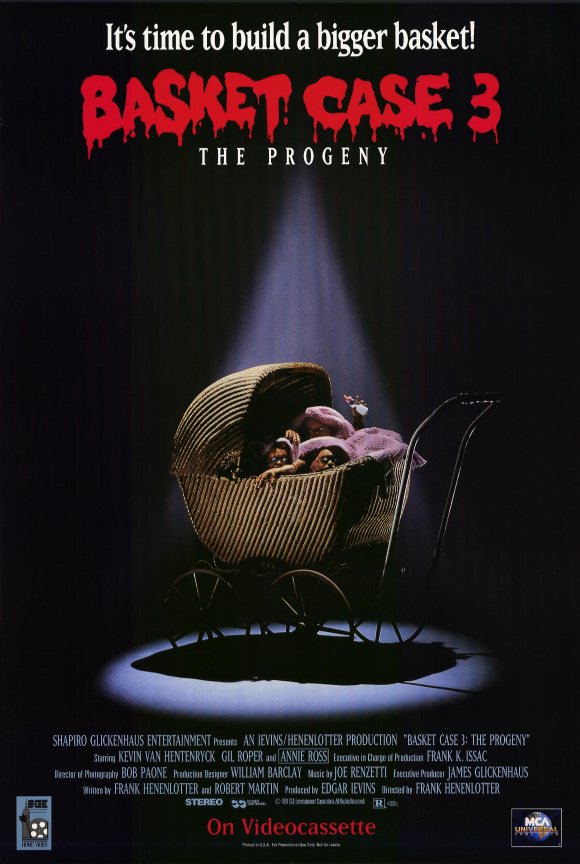
Videotape Swapshop Review: Basket Case 3 - The Progeny (1992)

From http://images.moviepostershop.com/basket-case-3-the-progeny-movie-poster-1992-1020210067.jpg

Dir. Frank Henenlotter

During this week I'm going to clear through the Videotape Swapshop reviews that have not had links posted up on my personal blog. I'll start with one of two films I choose for the site's "Threequels" series, the second sequel to a cult favorite. There's not much to say this time because my thoughts were pretty much written down in the review.

Review Link - http://www.videotapeswapshop.co.uk/16647/basket-case-3-1992-director-frank-henenlotter/

From http://www.coffeecoffeeandmorecoffee.com/archives/basket%20case%203%20c.jpg

Sunday, 3 November 2013

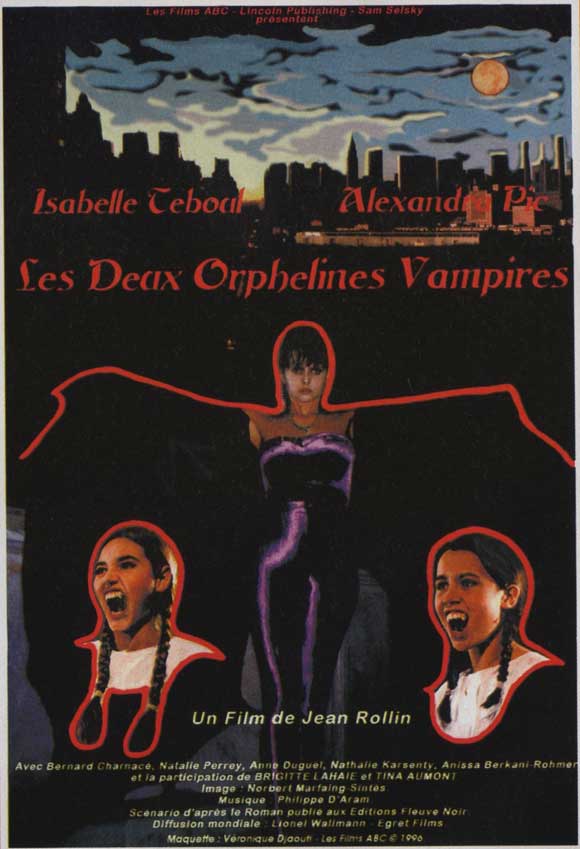
Representing France: Two Orphan Vampires (1997)

From http://images.moviepostershop.com/two-orphan-vampires-movie-poster-1997-1020492359.jpg

Dir. Jean Rollin

It's a delightful surprise that this film doesn't feel like a nineties horror movie at all. As much as I'm obsessed with the nineties, one of the reasons I'm obsessed with it is the tackiness of the era as well as the positives. Not a lot of horror films from that decade are celebrated, as compared to other eras, for this reason.  Jean Rollin didn't make a tacky film in the autumn/winter of his career here, thankfully making a very interesting one instead. It's very much an art film, against other films of his I've seen, which must be beared in mind. It's amazing too that I can compare this film to the work of fellow French director Eugène Green, of The Portuguese Nun (2009), with his long, almost Bressionian moments of dialogue, dangerously near the precipice of pretentious but ultimately charming and rewarding in being a bit more freer to let scenes play out as far as needed for mood and effect. This is the same for Two Orphan Vampires. I will openly admit it's going to be a difficult film for people to digest, including those who like Rollin films. I will also admit that I've developed a taste for films that could be seen as "difficult", with small fan bases, but this one works completely for what it intended.

From http://admin.highdefdigest.com/picture/original/32953

The titular vampires are two girls, Louise (Alexandra Pic) and Henriette (Isabelle Teboul), living in an orphanage ran by nuns, blind in the day, but able to see at night when they go out to feast. Immediately distinct in their identical clothes and white canes, the two are sympathetic in that, while they need to feed on the living, they are clearly close, engaging in their ponderings on existence, and obsessed with books on Aztec culture and magic while they believe they are reincarnations of the Aztec gods. The film is a series of events, ones from their previous lives, able to come back to life after being killed, as well as ones from their new life, as a doctor adopts them and they continue to explore the world around them. They do encounter other supernatural entities - a ghoul, a werewolf and so forth - but they are women too; in fact, baring the doctor, there are no male characters in the film baring extras or minor, one scene roles. (An interesting tone for the film in that it's a world framed entirely around women who have the discussions on the meaning of life as well as the small dramatic plots.) Its brief story is more of an engaging character piece, of characters doomed to repeatedly die despite their happiness, both girls concerned that they'll eventually never come back to life again at some point. Its abstract in a way that could frustrate people, but baring in mind, digging deeper with what Rollin was obsessed by, this is a waking dream of a film crossed with the kind of aesthetics of book illustrations that look exceptional when used in the opening and end credits of the film

From http://2.bp.blogspot.com/_n35PfUpWyak/TPwPrOEv2mI/AAAAAAAAZVg/
MIh3GTMdpbg/s1600/Two%2BOrphan%2BVampires%2B11.JPG

It doesn't look cheap either. I suspect it was shot on celluloid. It has an atmosphere, like the best films covered in this series of reviews, where from the first scenes it already sets up the mood immediately with the look and use of the locations and the space in them. The bright, vast locations of the day time to the blue lit environments of the night time scenes. His obsession with sexuality and sensuality is still there slightly in the vampires' relationship, including the sexual nature of how vampires bite a victim's neck that has always existed in the mythology, but barring two moments or so of nudity, this is quite a chaste film more concerned with friendship, and the bonding of Louise and Henriette, at times like teenage girls onscreen, other times very wise and adult in their reflections of the world around them. The film's mind is more on magic and supernatural creatures than carnality of other films of his I've seen. Probably the biggest reason why people could be put off Two Orphan Vampires if they're not prepared for it is because this strips away the blood and nudity in Rollin's films and leaves the unconventional plotting, where two vampires get bored of their predicament and do whatever they desire to escape it, presented not as a conventional three act narrative. For me it's nice to go through such an abstract, dreamlike film that paces itself well. The dialogue is all of interest even if its unconventional at times. It's an interesting take on vampires that doesn't compromise the mythology while adds new things for its own depiction. The two lead actresses are very charismatic as their characters, to the point that their potential ego in believing themselves to be gods is actually sweet natured and understandable pride in their existence than despairing their "curse". The distinct age fluctuation in their appearance in fact adds a strange air to the proceedings which makes their characters more interesting. The directions the film takes make sense - a world of supernatural beings who are methodical and languid, none of the hectic tone of, say, the Twilight films, and most horror films, where two vampires can kill time as best friends for most of the running time. Nothing feels contrived in the film in what happens, anything odd feeling appropriate for the dreamlike tone. It feels like spending a week with these characters in their immortal lives only with a few deaths at their hands taking place, and the danger they will be discovered and killed themselves adding dramatic tension. It looks good, and even if the score is dated synth, it feels like it's actually from the eighties, the depth of that era's music here to and adding to the material. There is nothing in Two Orphan Vampires that feels amiss, and that Rollin made a film completely against what is expected with these genre tropes is admirable, more so in that he succeeded for me.

From http://3.bp.blogspot.com/_n35PfUpWyak/TPwPhQPz1ZI/AAAAAAAAZVY/
1kZLEI5GMPc/s1600/Two%2BOrphan%2BVampires%2B12.JPG

Tuesday, 29 October 2013

Also Representing Japan, For The Anime Slot: GenoCyber (1993)

From http://1.bp.blogspot.com/-UHDL9E8qiyY/T6G9pHHGMmI/AAAAAAAABvs/gx_ZO_DVw6Q/s1600/genocyberposter.jpg

Dir. Koichi Ohata

Note that the version of the five part original video animation (OVA) I saw was with an English dub. Dubs for anime, unlike Italian genre films from the seventies, can drastically effect the actual work. Liberties were clearly taken with GenoCyber's script even without seeing a version with the original Japanese language track, and like a lot of reasons why dubs are notorious, it is mostly poor. It's not without flaws - it befits the first episode - but I would want to find the original version. Be ready, if watching the English dub version, for ridiculous acting performances and "fifteening", a controversial practice of English company Manga Entertainment, from their older days of existence, of adding swearing to the scripts to help boost the age ratings when the anime they sold was being certificated by the British film censors. I will have to deal with the dub in this review, but my greater concern is what GenoCyber is as a notorious anime.

From http://1.bp.blogspot.com/-KRtpNLSqcHA/T7GaXjx8PdI/AAAAAAAAB3E/safDPMzJg0U/s1600/geno.jpg

Controversial, ultraviolent, and just a mess. GenoCyber is a mess finally seeing it, hearing of it like the many bogymen, infamous works, in anime's history for all these years, but actually viewing GenoCyber is more complicated than this. Its twisted, and for a lack of a better term, fucked up, but having to actually watch it is a drastically different experience than something merely infamous. The first part - the work splits into three stories between Part 1 (A New Life Form), Part 2 and 3 (Vajranoid Attack & Global War), and Part 4 and 5 (Legend of the City of the Grand Ark I & II) - definitely shows everything that made the anime infamous. Nihilistic, complete hatred for humanity, horrifying images of dismemberment and mass death, body horror taking advantage of sci-fi tropes' most gruesome potential, and the episode was made with barely a budget. Barely a budget. Events abruptly happen with no pace. Live action inserts were used. The animation looks aesthetically foul and scuzzy in a horrifically compelling way. And it does fascinate. In a world where nearly every nation plans to unite into one peaceful, global utopia, a corporation sticks out as a potential threat in its self ostracization from everyone else. Taking advantage of a scientist's discovery of "mind shadows", latent psychic abilities he could unlock through a machine he made called the Mandala, (yes, there are clear Buddhist and Eastern spiritual symbolism here), they have human beings, as young as children, as potential weapons. Very much like Akira (1988), potentially dangerous psychics. Two of them are the twin daughters of the original scientist. One, Diana, is one the side of the corrupt scientist in control of the knowledge, left from birth with a completely crippled body which leaves her as a head supported in an android frame. The other Elaine, on the loose in the city of future Hong Kong, is physically healthy but with the mind of a savage animal, befriend a young boy. The corporation ran by the scientist wants Elaine back, employing android mercenaries, his pack of masked psychotic minions, and her own sisters after her and to silence anyone in the way. But not only is Elaine a very dangerous psychic, but when the two sisters are together, they could become one and become the titular GeonCyber, a horrifying demonic creature that could wipe out anything and everything.

From https://blogger.googleusercontent.com/img/b/R29vZ2xl/AVvXsEjnj2byz76P8my7jBqyVg_Z70Tmm931HYk1k0k5YdgKIQ7SBOsypsCNhJmhUbdtb9r2eBVbKlN5_03WmZYsUceF-Kv1snr-c8yh7bFF9TanEzxn0xqTt81k16hJBoteAyrfNVMuAtFFFDA/s1600/Genocyber11.jpg

The first episode is a complete car crash of gore, disturbing images of viscera and exposed intestines, wrapped in such a misanthropic work in its message. But its compelling. Body horror with no self censorship. Actually missed by myself in the later episodes greatly, the director went further to make the gore disgusting by using images of actual wet clay being smashed for icky effect. Its only done twice or so from what I registered, but its an incredibly lurid effect that should have been used in the later episodes, the kind of reckless idea, on such a cheap production, that lifts it up from just being trash but something legitimately interesting. It has nihilism that actually feels like it's from the bowels of the creators', the director and co-writer Shô Aikawa, guts than that a cynical liberals going for a cheap pop, discomforting but driven by a narrative where two mangled young women come together, and their collected rage collects to created a being on the scale of Cthulhu. Koichi Ohata is already controversial for his creation MD Geist (1986), to some one of the worst anime ever made, along with its sequel, but a best seller in the US. Aikawa is incredibly twisted in just the few works he penned I've seen. He's managed, of all things, to become the scriptwriter for some of the Full Metal Alchemist franchise, an incredibly popular work with a large, mostly young audience, but the man also wrote the scripts for a lot of the Urotsukidoji series and Violence Jack (1986-1990), the former the most controversial work in anime in the West, the later only really known for its drastically censored English dub version, and from I've read and heard, probably for the better for your stomachs. His filmography has a lot of notoriously bad, ultraviolent or scuzzy work, but Aikawa has a sense of body horror, and surprising potent ideas of the manipulation of the body and political ideas that managed to get into even Full Metal Alchemist. It's not surprising that GenoCYber ended up as it did with just him, let alone with his co-writer and director. It's no way near the most disturbing anime in existence, when Neon Genesis Evangelion: The End of Evangelion (1997) exists, but even if I am desensitised from a lot of this sort of thing, and frankly view it as merely animation on a cell not reality, it still leaves a gaping, nagging wound in your memory whether you see merit in it or not. With how this part ends, there was no real need for any other episodes. It could have stood up as one single, forty or minute piece of disturbing anime. It's a mess in quality control, but it its memorable and potent in what is seen. The only other work of the director I've seen before this was the TV series Burst Angel (2004), which was legitimately poor, all the most generic tropes, even in designing the female character designs meant to be lusted over, of current anime. That was the kind of anime that is truly bad. This episode, from the same director, is something uniquely itself even in its screwed up existence.

From http://i1.ytimg.com/vi/fd5uF17mXkA/hqdefault.jpg

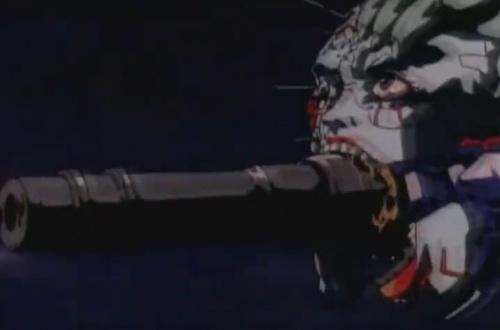
But more episodes were made. Parts 2 and 3 probably have some importance though. Part 2 contains the most controversial moment in the whole work where, in the first scene, the first actual scene, young kids are chain gunned into gristly, fully detailed body parts. Its tasteless, its shocking, never done in any other anime I've seen yet, but doesn't compare to the kind content in the rest of this story arc or in the first episode. It's no way near as disturbing for me, in a story where a prototype android eventually goes out of control and literally melds with the whole of a naval warship, as just having a character, seeing the atrocity around her, suddenly throw up in revulsion in detail. What really disturbs in the whole of GenoCyber, what really makes it justify its reputation, is the mood and ideas rather than the gristly results. Shô Aikawa's writing, when it's not garbage, is far more disturbing in what he implies with full detail or not. His work is very Cronenbergian even when he's in a completely different genre like with Hades Project Zeorymer (1988-1990), an anime which shows a legitimate best with how, for its flaws, the ideas and where he goes with them are truly compelling in a startling way. This story arc is still an worthy inclusion for this. How our hero - Elaine and Diane one single being who are rescued by the warship and set off the android when it see them as a threat - is actually a monster who can destroy everything. That no one is sin free, or those who are good people will be killed, even children, or go insane. That this series, for all its disgusting gore designed to only shock and its shonky look, still forces the viewer to think of the consequences of man's brutality. That its use of body horror, in visuals and the concepts, is immensely imaginative, and downright disgusting and disturbing because of the ideas behind them, especially with part 3. These two episodes do deserve to exist, because while weaker they still fit the tone of the first one and are just as interesting.

From http://www.imfdb.org/images/thumb/2/27/Genocyber_Minigun1.jpg/500px-Genocyber_Minigun1.jpg

Which causes me to ask - what happened with parts 4 and 5, and why were they even made? Suddenly you are forced to watch legitimately awful pieces of anime. A drastic shift takes place. The GenoCyber has completely decimated all human populations in the world and is now gone, leaving all the clichés of anime of this era to repopulate the scorched planet in their tired flourishing. A utopian city exists which is actually a dictatorship, the writing suddenly losing all its distinct nihilism in favour of a generic tone without any real bite, where there's the corrupt rich, and the rebels in a terrorist group and a religious cult. Suddenly you're forced with two new protagonists, a young man and a woman, moving to the city and making their way barely as a knife throwing act and through street based mysticism. We're supposed to sympathise with them because she's blind and they're a couple about to be crushed by the evil city, not because they're of any interest. At this point, I cannot ignore the English dub. It was poor in areas before this arc and the added swearing was unnecessary, but some of it actually fit the tone. Here the dialogue readings, ignoring the tedious plot, are atrocious, with the voice actor for the main male protagonist performing some of the worst line delivery I have ever had to endure legitimately in a long while. It's up there with some of the worse I've ever encountered actually, clearly playing the character as everything people say about Keanu Reeves in Bram Stoker's Dracula (1992) at one point. This is why anime viewers like myself, let alone fans, eventually switched to Japanese dialogue with subtitles completely unless it wasn't available for certain releases or the English dub was actually exceptional. The entirety of this story arc, even though it's from the original manga the anime was adapting, is abysmal, a huge blot on the whole work. The blind woman encounters Diane through her mind, or an alternative world, befriends children living with the underground rebels, as you do in anime at this time, and eventually the obvious happens when GenoCyber awakes. You rise the memory of this arc from your mind and, if the whole work ever gets a DVD re-release, the only reason you would ever see this again is to check the disc(s) work. Suddenly it's not the original anime of the first few episodes but a completely different work, written by someone with no real grasp of what corruption means and merely using it as an excuse to bash the upper class and real life society in a cheap way to come up with a dystopia narrative. One, as in all the live action films that do it as well, that would put people off actually questioning their society and leaders because its trivialised to such an extent and because they don't want to suddenly become the characters in a crappy GenoCyber story arc. OVAs at this time in the nineties were also notorious for how abrupt their productions could be - anime works suddenly ending on a cliffhanger with no sequels ever to finish them, or with wildly different tonal shifts like here. Sometimes it's part of my fascination with these nineties anime, but here it's painful.

From http://www.animeclick.it/prove/serie/Genocyber/Genocyber8.jpg

Altogether, anyone with a strong stomach should attempt viewing Part 1 of the work. It's not a series to watch on a loop, too bitter, too misanthropic in tone to digest except occasionally. Its indefensible, but it doesn't feel like a mere mindless piece of anime ultra violence that the whole medium was lumped into by newspaper tabloids. Parts 2 and 3 are also worthwhile, but if it was possible to remove Parts 4 and 5 from existence I would do such a task. It has to be beared in mind that this has content that would even startle people used to animated gore and depravity, but it's a creation of individuals with throats full of bile for humanity rather than making cynical jabs, for attracting peoples' simpleminded views of anti-humanity and selling product by using such naive views on corrupt society. As perfectly put by an anime reviewer, it's the equivalent of punk rock, shambolic in production, offensive but with vitriol and energy you wish was there more often.

From http://www.anime-planet.com/images/anime/screenshots/genocyber1.jpg