Showing posts with label Country: Spain. Show all posts

Saturday, 12 April 2014

Killer Barbys (1996)

From http://ecx.images-amazon.com/images/I/51G9788WMCL.jpg

Dir. Jesus Franco

Reviewing this, it may actually cause more damage to the film if I suddenly tried to use film studies glossary terms of 'style' to describe my enjoyment of it. This'll be a circumvention on myself since there is always a danger of defending one's enjoyments against imaginary detractors. Shame as it's called too, but there's no reason for it to exist. Can't I just admit I enjoyed the film? Why not for once? Admit to being turned on by the female nudity? I'm a heterosexual male so why not admit it? Admit to liking the goofy special effects and cheapness compared to other Jess Franco films? Yes, and say that it's still a Franco film despite this. There is of course this issue of celebrating something like this subconsciously to rebel against good taste, politically correct films. But taste's subjective, I've loved films both progressive and far more so than more celebrated politically correct films, and even the idea of what is politically correct is questionable when it doesn't always work in what it was intended to do. The only shame that exists for me is that the British DVD I viewed it on was English dub only. While its amusing, it's not seamless to the static noise of the original film, and is completely awful. Enjoyable so, but embarrassing for the film's sake. As for the film itself, I feel no shame enjoying it on this viewing. Honestly, while Killer Barbys is a drop down from Franco's best, is still memorable and considerably better than a lot of films like it from other directors.

(Real life) pop punk band Killer Barbys, name modified here because of Mattel, find their Mystery Van dying on them in the middle of nowhere. Their trademark are Barbie dolls tied up as van decorations, and on microphone stands, in improvised tape bondage gear, and the red haired, scantily clad lead female singer to wave a chainsaw around. She's the heroine, sometimes dressed in a Spiderman crop top. Two male members, the first with a beard and long hair, the other, the closest to another key character, with clean shaven features and has a higher pitched voice in the English dub. Both of them always go on about sex, the dialogue more ridiculous in the dubbing. The final two members, a male member and a female dancer, prefer to stay in the van and actually have sex continually rather than merely talk about it, to the point of seemingly staying the entire night there in coupling. A mysterious older man, who passes by the van, says he can get a toll truck for them by the next morning, and that they can all stay at the castle that he is servant of, that of a Countess who may be over a hundred years old or more. As established before the titular band are introduced, staying in this castle is probably a very bad idea, Lady Bathory reasons why it's so.

A very slim, simple plot - a common trait of a Franco film - the director concerning himself with mood, violence and sex. Mood, as with the best work of the director, is all encompassing. Characters, like the main heroine in this film by the end, find themselves wandering adrift in corridors and open areas, and very long camera takes are done that feel longer then they should be. This is my first from the winter period of the late director, divisive even amongst his fans, where it's said there was a considerable decline. A period, as co-funded European horror cinema was dissipating, where Franco was being helped financially by his own fan base. The lower production quality and, if translated accurately from the original audio track, dialogue do show this is a bit of a drop from Vampyros Lesbos (1971) or Succubus (1968). But despite these problems, it's a film like this that shows me how good Franco was. The band are picked off one-by-one, leading to the lead singer having to get out of the castle as the Countess makes her appearance. Along with the servant, there's another man living in the back, who prepares (clearly rubber mould) corpses for the Countess to drink the blood of and who has two dwarfs, both genders, as "children" who help and get the spoils, human ears to those dolls hanging up in the Mystery Van. The plot has very few twists and turns within it in terms of the events I've described going any further from this. What's more important is the content surrounding this thin plot. Sexual pleasure and blood are the main plot momentums, as is the case with other Franco films.

From http://www.imcdb.org/i292847.jpg

Some of his key trademarks are not at their best. The usually exceptional music score is replaced here by a funny but horrifically dinky keyboard sound - you'd think synthesisers from the seventies and eighties Euro horror films, ignored for nineties sounds, could've been relocated, dusted off and used but apparently not. Location use and creating environments from what he had for his films however is still strong here. Despite the small plot, what's really of enjoyment is a lurid journey from one moment of sex or horror to another, and the distinctness of the castle location helps make the film stand out. Using it as part of his usual dream logic, where characters are adrift in rooms and almost sleepwalking along predestined routes, it exists here too. Mist covered hill, near the river, are still powerful to see even in a weaker film like this. Creepy stuffed animals, with boggle eyes or made to be like people are lingered over as is the decorations of the castle's rooms. The abattoir at the back, despite the rubber bodies, is a sparse and messy space that's riddled with blood everywhere. When it gets to the point of the heroine finding out what's going on, the film fully becomes what I love about Franco as a she wanders the hidden rooms of the castle, a literal chess room with giant chess pieces and matching black and white tiles, to a room of various body parts and curiosities in jars. This doesn't last long, but from it the tone of the film is shown, even with the plot's junky schlock, to be a dreamy one of previous Franco films even if the style is not completely the same as the before ones.

Regardless of the film's failings, it's still in my thoughts as a memorable viewing experience. Once I get past the cheesiness, although I liked the (overused) songs by the band, I still felt an atmosphere that is shared with the best of Jess Franco's work and is rarely done in other horror films. The special effects for the blood and gore were absurd but befitting, the film never taking on a serious tone that would've been deflated by the obvious failings. The sexuality was honestly appealing too; admittedly I didn't find a female character running from a man with a scythe while completely naked titillating, instead seeing it as lurid on purpose, but the rest of the sexual nature of the film, while also schlocky, was enticing. And it's worth baring in mind that, for all the criticisms Franco has had levelled at him for this, the fact that the actress playing the Countess, when she appears to the band, is not just a beautiful woman but a beautiful older woman suggests that, perversely, Franco may have had a more progressive view of sexuality and gender than many other apparently 'progressive' directors. The luridness and the few failings are probably why I had to start this review as I did, although I give up keeping any un-biased mask on and admit to having completely enjoyed Killer Barbys. It could be argued to have a cop-out ending - that its revealed to have been merely fiction with an improvised music video for the band taking place - but personally it was an emphasis that this was Franco trying to make a fun film. And it was fun to view. He still had the talent despite the big drawbacks in production of this compared his sixties and seventies work. I could care less any more about trying to write intelligent, good taste reviews and I thank Killer Barbys, and my enjoyment of it, for reminding me that individual taste has completely influenced everything I've written on this blog. That I've covered many Franco films from before this pretty much says that I've really found enjoyment in his work even here.

From http://img.photobucket.com/albums/v517/richardsplash/blog6/killerbarbys_04_zpsa9a9067a.jpg

Sunday, 16 February 2014

Videotape Swapshop Review: Django Kill… If You Live, Shoot! (1967)

From http://www.videotapeswapshop.co.uk/18672/django-kill-if-you-live-shoot-1967-director-giulio-questi/

Dir. Giulio Questi

Mentioned briefly in the current series of all the films I liked watching from last year, which I promise is going to get finished at some point, I've became a lot more fonder of this film than (the still positive) review that you can read here stated. The tone of the film is not comparable to a lot else in the spaghetti western sub-genre I've seen, the mixing of the politics and the bizarre not common at all. The only thing it really compares to is the director's giallo film Death Laid An Egg (1968) that, for you the reader, you can read a review of here too. The fact that Questi didn't make a lot of feature films, and that barring Django Kill..., the others are not available to see is disappointing. That he's making short films completely by his own for the last few years or less though is something to be happy about however.

From http://www.screenslate.com/wp-content/uploads/2012/06/060312-DjangoKill-Post2.jpg

Friday, 31 January 2014

Two Films From Jess Franco...

From http://media.screened.com/uploads/0/2709/264577-devilakasava_dvd_large.jpg

The Devil Came From Akasava (1971)
Dir. Jess Franco

Another Franco film. Different from the others yet very familiar like siblings. The same key is used with a different melody. There is a stone that is able to turn base metals into gold in ...Akasava. It also assaults the person who has contact with it without a protective suit on with radiation that kills you instantly. A paradoxical item of harm and lust, a Mcguffin if there ever was one which can yet effect the small narrative further because it can be implemented as a murder weapon too. Making it useful to use against people trying to claim it. Even then there are multiple groups who'll kill each other off the normal way, leading to secret agents and Scotland Yard having to get involved.

Small, limited sets are broken down into pieces of edited sequences. To Franco it's not the narrative that is of the most importance but the moments and the mood of them. The erotic dancing that a female secret agent (Soledad Miranda) does in a cover is of as much importance as a chase scene, lingered over for prolonged minutes until it's as much of the position of being there as well as the titillation that is of importance. It's too pronounced how Franco stretches out eroticism and violence in his films to say that they're just sluggish genre films, but a clearly disarming tone to them that encapsulates how much of this is very unreal cinema. The characters here are trapped in plot circumstance and twists that have taken place before, many times before, and the arbitrary nature of this actually makes the genre clichés fresh and entertaining. So close to being aesthetic messes, even though people may be divided with Franco's work, that they are completely unpredictable. Always abrupt when someone does turn the tables on another, but some moments, like the disposal of a body, actually show the director could as much make great scenes through conventional scene structure too. Suspicious people are actually working on the same side. Old women are not what you perceive them to be. The clichés of the sci-fi and thriller, despite the clear budget restrictions, stand out because the restricted tone prevents Franco from padding the twists out until they lose their effect. Although even then his cinematic style, mood before plot, meant that this is prevented in his films already.

http://i263.photobucket.com/albums/ii135/guessthefilm/devil.jpg

A lot of his great virtue is that, looked down on for his apparent sloppiness and disregard of structure, it's clear he was concerned for the structure of his films, but in terms of everything else but the plots. They are transitions. He cared about the sexuality of the human body. The sharp shock of a death. Films improvised on the huff. Contrivance like the reality has been drastically changed, even if this was not even considered by the director. ...Akasava doesn't really repeat any plotting from the films I have seen, and actually stands out as a unique film so far in viewing his work, somewhat fittingly ironic because in another person's hands this is insanely generic material. In his hands he was clearly obsessed with the cinematic image inherently as it was. Plot moments suddenly happen in his work, jarring you because the scenes before were so languidly paced. His obsession with the female body, possible contentious opinion on a male director's gaze on feminity notwithstanding, was as much about canvassing the screen in the female body (the breasts, lips, skin, pubic hair, all) in close-ups that at least showed the whole female body as part of real woman and belonging to her fully. Rather than parade a questionable attitude of putting women behind a glass screen and, while letting you look, seeing it as an abstraction of titillation. Instead of what Franco did and made it matter of fact even in a softcore tone. And he at least had women who were in control of their sexuality, in both films covered here in Soledad Miranda, than mere images, even if the characters were one dimensional pulp. Of course these films were exploitation. Of course Franco could show complete apathy with some of his films. Of course some of them fail miserably or purport tedious schlock. But with the ones I've tries to defend there is always a sense, even if it was sordid or made of tired conventions, that he impassioned and wanted to bring the viewers into them with his overload of incredibly long scene times, of characters wandering through rooms and corridors trapped in a haze, stuck in the environments on repeat by this point in his films, and sexuality less of a quick porno but a long, lingering sensation.

In having made as many films as Franco did, they start to meld together, not into pointlessness of their existence, but connecting and reflecting each other. They are very much genre films sold for their nudity and (hastily composed) action in closed hotel rooms and buildings, cut off from the rest of the world, but viewing as many of them as I have has introduced me to a slowly building universe. Happy to see Howard Vernon appear, a distinct face that, while he never got to work in Universal horror films from the thirties sadly, he did get his own world of horror films through Franco and to work with Jean-Luc Godard on Alphaville (1965). Introduced again to Franco's trademark of extreme zooms from afar. How isolated those interior locations actually are, and how even the exterior ones are cut off from all in their secret narrative. Films whose stories drift along. The fact that it's difficult for me not to repeat myself with these reviews is not a detriment to the late director but the sense of films which easily splice together into a single, self referential and formed entity. When you end one Franco film, you can transition into another and continue the atmosphere of the films in the next one....

http://classic-horror.com/files/images/shekilledin-poster.jpg

She Killed In Ecstasy (1971)
Dir. Jess Franco

Same year as the first film covered. Same universe. Maybe happening in the same time frame or another reality where these people lived completely different lives from the ones in the other film. A young doctor is barred from his career by four other doctors for an experimental that, despite intending to extend the lifespan of humanity, used human foetuses as guinea pigs. He loses his mind and eventually kills himself. His wife (Soledad Miranda again in a different personality) goes about taking revenge on the four doctors. It is a small film, only seventy or so minutes, and manages to be immensely economical in structure and yet retain the trademark prolonged, languid mood Franco made his trademark, abstracting scenes by their length and keeping the camera on moments longer than most directors. What makes this film stand out is that its brisk length allows the film to never sag, yet it's still intentionally slower paced, pulling you into the film fully if you can engage with Franco's (usually) erotic horror cinema.

As the gorgeous Miranda stalks the screen getting her revenge, the film like his best for me so far (eg. Succubus (1968)) is thick in mood and also with real visual richness. At his distinct, Franco could still make exploitation films, quickly, that stood out in a clear auteurist style, despite being a director-for-hire in his style and hundred plus filmography, and significantly different in their presentation and said style even if work was dismissed as rudimentary. The music, having seen a lot of films, and listened carefully to the soundtracks, in these films are memorable or legitimately great, especially jazz and world music used. The films, lurid horror and erotica, are constructed around simple plots but their concerns are the sense of everything but that plot except to get to the new twist, Franco more obsessed with the decor, the naked flesh, the sense of time passing. Even the compromised aspects of these films and his working habits, having to moved through numerous countries in co-productions and making countless ones within the same year, added special traits to them that are noticeable despite only seeing twenty or so films from a hundred film catalogue. The closed, limited interior sets, usually memorably well decorated, add a real sense of claustrophobia, tight reality for these characters, especially as Miranda's character becomes much more of a stalker in a prolonged sequence of her following a doctor she wants to take revenge on. Since Franco, in the sixties and seventies at least, had a tendency to cast the same actors, many recognisable to me now despite not remembering their names, it makes the films like a reoccurring dream. The same beings repeating cycles of revenge, erotic death and horror, especially as the films repeat plot points and narratives in different presentations. She Killed In Ecstasy is a reinterpretation of Venus In Furs (1969), of a woman using her sexual body to seduce people and kill them. Even if sadly her life was drastically cut short in real life, Miranda, as a woman who transforms into a being of sexual desire who can seduce both genders, was able to be a prescience onscreen immortalised in how Franco idolised her, the same with The Devil Came From Akasava where she is seen as an employee for a spy group who can switch between the alias of a prostitute and an erotic dancer and yet seem above them in her sexuality and beauty. Howard Vernon is able to become this recognisable face in the director's work, and since Franco cast himself in secondary roles countless times, he himself became a distinct face immortalised in these films too. It's also befitting he's in his own work, making himself as much a creation of his own films, while significantly, not using them as an excuse to be a lead, but always the interesting minor character in physical appearance and behaviour, and not afraid of killing himself off with his own stories.

Together with The Devil Came From Akasava, these films' minimalist attitude to plotting actually make plot swerves and twists, even ones usually cliché, become different because they are made into unexpected moments within the long sequences of the film. The plot in She Killed In Ecstasy is slight, but if you can gauge with the atmosphere led presentation, you'll engage fully with it. Both films co-exist within the same type of filmmaking context that is clearly distinct to Franco only. Even a director like Jean Rollin, who crossed paths with him in taking over Zombie Lake (1981), who also mixed the erotic with the languid, and are put together within the same part of Euro genre cinema, has a clear difference to Franco in presentation. Contrary to the appearance given to him even by cult viewers who see him as only a schlock filmmaker, Jess Franco if he is still to be a schlock filmmaker was yet clearly his own, distinct of a filmmaker in how he presented his material and in how many of films interlink very clearly together. At this point the films are now going to be intentionally melded together by myself because, despite the difficulties a hundred film or more career in terms of trying to find it all let alone complete, I cannot look at these films without them being part of one giant concept that connects fully in their mirroring of each other. The virtues I've stated for these films can be said for others I've seen, and they all befit each other if the director's work was treated like this fully. 

http://24.media.tumblr.com/332f1760d4d85b07cf722af739cf335d/tumblr_mk754t9DZU1qzrs0co1_1280.png

Saturday, 23 November 2013

Videotape Swapshop Review: The Awful Dr. Orlof (1962)

From http://wrongsideoftheart.com/wp-content/gallery/posters-a/awful_dr_orlof_poster_07.jpg

Dir. Jesús Franco

Another Videotape Swapshop review, and more Franco. Like a reliving high, I can jump back to reviewing another of his films and always find something of interest. Only my own inconsistency with using Jesús and Jess for his first name is going to give me grief one day if I don't get a consistence first name moniker for him in my writing, especially when I'm LONG before ever getting through a quarter of his work. I was thinking about starting on another director, next year, that I felt I had barely seen work from and wanted to compensate for the embarrassment, but I had to choose a director whose filmography is over the hundreds as the first, meaning I'll be with Franco for a while at the same time. Its damn great to be watching his works which is the thing I'll be going to in my mind every time I think this, and I only wish I started becoming a fan of his while he was still alive. But as I watched this early work of his, I can say fully that he left a vast library of work that expands when you think you've pinned the late Spaniard down fully in tropes.

Review Link - http://www.videotapeswapshop.co.uk/18154/the-awful-dr-orloff-1962-director-jesus-franco/

From http://www.mondo-digital.com/awfulorlof4big.jpg

Thursday, 3 October 2013

Representing Portugal By Way of Spain: Tombs of the Blind Dead (1971)

From http://upload.wikimedia.org/wikipedia/en/c/cd/Tombs_of_the_Blind_Dead_Poster.jpg

Dir. Amando de Ossorio

The most entertaining thing from the viewing experience of Tombs of the Blind Dead wasn't anything in the film; needing a drink to get through it part of the way through, it was the beer upon opening it exploding in a fountain of golden ale foam and not seeming to end that was more entertaining. It made a mess of the kitchen top, but it was of more interest than the disappointment when, viewing this highly regarded horror film, the first in a whole series of them, I find it to be such a complete failure in what I was hoping for. The beginning of film's series, Tombs of the Blind Dead touts a cultish space in European horror cinema in depicting undead Templar Knights on horseback with swords on a rudimentary level, a potential for adding historical and mystical material to familiar horror tropes. It's a long wait before you even get to the knights as the first twenty minutes or so is an incredibly dull drama, ending with a woman jumping off a train, in the middle of nowhere, when her boarding school friend gets too close to her boyfriend (and her) for comfort. Its plodding dramatic scenes you have to put up with. And it may just say something about me, but up to viewing this film at the moment I did, I had more enough depictions of lipstick lesbians already so that the risqué twist shown here was enough to make me oversaturated to it. It actually shows how clunky and arbitrary this kind of material can be presented though, lurid or with depth or both, when comparing it to other works that don't seem to have crowbarred it in without any sense of nuisance or entertainment in it, and this sense of cheapness runs through other aspects of the whole film.


From http://farm4.static.flickr.com/3085/2865460697_bded6df2db_o.jpg

When the Blind Dead do make their appearance, it's clear I was in a place where the film would never get good. The idea of Templar Knights and the fact that, blind, they have to use sound to find their prey is great, but they're never threatening or scary. The image dashed, in my head for all these years before finally seeing this, was of an atmospheric film, very misty or fog covered, an occult or threatening edge to make the Templar even more unsettling when they arrive on horseback or rise from their graves. It doesn't turn out that way. Its men in costumes slowly lumbering along, occasionally swinging a sword. There is no sense of dreading mood, even though its set around an abandoned medieval  village where the Templar rest. The whole film is really cheap, sluggish horror. It tries to bring in zombie infection briefly which never goes anywhere, and drags the narrative into a different location without any reason. Characters are pointlessly introduced, and in complete tastelessness, there's an abrupt rape scene near the end where, after being forced to the ground, the female character just buttons her shirt back up with no sense of a negative reaction to it. Say what you want of a director like Lucio Fulci, even if someone bring up The New York Ripper (1982) to question this point I'm about to make, but something like this scene for me is an actual case of something incredibly sexist and morally objectionable. I don't use the word 'misogyny' because my definition of the word, the complete hatred of the whole female gender, means it should only be used in extreme cases, but a scene like this in Tombs of the Blind Dead is a prime candidate for foul gender depictions and more so for how slapdash its depicted. A director like Fulci, for an example of someone accused of objectionable content, comes off as a misanthropic nihilist, and more importantly from what I've seen of his, even if he lingers luridly on something it still feels extremely painful and horrifying when he shows something horrible. Here, its sexual violence which happens with no sense of the director making it painful to sit through even in the context of an exploitation film, and its worse because its quickly forgotten and is incredibly pointless in its placement there. A film that was already terrible shows how poor it is further with a moment like this because, despite the scene not being that explicit, it shows that it clearly has no sense of care and thought in how it was put together. That a film can do something this cack-handed, without taking into account how offensive it truly is, shows how sloppy the movie is more so with a moment that digs its own grave the viewer would have made to kick it in after the end credits.

From https://blogger.googleusercontent.com/img/b/R29vZ2xl/AVvXsEg4rgS5z_NBYJT16YoBwQDDJzNkoJElpxS118ucrUtqA275BfsGSv17D6lgmIdXFUiO3ekvFVoPBi2ABjzOhX56lDdKoq4rmIEGXxl7CfetCdwPstA5qaAwKnu0D_pjUx9px_C1S826RlM/s1600/vlcsnap-2012-10-23-19h20m03s201.png

And I realise how head and above a critically maligned director like Fulci viewing this. Even Jess Franco is above this by many, many tiers in his lowest. Directors like them, even if they could fail miserably, had the ability to create potent moods and tension with even hack material. Zombi 2 (1979), Fulci's film, is art in a legitimate sense next to this, completely in a different world in the construction and what is shown onscreen in images and tone. In comparison there's a decided lack of artistry here, a squandered potential. There's nothing entertaining about it even as just a junky zombie film. The later films in this series could redeem the experience of this one, but as I fall in love with European horror films of the seventies and early eighties, I may defend less than good ones occasionally but I'm also incredibly picky with them too. Just red paint blood and people screaming is not enough unless its well made, effecting or completely insane, and this has none of the above.

From https://blogger.googleusercontent.com/img/b/R29vZ2xl/AVvXsEhADM6Y511MY7mhyMlOxfN1pLodal8RCGnhGTTfHjm3yZIYfpJthEf3uKy-Hykj_w2yzh7nrLK2qDJKI_qC2RYXoEzxnIyhgiKUD0xo5UTttTKFVknjdhbouwBRyjYrvsJdb_lRLrqwFG4/s1600/blind+dead+mannequins.jpg

Sunday, 18 August 2013

I Is For... The Idiots

From https://blogger.googleusercontent.com/img/b/R29vZ2xl/AVvXsEgRcyEsUfzSblHSgximtQa30RKApLJD-K7YqKT5pbRNm6oE3_50fB5VwbR-6-Njz2XJIEiniR6KDvcITFfwTHSCGXHzDeMRmsJrs48R4C49nChqjmujI2dcb0hw128sQoI9xqjFnmfd54ea/s640/idioterne-original.jpg
Dir. Lars von Trier


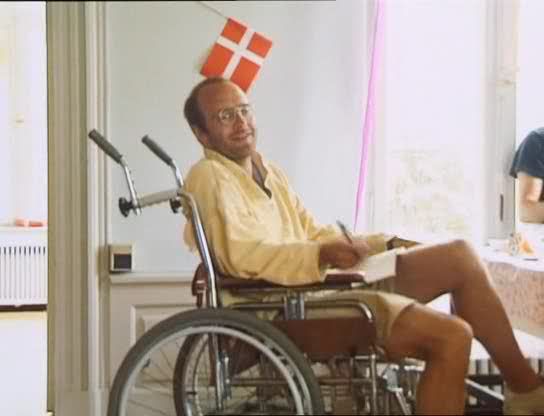
This is probably one of the most personal pieces I've written, but considering the subject matter, it felt appropriate to bring in some of my own personal life into it. The only other thing I can say is that there were too many flags to be able to put them all up. A co-production between six countries, it'll be insane to stick that many into such a small piece. I'll just stick with the Danish one and have the others in the labels.


Review Link - http://www.videotapeswapshop.co.uk/16026/i-is-for-the-idiots-1998-director-lars-von-trier/

From http://i1143.photobucket.com/albums/n627/worldscinema/2nakapz.jpg

Tuesday, 11 June 2013

Mini-Review: Dracula – Prisoner of Frankenstein (1972)

From http://wrongsideoftheart.com/wp-content/gallery/posters-d/dracula_prisoner_of_frankenstein_poster_02.jpg

Dir. Jess Franco
France-Spain

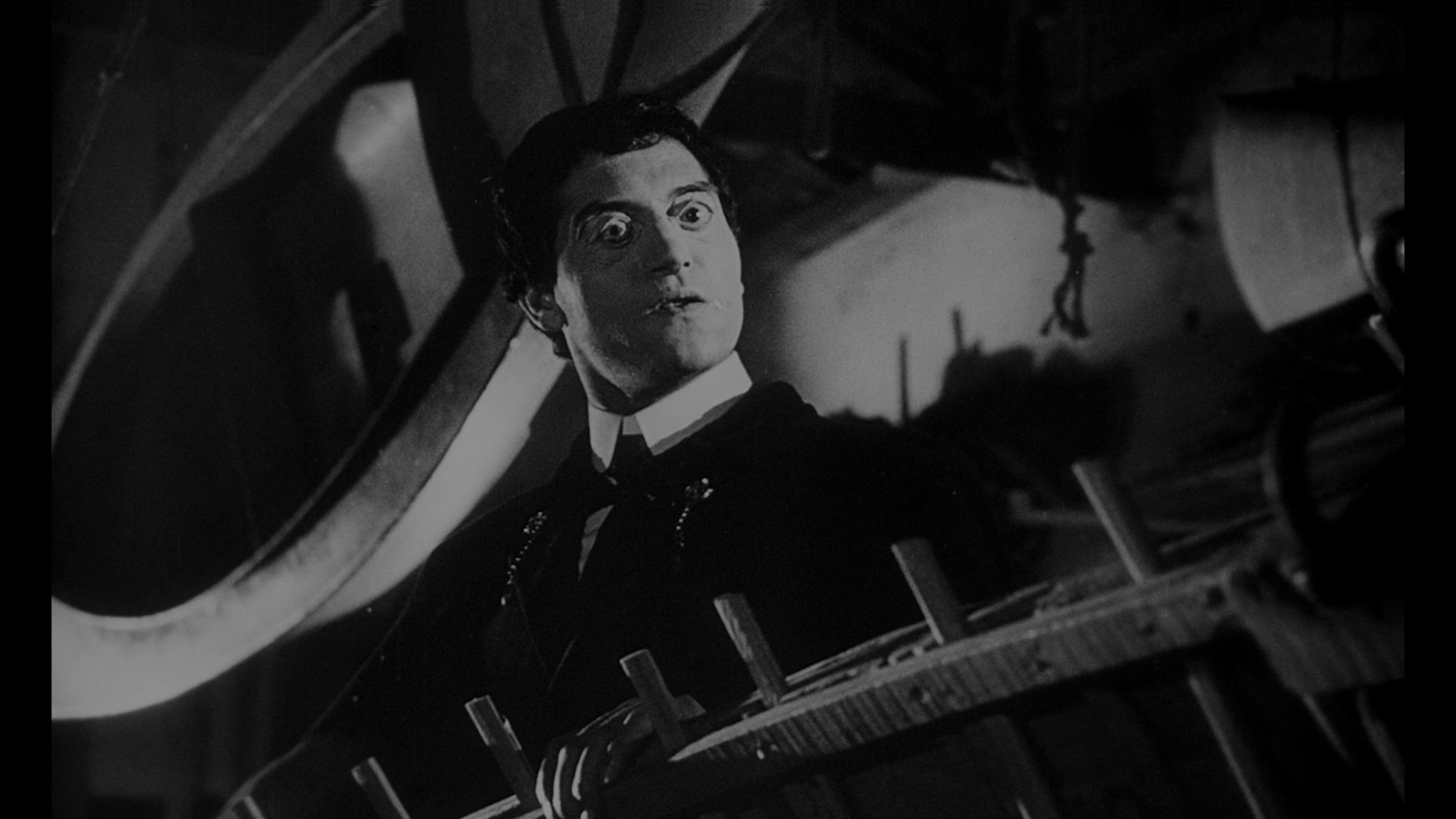
For a B-movie, it’s amazing to see how more economic and more watchable it is when it removes all the perceived requirements of a horror movie that usually hampers it. The first conversation between two characters takes place, in the eighty minute film, at fifty nine minutes, in vast contrast to a genre which is usually full of tedious character dialogue. Exposition is kept to an extreme minimum and it’s all about the images. Wide eyes heightened by makeup and prosthetics. Rubber bat abuse. Erratic camera zooms and female vampires. Times in Dracula: Prisoner Of Frankenstein I drifted off but I was not bored. Instead I found myself catching up with going on after this happened and finding myself gleefully pleased by the fact this happened. Dr Frankenstein (Dennis Price) and his hunchback assistant take over the castle towering a small village only to find the remains of Dracula (Howard Vernon, fake grey makeup, but with the look and bugged-out eyes perfect for a more corpse-like, mute Dracula). Resurrecting him, Frankenstein intends to use him and his turned victims, alongside his own Frankenstein creation, to start his own army of creatures to dominate the world. He now has to deal with Dracula’s arch enemy, a doctor (Alberto Dalbés) and the female clairvoyant who, almost catatonic, he uses to detect the evil beings.


The story is simple. It is stretched out for the whole of the film, languid and slow paced, with the main story only starting proper halfway through. But instead of padded, unbearable dialogue, which sadly can be found in Jess Franco’s own The Bloody Judge (1970), and like that film, ultimately uninteresting plotting, this one instead reveals in the material in what it shows onscreen. It comes off like a silent film in tone in how it, unlike many other movies, managing to convey its story economically through the images themselves and atmosphere. It’s ridiculous – the rubber bats being wiggled up and down just off camera, the idle attitude to plot points – and its last quarter throws in another classic movie monster and ends in the most abrupt of ways possible. But not only does it outdo Van Helsing (2004) in every conceivable way in terms of movie monster mash-ups, but this mix of economic storytelling and the complete lack of it makes it far more engaging. Franco is capable of some striking images even in a low budget film like this – Vernon’s mad eyes and blood around his lips, a hand poking out of a coffin – and scenes, such as Frankenstein’s monster kidnapping a female single with little effort whatsoever, are memorable. Its non-sequitur ending makes it better, adding to pulling the rug out from under your feet with a kick to push you further into its tone. Its far more entertaining like this, and it’s a testament to Jess Franco, as I’ve started going through his filmography, that its already clear that he had a distinct style which used weaknesses to his advantage and, decades later, makes films like this that could have been atrocious an immensely watchable surprise.

From http://whydoesitexist.files.wordpress.com/2011/04/vlcsnap-2011-04-13-18h12m47s78.png

Wednesday, 6 February 2013

Mini Review: Cannibal Apocalypse (1980)


From http://wrongsideoftheart.com/wp-content/gallery/posters-c/cannibal_apocalypse_poster_01.jpg

Dir. Antonio Margheriti
Italy-Spain

[Note: The following is a start of a new post type on this blog, capsule reviews for films that need their own reviews separate from the This Week... series, which will return soon, but do not need a longer review. I hope these will be as of interest as every other type of post too.]

I’ve always found the pace in Antonio Margheriti films unbelievably sluggish. About a virus, that causes people to become cannibals, which is unleashed into an urban environment, Cannibal Apocalypse has a potentially great idea. The infected individuals, who first spread the plague, are Vietnam veterans, with John Saxon’s protagonist as the commander who is bitten by one of his infected men during the opening Vietnam scene and must deal with, years later, the likelihood of the disease corrupting him, an interesting take on the after effects of war from within the Italian cannibal subgenre. The Antonio Margheriti films I’ve seen as well always had potential in their production especially since he had a talent for action choreograph. Sadly this film feels like an impersonal film that goes from A to B without any sense of thrill, emotional connection or, excluding a well known gore moment, any visceral punch.

The plot is erratic as well, not becoming a cannibal virus film, or having anything to do with cannibalism for the most part aside some gory afterthoughts, or becoming a film fully from the perspectives of the infected Vietnam vets who are being hunted down. There are many plot holes in the film, but the real issue is how it never goes anywhere truly interesting. It takes a long, needless amount of time to get to the virus breaking out, but it never feels impactful, and after that the characters and plot threads are too threadbare to have any effect. It is extremely dull. The only thing of worth really from this former Video Nasty is one of the most effective gore scenes from Italian cinema which is, sadly, spoilt on the UK DVD cover even if the film is not good. Giovanni Lombardo Radice, who I’ve gotten into as an actor ever since viewing the DVD extras for the Arrow Video release of City of the Living Dead (1980), is also of interest alongside John Saxon, but the annoying thing is, like many Video Nasties, this is just a mediocre and ultimately tedious genre film.

Frpm http://www.horror-extreme.com/images/cannibal-apocalypse/cannibal-apocalypse-3.jpg

Thursday, 10 January 2013

A Videotape Swapshop Review: Vampyros Lesbos (1971)

From https://blogger.googleusercontent.com/img/b/R29vZ2xl/AVvXsEjN5D8Pkq17NLJ71syeh3dn2cwRaadqLs1SGAQ68LspcbVxtct7rrGiADAoxYQHNves4ZR_RjgQ9Sc3vovk2Y-HezbDBTf4f0bx37sbS3CQBaNc3Heukq0SWfSKuTVYdH8BYVlVUkFyMx8/s1600/Vampyros_Lesbos_017.jpg


Dir. Jesús Franco
Spain-West Germany


The following is one of two reviews of mine for an month’s worth of Jesus Franco and Jean Rollin reviews on Videotape Swapshop this January. Some decadence and sex is a nice palate cleanser from the bad films you’ve all been reading reviews of this week.