Friday, 8 November 2013

October 2013

1. Brain Dead aka. Dead Alive (Peter Jackson, 1992/New Zealand) [Rewatch]
2. The Cremator (Juraj Herz, 1968/Czechoslovakia)
3. The Golden Coach (Jean Renoir, 1953/France-Italy)
4. Kagemusha (Dir. Akira Kurosawa, 1980/Japan-USA) [International Cut] 
5. Prisoners (Denis Villeneuve, 2013/USA)
6. Inglourious Basterds (Quentin Tarantino, 2009/Germany-USA) [Rewatch]
7. The Keep (Michael Mann, 1983/USA) [Rewatch]
8. A Woman After A Killer Butterfly aka. Salinnabileul ggotneun yeoja (Ki-young Kim, 1978/South Korea)
9. Ringu (Dir. Hideo Nakata, 1998) [Rewatch]
10. Häxan: Witchcraft Through the Ages (Benjamin Christensen, 1922/Sweden) [Rewatch]
11. Faust (Aleksandr Sokurov, 2011/Russia)
12. La tête contre les murs (Georges Franju, 1959/France) [Rewatch]
13. Macross Plus (Shinichirô Watanabe and Shôji Kawamori, 1994/Japan) [Rewatch]
14. Straight on Till Morning (Peter Collinson, 1972/UK)
15. Persona (Ingmar Bergman, 1966/Sweden) [Rewatch]
16. Horrors of Malformed Men (Teruo Ishii, 1969/Japan)
17. Blue Rita aka. Das Frauenhaus (Jesus Franco, 1977/France-Switzerland)
18. Twixt (Francis Ford Coppola, 2011/USA)
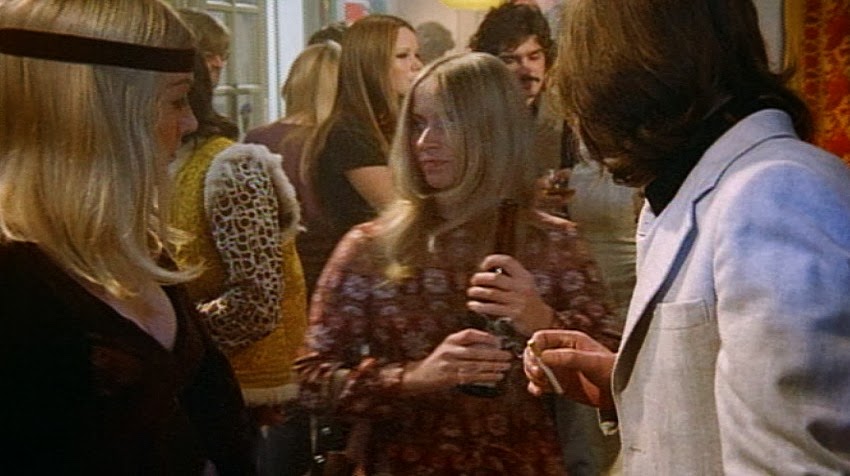
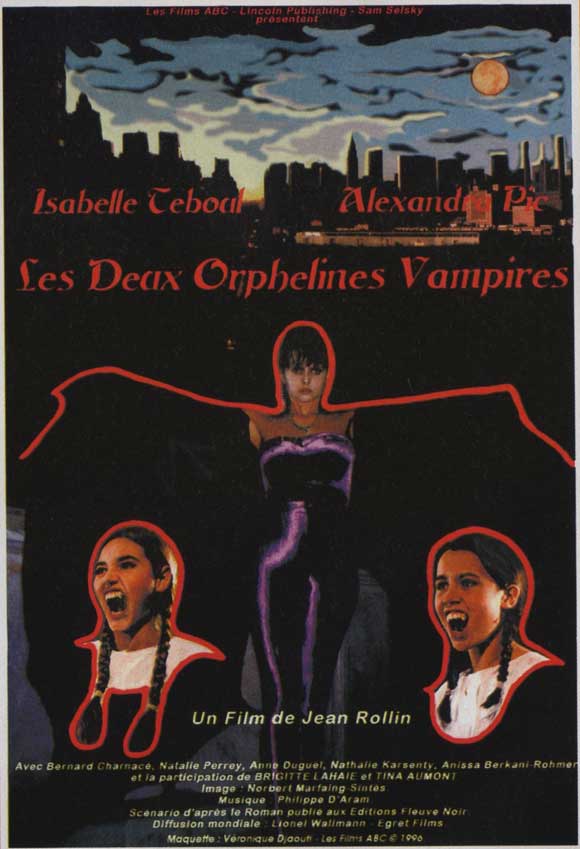
19. Two Orphan Vampires (Jean Rollin, 1997/France)
20. Halloween III: Season of the Witch (Tommy Lee Wallace, 1982/USA) [Rewatch]

Honorable Mentions: Time to Leave (François Ozon, 2005/France); Mean Creek (Jacob Aaron Estes, 2004/USA) [Rewatch]; Penthesilea: Queen of the Amazons (Laura Mulvey and Peter Wollen, 1974/UK); GenoCyber Episode 1 (Koichi Ohata, 1994/Japan); V/H/S/2 (2013/Canada-Indonesia-USA); Jack the Ripper (Jesus Franco, 1976/Switzerland-West Germany)

I love Brain Dead too much to not put it at my number 1. Forgive my blasphemy. But its a strong list of non-horror films in the twenty shown, including a film I saw at the multiplex I never even knew existed until just before seeing it, showing new movies can be great. As for horror, of course I completed Halloween 31 For 31 even with the delay that took place. What have I learnt from this and the other horror films I watched for Halloween? I could say "watch old horror films only" like a contrarian, but its a bit more complicated than that, especially since I saw V/H/S 2 (2013) and liked it. Frankly though, there has been a considerable drop in artistic quality in the sort of horror films that get wider attention; they're not interesting, for the most part, at all and the few gems are unconventional and neglected for a dull Chucky sequel. In fact all the horror films on this list are not conventional. Even Halloween III would have been a bizarre work to see, back when it was first released, for people expecting a Halloween sequel, which sadly did cause horror cinema to lose a potential franchise with a difference in favor for more regurgitation of Michael Myers. With a global bent for this year's series, this affirms this idea further, as I've seen some very generic films even from countries like Iceland, while the really interesting films are products of very distinct directors, very distinct source material like Japanese author Edogawa Rampo, and/or sheer bloody mindedness. Revisiting a film like Ringu, which kicked off a whole boom in Asian horror movies, you realise that even a source that eventually led to generic films could be so drastically different from its offspring, especially the film's slow, methodical, water obsessed tone.This month affirms that I need to be even more picky than I am with horror cinema. Why waste my time with something that looks generic just from the DVD cover when I could see more films by the likes of Ki-young Kim? If there was a poster boy for this Top Twenty list, he's up there because his film on the list was made independently by himself, ostracised from the Korean film industry, with the money his wife gained from her dentistry career. That's devotion.

Worst film or work? There were two things I gave up on again, but one, the anime TV series Highschool of the Dead (2010), will be attempted again at some point. It'll be a messy experience to get beyond a single episode, with its gratuitous animated images of schoolgirl's underwear and breast physics like plastic bags full of tap water, and that was just the first episode before I gave up, but I want to be an anime completionist, especially for horror anime as it isn't as common as I wish it would be considering the flexibility animation could provide. Worst work I got through? Unfortunately Jess Franco made Bloody Moon (1981); for every great film of his I'm seeing, it feels like there has to be a terrible one to balance out the discrepancy of enjoying his films too much. Cosplay Complex (2002), a terrible anime so bad I'm not actually going to review it on here, its fetishes no way near as bad as the pandering, lazy tone of the whole thing in general. The Filipino film The Killing of Satan (1983), for the Halloween project, was the worst film of the whole series of reviews, slapdash to the point its no longer entertaining. Nude Nuns with Big Guns (2010) showed what true offensiveness in films is, laziness making it truly offending because it feels like the creator(s) are grasping for straws with the most base content without any daring or intelligent transgression to it. And it managed to make the concept of looking at beautiful naked women, for a heterosexual male like myself, a numbing experience with no real physical engagement to it, and on a serious point, probably the discovery for me of what it really feels like to see human sexuality turned into a produce with no humanity to it, especially on such a cheap looking film. Your libido will die of boredom before you get to the issues of sexism. The real worst film though, from the year of my birth, was Houseboat Horror (1989). Wait for the review of that one...

61 Works Watched In October
15 Rewatched Works
46 New Works Seen

=============
1. http://www.forafewmoviesmore.com/wp-content/uploads/2012/04/deadalive_01.jpg
2. http://farm5.static.flickr.com/4009/4335729664_7bd097a763_o.jpg
3. http://s3.amazonaws.com/auteurs_production/images/film/the-golden-coach/w448/the-golden-coach.jpg
4. http://i39.photobucket.com/albums/e189/drunkenmaster42/Kagemusha.jpg
5. http://nextprojection.com/wp-content/uploads/2013/05/Prisoners_2013_1.jpg
6. http://www.sensesofcinema.com/wp-content/uploads/2009/09/Inglourious-Basterds-3.jpg
7. http://wondersinthedark.files.wordpress.com/2011/02/thekeep11.png
8. https://blogger.googleusercontent.com/img/b/R29vZ2xl/AVvXsEg3rzvs40WLgSv2bVHEjKjZSH_Pz1QpADtxHJPlhF_vXyTEPlOkr3tXw5piU8WCxI_3rqlN4aZ4FHTZKpLbiFHEiToGluDF-ZiF0Xuw1xRtWDGQwrhYD2Sko1u_1zdDraqcwBg6N3ShZuI/s1600/KB02.jpg
9. http://www.squabblebox.co.uk/admin/wp-content/uploads/2013/04/Ring.1998.BluRay.720p.x264-MySiLU-007.jpg
10. http://classixquest.files.wordpress.com/2013/09/hax1.jpg
11. https://blogger.googleusercontent.com/img/b/R29vZ2xl/AVvXsEgI0lk4_tK39t7xEoCwMLCJCaCOaZQUnrnUYmnPboCV6zO169jVz3k2PmLO13fH0gWdakdK6SmMPVrUyweZGyPsrGrPQpNCmC4vrxQ7vlZS6h4dJTwdT-vG5GdZnBIeyyNB_T_dFTBHfVQ/s400/vlcsnap-2012-08-25-15h00m52s54.png
12. https://blogger.googleusercontent.com/img/b/R29vZ2xl/AVvXsEi6qs1VR3Rdb8T6ZDSfa_CPH1r7_7ULBw6t5rX4GHyfUAlRlxvWfEmcw3OwgwlQ8BNT3e60OPnR0_tZOfubBj_3V7gGIzy6O3Wkx37pk7c-hvEYpAGqiSubWbtqfGYtwPOQlnlH15VKGrY/s1600/la_tete_contre_les_mursPDVD_035%252520.jpg
13. http://www.yukianimereviews.com/images/macrossplus11.jpg
14. http://farm7.staticflickr.com/6192/6041055562_4df2cd6431_z.jpg
15. http://lisathatcher.files.wordpress.com/2012/02/persona6.jpg
16. http://theuraniumcafe.files.wordpress.com/2011/07/horrors_of_malformed_men-16.jpg
17. http://wrongsideoftheart.com/wp-content/gallery/lobby_cards/blue_rita_glc_01.jpg
18. http://image.toutlecine.com/photos/t/w/i/twixt-twixt-twixt-2011-19-g.jpg
19. http://admin.highdefdigest.com/picture/original/32954
20. https://blogger.googleusercontent.com/img/b/R29vZ2xl/AVvXsEjvbScp72NRDCzrY4SP_0PsKCAjDrG-VMxSogMO7wjIHQaxcnhItQxZgxvNUXL-AxkXh9bbr9hC8yo-ifz27ZEfsgHNstVABTonKHfREEWll90qXK5Aj3l6Q3KWjKvMAAcmVKZ1vje9ofvt/s400/halloween+3.jpg

Tuesday, 5 November 2013

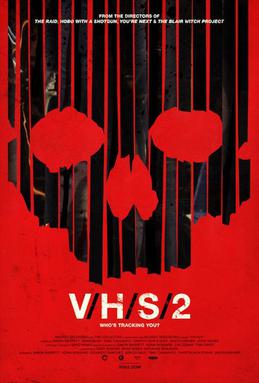
Made From Ingredients From The USA, Canada and Indonesia: V/H/S 2 (2013)

From http://upload.wikimedia.org/wikipedia/en/9/94/V-H-S-2_Poster.jpg

Dirs. Simon Barrett, Jason Eisener, Gareth Evans, Gregg Hale, Eduardo Sánchez, Timo Tjahjanto and Adam Wingard

Like a beautiful coincidence, I cover the original V/H/S (2012) months earlier, and like this sequel's release in Britain, you get V/H/S 2 the same year near Halloween. How many franchises get both the prequel and sequel debuting in the UK in the exact same year to each other? There is a slight caveat to the words "beautiful" though. The original V/H/S wasn't a good anthology film. Set around a mysterious series of VHS tapes found in a house, a Wunderkammer of death or an atrocity exhibition, the first film in hindsight was the creation of directors who clearly wanted to make dramas than horror shorts for the most part, and barring one legitimately good segment, none of them were good at the drama in their work either. They dangerously became films that symbolised some kind of elite club of white, middle class, male twenty something horror fans rather than horror shorts for everyone; if the grindhouse phenomenon has (thankfully) died on its backside, its unfortunately been surpassed by a vocabulary of mostly swearing, quasi-drama with no interest and power dimensions amongst peers that really didn't need to have been fed by accident with V/H/S 1. It was a nostalgia for a format (VHS) without considering the potential mysteries of the object in question, and with no real sense of atmosphere and tone, a bane on the genre's existence that has frankly sabotaged it for decades long before I was even born. 

Harsh words, very harsh words, but while I have suddenly become enamoured with this new era of anthology films, at the moment like giving bloodied candy to a four year old, the first film was the one blot when its sequel and The ABCs of Death (2012), for their flaws, had been enjoyable in their fragments, and for both showing potential new talent and even bringing back interest in directors I was cold to. V/H/S 2 can still be criticised for many things, and is as much as an all men's club frankly, in an era where one would hope for more female horror directors to exist, but it's still a drastic improvement on the original. No longer, thankfully, preoccupied with evil women as the segments in the first did barring that one good one which skewered the notion. While still wadding in violence, some sex and general misanthropy, it's for more inventive and trying to do something generally interesting in all the key segments. And, aside from returning contributors Simon Wingard and Simon Barrett,  you've got clear outsiders with different ideas now to bring to the table. A Canadian Jason Eisener, whose work with Hobo With A Shotgun (2011) and his short Youngbuck for The ABCs of Death is that of someone obsessed with visual style and bouncing off the walls in his anarchic tendencies. Eduardo Sánchez, co-directing with Gregg Hale in one of the two contributions done by a duo, one of the directors of The Blair Witch Project (1999), the beginning, legitimately, of the found footage subgenre that this anthology is part of, the drastic shift from that film to a decade or so later adding a potentially fascinating layer to Sánchez's contribution. And finally, expanding the film beyond North American soil, there is the pairing of Indonesian director Timo Tjahjanto and British director Gareth Evans, the later significantly known for martial arts action cinema, not horror, and bringing a drastically different perspective to the material because of this.


From http://media.tumblr.com/5fd0d1b998deb3c5771e411bb34cac86
/tumblr_inline_mpopgjsUxO1qz4rgp.jpg

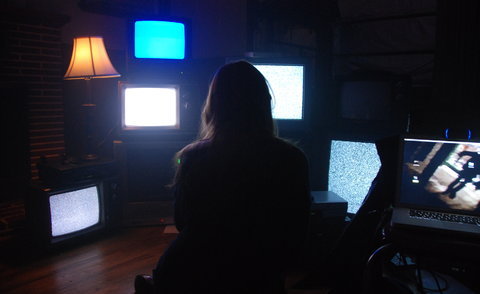
Tape 49 (Dir. Simon Barrett) - V/H/S 2 needs some suspension of disbelief to make it work fully. This is not a criticism at all, as most films need one aspect, or a couple, that need to be accepted as they are. That's the nature of fiction, and of cinema. But it has to be bared in mind, all these occult and supernatural events put on videotapes, with some of the events composed of more than one camera, all existing in the same world as two private detectives search for a young man. They instead find an abandoned house full of these tapes and one of them watch them to figure out what's going on. It's fascinating to imaging whole worlds within one bigger one, subjectively questioned by the film without it realising it, all of which may have more disturbing effects on a viewer than showing mere gristly demises. As the wraparound story that bookmarks the four key segments, its vastly superior to the one in the first film because it actually makes sense. The first one was a clusterfunk of bad pacing and editing, while this actually has a pace. It's the weakest piece alongside Adam Wingard's, the directors alumni of the prequel pointedly, but it at least fits the improved quality of this sequel by being interesting to view. What brief titbits it has about the meaning of these tapes' existence is tantalising this time as well; I hope if V/H/S 3 ever happens it suddenly turns into Videodrome (1983) in the implications made here. Brian O'Blivion would be proud of the idea this nudges towards, but just needs the final push if another sequel is made.

From http://cdn.bloody-disgusting.com/wp-content/uploads/2013/06/V-H-S-2_Naked_Chubby_Banner_6_3_13-726x248.jpg
Phase I Clinical Trials (Dir. Adam Wingard) - A man (the director himself) is given a robotic eye transplant, with recording equipment inside it for the creators to monitor its functions, only to find that he can see things with malevolent tendencies he didn't see before. The reason this is the weakest of the key segments is because its difficult to write a lot about it. It's a supernatural story reminiscent of The Eye (2002) but with a very short length, cutting it down to a basic structure, and a gimmick of being recorded from an eye in a quasi-Enter The Void (2009) first person. But it's still a higher quality work than almost all the shorts from the first film. It raises the interesting question of how someone got hold of the footage in the first place, an enticing what-if rather than a logical flaw. It's fascinating for a film in this anthology to be seen through a person's eye. It also starts the greatest virtue of V/H/S 2 - that it takes advantage of two key aspects of the found footage genre and uses both well. That they're filmed on various video recording devices, and that, when done properly, it's very kinetic and all about movement. None of the segments are mindless shaky camera, with even the chaotic moments where the image is incomprehensible being appropriate for the moment. It's far from perfect, and you will raise your eyebrows at the sex scene that suddenly happens, verging close to the same questionable, laddish mentality of the first V/H/S film your dread even if you would find it titillating in a perverse way, any potential eroticism undercut by the fact that, frankly, it's an excuse for nudity without just admitting its an erotic moment and objectifying the actress for no justifiable excuse in the context. But it's a good start to lead to better shorts, ending well in a panicked state, with an interesting idea, leading on to segments which are superior with running with these ideas that can top it easily.

From https://encrypted-tbn1.gstatic.com/images?q=tbn:ANd9GcR62Pn0_XJpuoIqtC0nQZAvEhsn-qdqcCzzjYfAiu2afqHO3zwz

A Ride In The Park (Dirs. Eduardo Sánchez and Gregg Hale) - A male mountain biking aficionado straps a head-mounted camera on and goes to record a morning bike trek in the local woodland park. Unfortunately he rides into a zombie outbreak. What happens is a really clever take on such a tired subgenre, the zombie film, as he is bitten and becomes a member of the undead, shown through improv zombie-cam. It's great to see one of the founders of the found footage subgenre, and a producer of said original film, bringing something very interesting here in such a simple thought, one that someone would come up with while drinking one night and be amused by it.  In fact it may actually be superior to the more acclaimed segment Safe Haven for the amount of emotions that the premise suddenly holds when its presented as well as it is here. How curiously charming it is to see the world from the shuffling dead, almost like flesh eating newborns who, in a nice touch, will chew on anything before they figure out what they're supposed to sustain themselves on. How a victim, as they're being eaten, will suddenly become undead and the attackers suddenly stop and welcome them in the horde, wandering off together. How hilarious the film gets in a sick way even when the zombies get to a birthday party, the use of various camera, while a leap in logic too, helping the film significantly in tension. And also how deeply sad by the climax the story becomes and how it plays out. All these emotions co-exist in the same minute within the film too, forcing you to feel them all together for maximum effect. It's short, its succinct, but brilliant for it.

From http://diaboliquemagazine.com/wp-content/uploads/2013/07/VHS21.jpg

Safe Haven (Dirs. Timo Tjahjanto and Gareth Evans)- The biggie. The short everyone talks about in this anthology. The centrepiece in its longer length and bombast. Set in Indonesia, a group of filmmakers manage to get inside the home of a controversial cult to interview their leader, dubbed only as Father, and let him speak on his own terms about their beliefs without opposition. In the middle of the interview, a bell rings and Hell on Earth tales place. It's the most maniac, insane, and downright violent of all the segments, but it's also incredibly complicated in structure. It has numerous camera the footage is recorded from, all that needs to be co-ordinated so the viewer gets what it going on, and doesn't get to know everything at the same time, before and during the chaos; and for all the madness that takes place, it's also as much a story about the filmmakers too, while simplistic, where there's conflict and a strained relationship in their camp which turns the final act into more darker implications. I have seen only one film from each director who made this, and while I am very open to them now, those two works weren't good. Evans is famous for The Raid (2011), but for its visceral fight scenes and their craft, its completely bland in the ideas it actually has. Tjahjanto I know of only from his few minutes long contribution to The ABCs of Death, L Is For Libido, a potentially interesting piece, very well made, that becomes pointlessly shocking for the sake of shock value, almost becoming silly when it tries to cram as many taboos as it can into its short length. There is a possibility, on another viewing, that this ridiculousness was actually a really clever, unexpected moment of self consciousness from Tjahjanto as a horror director who realises the perversity of upping the disgusting sakes for viewers mentally masturbating over it, but it'll have to wait until rewatching that piece to see if I change my mind on it. As a duo thought, I want to wager they cancelled out the other's flaws. Evans pulling Tjahjanto back from pointless gruel, but Tjahjanto getting Evans to try to create something very interesting. It's been seen before in terms of the ideas of the short, and may be pointlessly twisted at times, but Safe Haven is a gem because it's clear in its goal, and baring some disappointingly obvious CGI, works. It could be off-putting in content or how it uses very well used clichés in horror cinema, but it never feels pointlessly sick or insipid, and ends on such a high note that, honestly, this should have been the final segment of the four that leads to the wraparound story's own conclusion. And while I am open to these directors now, I think the two should work together more, likely to boost Indonesian genre cinema up again as a pair combining styles.

From http://zanyzacreviews.files.wordpress.com/2013/10/rtyrtrty.jpg
Slumber Party Alien Abduction (Dir. Jason Eisener) - It's unfortunate that Eisener had to follow Safe Haven. His short - the name on the tin says it all, but with a large part of it recorded on a camera attached on a dog's back - should have been between the zombies and Indonesian cults. Its flawed, the second weakest of the key segments, but I admit I have hope for the director. As someone who likes putting works as one single, giant creation of its creator(s), I wish Eisener gets better and better. Hobo With A Shotgun has an ending the annoyingly peters out, but the energy of the first three quarters was so infectious and legitimately daring than tedious in tone like so many neo-grindhouse films. His segment for The ABCs of Death was structured like a politically incorrect music video, which he pulled off perfectly. If there's another flaw with V/H/S 2, all the segments are structured around chaos suddenly taking place. For the most part it failed, but at least the first film has a varied choice of plot structures. But this short's still fun. Still scary when it gets hectic, with strange aliens that clearly hung around a Edvard Munch painting or two, and the premise of making most of the film shot from a dog's perspective, aside from some hijinks early on from the young cast, again takes the kind of premise joked about in a night's trip to the pub but makes it interesting. From the "eyes" of a small dog, looking up at the world, or crawling in the undergrowth outside, you are truly lost in what is going on, which makes it very interesting as a concept short. The result is still impressive even if it's in the wrong place in ordering the segments together.

From http://media.naplesnews.com/media/img/videothumbs/2013/06/04
/158794_med_1_thumbnail_t320_240.jpg

Altogether, there are flaws, but this still raising the bar higher than per usual horror films of now. With this and The ABCs of Death, as I've already stated, there is a potentially wonderful phenomenon approaching of genre anthologies like this becoming a subgenre of interest. I still have some reservations admittedly, when directors coasts, or that they spend their time making entries for these anthologies than actually making feature films. But in the subgenre's favour, you cannot rest back on the worst aspects of genre filmmaking - padded plots, workmanlike aesthetics, tired clichéd structures - in such a restricted short length and small budget unless you want to be the one the viewers dub the bad entry in said anthology. It can potentially cut the chaff from these directors so they can improve, and as this film and the upcoming ABCs of Death 2 show, the combination of so many unconventional choices of directors from various generations, nationalities, even not known for making horror films, could make for some interesting combinations. What needs to be done with the subgenre if they're now in vogue, funded by theatre chains, DVD labels, or in this case Bloody Disgusting, creating an interesting ouroboros in horror films and their audiences, is to prevent it from what unfortunately happened with the first V/H/S, a small club whose language is befitting a small clique that bars outsiders and the new perspectives from it. Here at least there were four different nationalities in the director chairs, and even the plot structures are similar, you have people of various areas, including one from outside of horror, nonetheless making a film with a very consistent tone. Leaner with less segments, clearer but replacing the vagueness with material that adds layers to the segments, and a kinetic grace to all the segments in using the cameras mixed with experimentation. It's a shame it has to replicate the obnoxious end credits style of the first film - abrasive music, and a barrage of sex and gore scenes more closer to a thirteen year old boy or two writing the project. The film that preceded it, while still schlocky, was far more interesting than this.

From http://media.sfx.co.uk/files/2013/10/VHS-2-bloody-chair.jpg

Monday, 4 November 2013

Representing England: Straight On Till Morning (1972)

From https://blogger.googleusercontent.com/img/b/R29vZ2xl/AVvXsEgc1KZU_e1N_nOTfTYeIQxeno6EzhT_P_n1odolVBa8G1Wo72zJjh1PzMAsSIxfT7qza4WGFhRj5lG3mWwxJCjqOVL_2GlyBljloVDG4X1cm8Szm2CZ0DAas_r5Zon6fWpaXamHTfNq0A0/s1600/straight_on_til_morming_quad.jpg

Dir. Peter Collinson

It's a great moment when you find something with no knowledge of it, no expectations good or bad, no idea what its actually about, and find out it's great. A Hammer production, Straight On Till Morning is not quite a horror film but is still creepy and is completely unconventional to most British genre films I've seen from this period in many ways. It's a surprise that Peter Collinson is the director of this too. Yes, he made The Italian Job (1969), but while its very well made, it's also a bit of a personality-less work too pleased with itself. And Fright (1971), a potentially great proto-slasher with Susan George, was dull. Even if it becomes somewhat more conventional by the half way point, this is such an unexpected surprise.


From http://www.horrordvds.com/reviews/n-z/sotm/sotm_shot4l.jpg
A young woman Brenda Thompson (Rita Tushingham), clearly with some psychological issues, simplistic, almost childlike, naive with an incredible awkwardness with trying to communicate with others, leaves her home to go to London for her "Prince Charming". In London at the same time is a young, dashing man named Peter Clive (Shane Briant), almost childlike too, but like his namesake Peter Pan, more of a free spirited young boy with a clear idea of what he wants than innocent and easy to lead like Brenda. It's also clear very early on that he has a dark side, and when these two meet and start to live together in his home, his other side is just lingering under the surface. It's an odd film, a drama that yet steps into an unsuspecting territory for most viewers. The first half, before the two meet, separate stories, is played out in an incredibly dense, chronology breaking series of images and scenes back and forth, through almost modern editing, where you can see the events of a character new and how it was set up together one-after-another, the two separate threads quickly bounced between in a pace of an expert juggling act. I can't help but admire the gall to have made this section this way, and barring the almost drops in background sound when it skips from one place to another, at the same time or the past or future, and back again, it's done exceptionally well. I cannot help but expect these seventies genre films from my country to be workmanlike and plainly made barring the exceptions, so editing that's from the page of Nicolas Roeg, which it can actually pull is, is incredible.

From http://4.bp.blogspot.com/-1RV9nxNwOAI/UFYnmMFtiSI/
AAAAAAAABWY/nSYyFKC5S8I/s1600/1.jpg
Quite early into the film, for her and eventually both when the characters are interacting, actors Tushingham and Briant hold the giant task of keeping their story up on their shoulders exceptionally. Tushingham perfectly conveys a girl who, frankly, is so awkward in her behaviour that unfortunately you would be put off if she tried forcing a question to you as a random stranger you encounter, but you sympathise with her too. Briant as Peter is as sympathetic; the nature of his character the viewer knows but Brenda doesn't is nerve-shredding, but the film lets you see why he is who he is, and feel pity for him still. But even she, quickly, realises something is amiss with him, racking the tension up even if she's still smitten by him. When it reaches the last half, when she meets him and moves into his house, and the abstract editing style is mostly dropped, Straight On Till Morning is still unconventional. The characters are so different from what you usually expect that their interactions, as her mother and others try to find her, that you cannot help but feel pulled further into the narrative. It's a very well made film, but also one even by this section of the story presents the material in a different way. Moments when the abstract editing is used occasionally again for aspects needing a break in conventional timeframe. The feeding out of characterisation that is structured drastically different from most films - we know the dark secrets of Peter, but the reasoning and detail behind it is what's slowly given to us. Even how the film ends is very unexpected. Sound design for the film is as complex in its design, especially the ending where its use of it is unbelievably disturbing. The ending itself doesn't wrap itself up in a neat package either for added and devastating effect.

From http://i1097.photobucket.com/albums/g348/stillafool2/vlcsnap-1200588.png

That I've never heard of this film at all before now is shocking in hindsight. Maybe it was too strange. The editing in the first half too much for many viewers expecting a basic one just to give them the obvious plot points. It may have not been enough of a horror film, but also encased in such a unconventional tone. Briant as Peter is a youthful and handsome man, but Tushingham really has to act outside one's comfort zone, not playing a "beautiful" young woman as one would presume there to be in British genre films, in a decade which would go to cover girls and sexpots, but someone who would be dismissed as an ugly duckling, contrasted with an actress playing the conventional attractive woman who is pulled into Brenda's life after she joins hers first. Tushingham also has to act out a performance, let alone act physically, as a character who is as awkward as she is, so easy to break, and with moments of really intense crying that would not be seen as "glamorous". Her performance and character reminds me of Sissy Spacek in Carrie (1976), with as much of a Herculean task on her shoulders, despite the importance of Peter being filled out with a great performance, which she overcomes and succeeds with immensely. Nothing about the film is really that digestible as a conventional horror film or as drama. Brutally, British cinema has a terrible tendency to be mostly celebrated for its mediocrity. Anything legitimately great, unless it cannot be ignored in its size or scale, is dismissed as an "oddity", or lambasted as pretentious or failed. The good news is that films like this one are available - this review could be said to be sponsored by The Horror Channel, a cable channel that says what it does on the tin - and we can appreciate our cinema culture now as Brits, with those few exceptions needing a release still, without having it be dismissed for the obvious BAFTA winner. Pretty snarky and cynical on my part, I know, but I'm not blaming the obvious, cheap targets like Hollywood's influence on cinema, but that Britain as a cinematic culture has been forced to pander to middle class viewers with no willingness to be brave or really imaginative. If a Hammer production can be this unconventional, it shows there is a refreshing alternative to this mindset, (and not necessarily a dismissal of the rest of Hammer's  catalogue either), and Straight On Till Morning is such a strange and uncomfortable work. With its ending, returning to it, you would expect any other film to continue on with the perceived evil being stopped and social harmony to be restored. It doesn't happen and it ends. The point of the story is gained through this abrupt end, the devastation already having effect and irreversible. It's not childish nihilism either, but sadness and surprise for two very damaged people who are not a glamorous couple who live in the suburbs. Gone is the compromise the director's most well know film The Italian Job was stuck with - where the celebration of antisocial frolics was tainted by having it being done "for Blighty" - and suddenly he made up for it with such a fantastic piece of dream fiction.

From https://blogger.googleusercontent.com/img/b/R29vZ2xl/AVvXsEjWIsTdcmruKcfjAWj-v56xbDRhYtu6VtPQPWWnnEbOg5FufwlCxfBeYwZ97nCKwCNMvFba3VW9qn_g3RxtaxzJykLL2kWnViSq89F1194T63pbEvUTWbI6-HxxnkZQu6ppF3AgUatE9sv4/s1600/10+party.jpg

Sunday, 3 November 2013

Representing France: Two Orphan Vampires (1997)

From http://images.moviepostershop.com/two-orphan-vampires-movie-poster-1997-1020492359.jpg

Dir. Jean Rollin

It's a delightful surprise that this film doesn't feel like a nineties horror movie at all. As much as I'm obsessed with the nineties, one of the reasons I'm obsessed with it is the tackiness of the era as well as the positives. Not a lot of horror films from that decade are celebrated, as compared to other eras, for this reason.  Jean Rollin didn't make a tacky film in the autumn/winter of his career here, thankfully making a very interesting one instead. It's very much an art film, against other films of his I've seen, which must be beared in mind. It's amazing too that I can compare this film to the work of fellow French director Eugène Green, of The Portuguese Nun (2009), with his long, almost Bressionian moments of dialogue, dangerously near the precipice of pretentious but ultimately charming and rewarding in being a bit more freer to let scenes play out as far as needed for mood and effect. This is the same for Two Orphan Vampires. I will openly admit it's going to be a difficult film for people to digest, including those who like Rollin films. I will also admit that I've developed a taste for films that could be seen as "difficult", with small fan bases, but this one works completely for what it intended.

From http://admin.highdefdigest.com/picture/original/32953

The titular vampires are two girls, Louise (Alexandra Pic) and Henriette (Isabelle Teboul), living in an orphanage ran by nuns, blind in the day, but able to see at night when they go out to feast. Immediately distinct in their identical clothes and white canes, the two are sympathetic in that, while they need to feed on the living, they are clearly close, engaging in their ponderings on existence, and obsessed with books on Aztec culture and magic while they believe they are reincarnations of the Aztec gods. The film is a series of events, ones from their previous lives, able to come back to life after being killed, as well as ones from their new life, as a doctor adopts them and they continue to explore the world around them. They do encounter other supernatural entities - a ghoul, a werewolf and so forth - but they are women too; in fact, baring the doctor, there are no male characters in the film baring extras or minor, one scene roles. (An interesting tone for the film in that it's a world framed entirely around women who have the discussions on the meaning of life as well as the small dramatic plots.) Its brief story is more of an engaging character piece, of characters doomed to repeatedly die despite their happiness, both girls concerned that they'll eventually never come back to life again at some point. Its abstract in a way that could frustrate people, but baring in mind, digging deeper with what Rollin was obsessed by, this is a waking dream of a film crossed with the kind of aesthetics of book illustrations that look exceptional when used in the opening and end credits of the film

From http://2.bp.blogspot.com/_n35PfUpWyak/TPwPrOEv2mI/AAAAAAAAZVg/
MIh3GTMdpbg/s1600/Two%2BOrphan%2BVampires%2B11.JPG

It doesn't look cheap either. I suspect it was shot on celluloid. It has an atmosphere, like the best films covered in this series of reviews, where from the first scenes it already sets up the mood immediately with the look and use of the locations and the space in them. The bright, vast locations of the day time to the blue lit environments of the night time scenes. His obsession with sexuality and sensuality is still there slightly in the vampires' relationship, including the sexual nature of how vampires bite a victim's neck that has always existed in the mythology, but barring two moments or so of nudity, this is quite a chaste film more concerned with friendship, and the bonding of Louise and Henriette, at times like teenage girls onscreen, other times very wise and adult in their reflections of the world around them. The film's mind is more on magic and supernatural creatures than carnality of other films of his I've seen. Probably the biggest reason why people could be put off Two Orphan Vampires if they're not prepared for it is because this strips away the blood and nudity in Rollin's films and leaves the unconventional plotting, where two vampires get bored of their predicament and do whatever they desire to escape it, presented not as a conventional three act narrative. For me it's nice to go through such an abstract, dreamlike film that paces itself well. The dialogue is all of interest even if its unconventional at times. It's an interesting take on vampires that doesn't compromise the mythology while adds new things for its own depiction. The two lead actresses are very charismatic as their characters, to the point that their potential ego in believing themselves to be gods is actually sweet natured and understandable pride in their existence than despairing their "curse". The distinct age fluctuation in their appearance in fact adds a strange air to the proceedings which makes their characters more interesting. The directions the film takes make sense - a world of supernatural beings who are methodical and languid, none of the hectic tone of, say, the Twilight films, and most horror films, where two vampires can kill time as best friends for most of the running time. Nothing feels contrived in the film in what happens, anything odd feeling appropriate for the dreamlike tone. It feels like spending a week with these characters in their immortal lives only with a few deaths at their hands taking place, and the danger they will be discovered and killed themselves adding dramatic tension. It looks good, and even if the score is dated synth, it feels like it's actually from the eighties, the depth of that era's music here to and adding to the material. There is nothing in Two Orphan Vampires that feels amiss, and that Rollin made a film completely against what is expected with these genre tropes is admirable, more so in that he succeeded for me.

From http://3.bp.blogspot.com/_n35PfUpWyak/TPwPhQPz1ZI/AAAAAAAAZVY/
1kZLEI5GMPc/s1600/Two%2BOrphan%2BVampires%2B12.JPG

Saturday, 2 November 2013

Representing Canada: Ilsa, The Tigress of Siberia (1977)

From http://wrongsideoftheart.com/wp-content/gallery/posters-i/ilsa_tigress_of_siberia_poster_03.jpg
Dir. Jean LaFleur

There are many things I praise the BBFC, British Board of Film Classification, for since 2000, when they became more lenient on the films acceptable to see in British for the better, but there are a lot of things about them that anger me. An entire social cosmos of modern British attitudes can be gauged in what they censor as well as pass, including the contradictions. With one exception that was released on DVD over here, SS Experiment Camp (1976),  the Naziploitation subgenre has never been acceptable in its mixing of sex, torture and swastikas. Ilsa: She Wolf of the SS (1975), a Canadian film that started the subgenre proper, will probably not be released in Britain still, rejected back when it was first released. Sexual violence is one of the last remaining taboos left that, understandably despite my anti-censorship beliefs, will not die, and a film which has potentially trangressive S&M scenarios, baring a few that have been released, will probably have a tough time being passed uncut or at all still. In the outside world, that Canadian film managed to spawn Italian rip-offs, many put on the Video Nasties list, and the film itself spawned sequels that went away from the Nazis. One of them, Ilsa, The Tigress of Siberia, has been shown on British television uncut in October 2013. The hypocrisy that is latent in this is clear. A film that trivialises the Stalinist gulags, where real people died on mass, for seeing Dyanne Thorne naked and gore, is allowed to be shown on our TV yet Naziploitation is still taboo because it has more historical meaning for the country is questionable even if I'm glad the film was actually broadcasted. I am baring in mind that it hasn't got a lot of really objectionable material that would trouble the BBFC, but the issue is there. If suddenly Ilsa: She Wolf of the SS was passed or another Naziploitation film was released, I would not say this, but until then this point sticks out. As for the film itself...

From http://4.bp.blogspot.com/__ZC6F3SCITU/TPV2hWzPJpI/
AAAAAAAAENU/7NI5qzmgkNc/s1600/Ilsa+got+the+dude+chained+up.bmp
The first half is set in a Serbia gulag, where dissidents are brainwashed for the Stalinist cause by Ilsa (Thorne) and her minions/sex partners. One man stands out as being unbreakable, which she wants to reverse. Made with a ragged tone, set in almost desolate locations using Canadian snowy wilderness, it's still pretty raw even by today's standards despite being ridiculous. A lot of this is because, for all the freedom is cinema in terms of violence and sex now, this feels more blatant and lurid about it. The sex, where Thorne (and almost all the female cast) are naked at some point, and her character is insatiable for human comfort, feels like porn has directly influenced it even if nothing is seen. One scene with Ilsa and two of her minions, frankly, becomes double penetration, which causes me to wonder what erotica and pornography at this period of the seventies was like, as the film in these sex scenes and anytime an actress disrobes suddenly has a sheen of softcore. You suddenly expect there to be Vaseline on the camera despite the fact the same raggy look is still there in them. The other content, Ilsa's various methods of torture and brutality, are just as exaggerated. The gore is not that extreme, baring one exception, but the actual material is surprising. The tigress as a pet tiger, as you do, to feed prisoners to. The brain washing is through electric shock punishment, not that different from what the evil communists did to Sylvester Stallone in Rambo: First Blood Part II (1985). Throughout the film there's limb removal, spear impalement and general abuse of the body. And there is a scene with two chainsaws and arm wrestling that is still striking now, something you will never see in any other film to my knowledge. It's incredibly exploitative. But maybe its my distinctions between legitimately offensive material and these exploitation films distancing further, or I've given up with certain forms of political correctness after realising it has no content to the real world and real issues of human behaviour, but I admit this first half did engage me despite trivialising real historical content. The sexuality of the film is sensual, and titillating in a very vulgar but potent way. An older woman here, Thorne is attractive here while not becoming the kind of actress used in, say for example, most of Andy Sidaris' films whose there because she has large assets, if one is to be honest, and no charisma whatsoever. The tackiness and schlockyness of it all is actually a virtue. And in all its tactlessness in using communist purges, the film by itself is no less as offensive that actual sexual and fantasy scenarios which play with dominance, which if it's an issue for people has more to do with needing to probe the human mind that created the fantasies that criticising the actual scenarios. The only difference here is that there occasional gore from a horror movie spliced in-between it.

From http://img147.imageshack.us/img147/4764/ilsa4vs1.jpg
The second half takes a drastic shift. A huge time and geographical change. It suddenly becomes a strange, strange film, close to Jess Franco but its own weird beast of erotic political thriller. The use of a computer that projects one's nightmares leads to surreal images, and the film at this point gets completely silly rather than tasteless. Someone dies by a waterbed in the least expected way possible. There's unexpected use of a spear on a modern piece of technology. And at this point the real issue with the film is clear. It's not that it weaves sexuality and violence in disconcerting ways. Many films do this that I have defended. Some are awful however because their lifeless, terrible filmmaking actually makes the content offensive because, stripped of any craft, it becomes clear these films are just an excuse to pander to this material in a lazy, presumed to be inherent way rather than something legitimately transgressive. Here, with Ilsa, The Tigress of Siberia, the problem is just that its workman-like schlock. It's entertaining as it is, far from offensive in my mind, but there's no craft. Remove Thorne, and it's a generic film which sustains itself through an occasionally ridiculous moment and sex. Not through real craft, imagination or being truly gonzo and weird. It's strange, but not truly weird to be an interesting cult movie.

From https://blogger.googleusercontent.com/img/b/R29vZ2xl/AVvXsEjGBkAlOh1U-sT2pUGbk0pJWkkugfHvROK-tv2B98MQrpNqT310GlZD0qKPip7HJzVGojvqgzm9meNxLNakM1Qj18VGF0AnLJpqTJUm5yVNiKa4qPSbDbjnXNmok3UyxOU1U-6hlvCgSDw/s1600/ilsa3.4.jpg

Altogether this film is watchable. Merely tasteless entertainment because, barring the historical reference, there is nothing to be offended by even if it's still pretty surprising. It pushes itself close to the camp of films made by Jess Franco, rarely made now even in a period which has a great deal of artistic freedom, this fact counterbalanced by a hesitance to go this direction for political correctness or for the likelihood now of making it in a way that actually feels cheap rather than trangressive and potentially artistic. Unlike a good Franco film, its no way near as interesting. As distinct with a unique voice. It's no way near as bizarre as it could have been considering the direction it goes with computer generated nightmares and Soviet mercenary raids. The fact that it's a sequel probably doesn't help. Without seeing the original, I can still see that this is trying to continue spinning the wheels for a series with some desperation. Desperate use of nudity and sex. A Soviet theme that feels there to give the series one to follow from Nazis and Middle Eastern oil sheiks in the previous films. Violence and a tiger cage just because it could keep the viewers wanting more. It's a seventies exploitation film that is just entertaining, guilty pleasure or not, not quirky enough, not made with enough passion, not even ramshackle enough for me. I enjoyed it. Revealing in its luridness. But I can think of films better in these categories to rewatch over and over again.

From http://v016o.popscreen.com/eHM3eDVsMTI=_o_ilsa---die-tigerin-1977-trailer-german.jpg

Friday, 1 November 2013

Representing China: Song At Midnight (1937)

From http://photos1.blogger.com/blogger/1574/278/400/28_1_b.jpg

Dir. Ma-Xu Weibang

The last of the Videotape Swapshop reviews for this series, and this is the sort of film that represents this edition of Halloween 31 For 31 the most. It shows where I want to take this blog in covering films like this too, but I can gladly say there are quite a few reviews of things like this now on here. The only other thing I will say is that, seeing this film, there's a huge area of thirties Chinese cinema that needs to be more available, just for how stylish it could be, from this one, when its very early in the era of cinema when sound was introduced globally. I can only hope that Ma-Xu Weibang is known for me beyond this film even if its thanks to a fan posting his work, out of their own free time and with the possibility of having it pulled down, who did it. Even if the subtitles for the version I saw were far from perfect, the fact that person actually made the film available with English subtitles is something I am grateful for.

Review Link - http://www.videotapeswapshop.co.uk/17058/song-at-midnight-1937-director-ma-xu-weibang/

From http://www.horrorphilia.com/wp-content/uploads/2013/02/YeBan2.png