Showing posts with label Genre: Coming of Age Drama. Show all posts

Wednesday, 31 July 2013

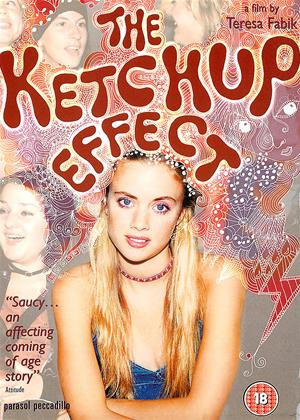
Not Strong Enough In Taste: The Ketchup Effect (2004)

From http://cdn-2.cinemaparadiso.co.uk/060817030759_l.jpg

Dir. Teresa Fabik

Coming up front with the main flaw of The Ketchup 
Effect, it's that it never ventures into braver territory. It's not a "safe" film by any comparison to what an English language version may have been like. About a thirteen year old girl Sofie (Amanda Renberg) whose life spirals downwards when indecent photos of her, while unconscious at a party, are passed around school, it is a lot more frank in its depiction of adolescent sexuality and bullying than most films I've seen from English language countries. In its playful, joyful moments it's just as blunt and honest. The film had a little controversy in Britain in that, despite clearly being for an audience the age of Sofie, with an important message to give to them, it was given an 18 certificate for the image of a prosthetic penis being exposed and slapped onscreen. One county, Stirling, went against this ruling, possible to do legally if any non-British readers would like to know, and gave it a rating that allowed twelve year olds to see it, but it still shows a discrepancy in the British and Europe that still stick out like a sore thumb. 

The film has a lot to like. Its topic of how someone can be badly treated by peer pressure needs to be brought up, especially when it points out that teachers and even parents can so badly screw up and be on the wrong moral side. In one sequence, if thought about, it presents a disturbing idea that a woman can be complicit to behaviour that is inherently misogynistic. The film perfectly depicts how awkward teenagers can be. On a serious note, this is seen when Sofie's friends, fearing they will become unpopular and as ostracised as Sofie when she gets mistreated, start to talk about her behind her back and hang out with another girl. On a lighter note, especially with a potential love interest for Sofie, this is seen in how difficult it is just to express one's interests to another person. Scenes show that Renberg as Sofie does the perfect performance for the role, completely sympathetic and charismatic in the lead. Everyone playing the younger characters in general do their best, but she especially stands out. 

From http://filmsouthflorida.com/images/ketchupeffect.jpg

The problem is that the film itself is the same as many others. It wraps its conflict up in a neat package than explore the difficulty, and full triumph, Sofie would have to have to overcome the situation she is in. It is very generic in presentation - actor on the left of the screen asks something, cuts to another actor on the right side replying, rather than have both in the same frame; music on soundtrack, outside of scenes, to push you along into a certain feeling than letting you get there yourself. And, as personal and potentially petty this criticism could be, some of the music and visual choices are so early 2000s, and don't age well already. Of course having never made a film myself, there is a danger of writing such criticisms, but I bring up these issues with films because, realising it with The Ketchup Effect, I've become concerned about the lack of variance in cinema. In film, literature, any art form, I would be concerned if many works looked exactly identical to each other, and the style this film has is shared by countless others, more of a problem in that many of them, including The Ketchup Effect, may have been a lot more better if they tried something different in presentation and narrative. If there was a ninety minute film that needed to be at least ten or maybe even thirty minutes longer, it's this film. It's perfectly fine how the film ends, but after the gruelling situation Sofie finds herself in, put through in the film, its suddenly dealt with it abruptly and feels like she's been cheated out something really triumphant. Its disappointing as there is something great about a film that deals with the material it does, but it turns out to be far less brave than one wishes it would be. It's much more honest in its presentation than other film would dare to - the coarse language, its adolescents drinking and using other substances until they go blotto - but it eventually shies away from being something more tougher but far greater in its reward. Films can be hesitant to tackle its subject fully even if the content is not the kind dealt with in mainstream cinema, and unfortunately The Ketchup Effect is such a film.

From http://cdn-3.cinemaparadiso.co.uk/clp/156467-13363-clp-720.jpg

Sunday, 9 June 2013

Mini-Review: Rumble Fish (1983)

From http://perhapses.files.wordpress.com/2011/06/mbreigns.png
Dir. Francis Ford Coppola
USA

From https://blogger.googleusercontent.com/img/b/R29vZ2xl/AVvXsEh9jviTYzZGFIteWqxTanwWxcWQTCXv5M7eCwVRdV1JK0RN98w3iDcHgXhID5O6NntV2I0NYiLohjAGCegEOv1J3JakqevZwX2QNW31T5WfedhR3PxTfrnWDpNBQEjWyqINv0bNzhCwixuc/s1600/rumble-fish-1983-mickey-rourke-matt-dillon-pic-3.jpg

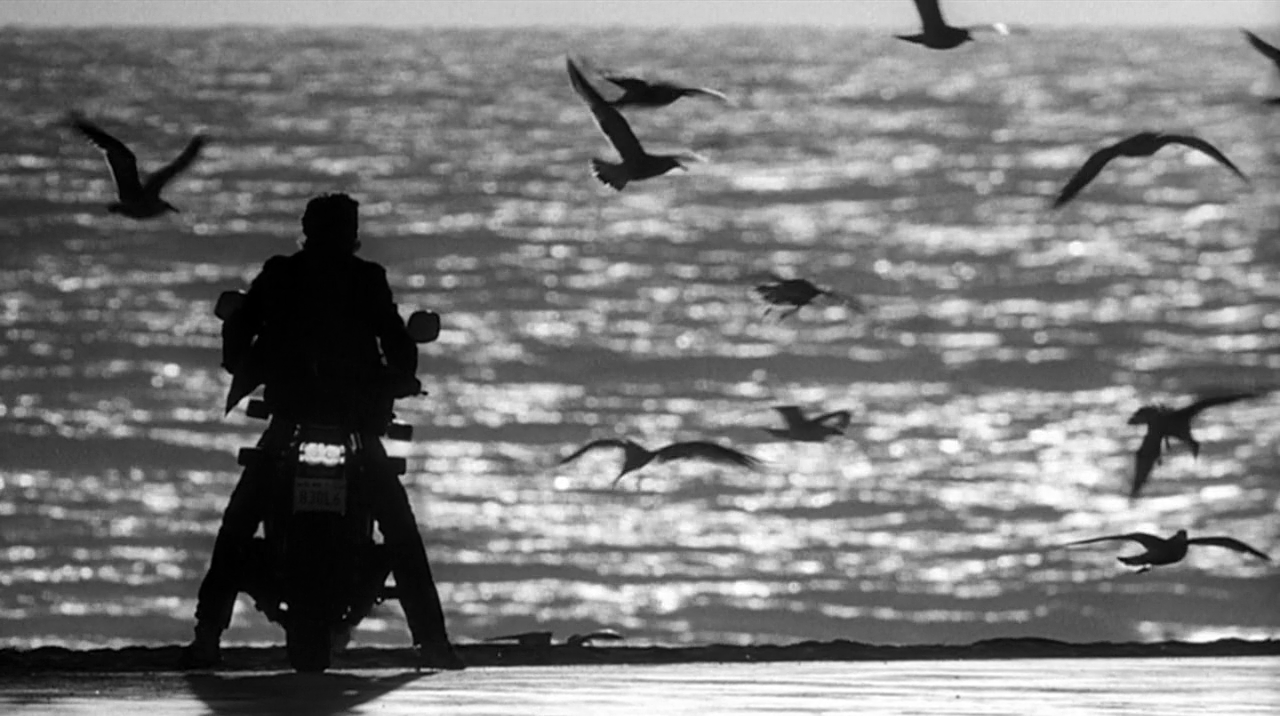
Rumble Fish manages to tackle a great deal in only ninety minutes. One of its director’s most well know film, The Godfather: Part II (1974), is over three hours long but he is able to make a film just as rich that is half the length or more. Many films procrastinate, but Rumble Fish both feels long in scope yet physically is brisk. This befits a film of adolescence and how short it is even if it feels long for the youths. A young man Rusty James (Matt Dillon) idolises his older brother, the quiet voiced Motorcycle Boy (Mickey Rourke), but when he returns he is shown to be unable to, without “the smarts” of him and within a period where he is completely adrift. The monochrome clouds move rapidly above him and others in fluid rich swathes and time peters, Tom Waits behind the counter of his diner expressing how none of the youths realise they have little time, shot from the angled perspective of the wall clock looking down on him too. Days go on but for Rusty James he is nearing a drastic change in his life. His relationship with Patty (Diane Lane), youthful exuberance, who he obsesses over in classes rather than pay attention to the lessons, is precarious. His life is going nowhere and his father (Dennis Hopper) is alone and stuck in an alcoholic dependency. The Motorcycle Boy, and his younger brother’s view of him, is not who he thought he was despite the graffiti of “The Motorcycle Boy Reigns” on street corners.

From http://perfectionofperplexion.files.wordpress.com/2010/07/rumble-fish-1983-hdtv-720p-english-and-russian-mkv_200502.jpg


Never does Rumble Fish become pretentious despite the options that could have lead it there. It is too simple and clear in its thoughts to confuse them. It is cool in rich black-and-white with echoing post-synch sound. It has Dillon, Rourke, Waits, Lane, Lawrence Fishburne, Nicolas Cage and Chris Penn onscreen. Even an adolescent Sofia Coppola in a small role as Patty’s little sister, making the lambasting of her performance, older, in The Godfather: Part III (1990) overdoing it even if it was justified. But beneath the timeless veneer, motorcycle jacketed rebels against arcade machines, it’s about the restlessness of youth. Aimless, not connected to adult life. The violence, Rusty James continually battered and experiencing an out-of-body experience in one such incident, as much the pent-up desires of the males asserting themselves as the desire for sex with girls their age. The fighting fish of the title, bright colours, are trapped and feel the need to assault even their own mirror images. Coppola is controlled, nuanced in every moment angled and lit in an interesting way, but he is as much obsessed with his characters meaning a lot for himself and the viewers. His characters are trapped in situations against their own wills and have to make their way out of it, drastically changing by the end. Gene Hackman against his paranoia in The Conversation (1974). Martin Sheen in Apocalypse Now (1979). Michael Corleone and his divine punishment by the end of The Godfather trilogy. Mina Murray and Dracula in Bram Stoker’s Dracula (1992). The protagonists of Tetro (2009) and Tim Roth, against his superhuman burden, in Youth Without Youth (2007). Like them all, Rusty James is not in control of what happens to him, barring the final decisions, having to decide after it’s too late what to do next. The music, by Stewart Copeland, is precise as clockwork and as varying and changing as a heartbeat. It is cool but weaves with sincerity. Filtered through dialogue by S.E. Hinton, author of the original source novel, Rumble Fish is cool but never aloof, as varying as the drama changes even in its style. Its end is at the ocean and the route to it is justified and felt. In only ninety minutes you are there for characters like Rusty James and the Motorcycle Boy and feel everything that happens. Even if I am distant from their lifestyles and older than them, a young man like myself cannot help but feel, through this stylish film, how my youth is fresh and running quickly on the clock too. 

From http://25.media.tumblr.com/tumblr_mczdxyTtBT1r4c8axo1_1280.png

Tuesday, 16 October 2012

Once Every Month... [Ginger Snaps (2000)]

From http://www.best-horror-movies.com/image-files/Ginger-snaps-dvd-cover-small.jpg

Dir. John Fawcett
Canada
Film #15, of Monday 15th October, for Halloween 31 For 31

Puberty and growing up is a cruel process. Even in one’s early twenties, after one’s body has finished its maturity, the psychological aimlessness can be more pronounced then it was as a teenager. It is cumbersome, awkward, painful, and in my own case filled with as much romantic and sexual love as there is water in the rivers of a desert. That I am a male does put me in a position that, careful with my words, I cannot fully understand what it would be like to be a girl growing up, both the emotional changes and the physical changes. That I am male and cannot fully understand from personal experience may yet help me though understand how unreal adolescence and becoming a teenager must be for a girl too. Growing up with an older sister as she went through her teens, and having prominent female friends at secondary school, Ginger and Brigitte Fitzgerald (Katharine Isabelle and Emily Perkins) are not that far off from real people who I have known broken down into fragments. Unlike my sister, who went through Goth clothing and a constant stream of Disturbed/Marilyn Manson/Rammstein blasting out of her bedroom, or the girls I knew at secondary school who combined Goth and heavy metal with drum kit playing and a passing interest for Satanism, the Fitzgeralds take a more extreme step in creating elaborate suicide and death scenes for a camera, the photographs showing their work making up the opening credits.

Completely inseparable, the sisters find themselves disconnected when Ginger is bitten by a lycanthrope. From there, the metaphor of burgeoning adulthood is literally shown when her first period takes place just before inheriting the blood of a werewolf. Written by Karen Walton from a story collaborated on with the director, it is very blatant and blunt in its ideas, but the twisting of this metaphor in a horror film with comedy and serious drama is very well done too, the obviousness of them prevented from being surface level by a wit to the writing. It is also a film that, while having many of the traits of horror films of the time, a decade or so after music videos were born and started influencing films, never descends into the most generic of structures. The director John Fawcett uses the well worn stylistic choices in a way that prevents them from being in front of the script and tone and to drag the final work down. Music over scenes designed to evoke emotions in the viewer, montages, and the sort of tropes found amongst late 1990s and early 2000s horror cinema, or at least feels so from my perspective growing up with them, are all used properly with other cinematic techniques like Dutch tilts, handheld camera etc. for the right scenes and at the right time; for a great example of this, the moment when Ginger first walks through the school hallway as her new self, turning the heads of male students, and music plays over the visuals as seen in many other movies. The music of the period, such as Machine Head, feels part of the time period but thankfully is used in ways that fit the scenes and avoid the datedness many films from the time have gone through. (Thankfully the Canadian film avoided pop punk and nu-metal, the mainstays of the period. Someone must have gone into the future and informed the production of the dangers of using bands such as The Offspring regardless of them being a good band or not).

And the film has a heart. One of two Canadian genre films I grew up with as an adolescent alongside Cube (1997), revisiting it within this year or so after such an absence away from it proved invigorating and by the end of the film emotionally heart jerking. Yes, it is a very gory film and intentionally ridiculous, its script feeling the influence of Scream (1996) writer Kevin Williamson without the smartarse smugness of that film, but it still takes the anxieties of a young woman growing up seriously. That I have grown up with girls and women much more profoundly outspoken, charismatic, and influential in most areas in my life for me than fellow males has had an effect on how I view Ginger Snaps, Ginger and Brigitte Fitzgerald’s dialogue, and that of the other female characters their age in the film,  littered with causal swearing and snappy comebacks and insults, reminiscent of a condensed and stronger version of how the girls in my year at secondary school acted and spoken, in class or behind the library block smoking, put within a metaphorical blender.

Even the violence is pushed into moments more personal than merely gore, both in the crossing of it with incredibly black humour and the emphasis on the smaller details that are more painful to see and imagine. An improvised belly button piercing, another symbol of growing up for many, is a far more gruesome and cringe worthy effect than if someone’s head was to be knocked off with a wolf claw like a tennis ball with a racket. That such extreme images are crossed with the ordinary suits how puberty and adulthood are strange, almost body horror situations, for both genders. The taboo and hostility with menstruation and menstrual blood, an ordinary biological function, is played with as Ginger and Brigitte suggest a period as a serious injury to a female medical councillor in one extended scene. STDs are also briefly brought into the lycanthrope metaphors, with quite ridiculous and leg crossing results, almost turning unintentionally into something out of Peter Jackson’s Meet the Feebles (1989), in tone and facial prosthetics, if it wasn’t for the writer and director pulling it away from goofy ghoulishness.

As has been established in one of the early reviews for this Halloween season, I have been incredibly cold about genre films from the 2000s onwards. Part of the problem is not just the technological side I have delved into before, but also that many of the films are merely repetitions of previous decades, beyond generic writing of said decades but purposely copying the films of before in this post-post-modern era, without any sense of their own personalities or a punch to them. While, on the cusp of the late 1990s, you could argue Ginger Snaps is closer to that decade, it is the kind of genre film that does catch my breath. Not winkingly ironic, not violent for the sake of violence with a pretentious streak (Martyrs (2008) or The Human Centipede (First Sequence) (2009)), not an ironic film that pretend to be bad rather than sincere exploitation (ie. why Canada’s Hobo With A Shotgun (2011) stands far and above all the tedious ‘Grindhouse’ revival films I’ve seen in terms of quality), or compromised into being jump-scare structured, 15 certificate/PG-13 repetition of even fan acclaimed films. You can argue Ginger Snaps has the pacing and use of horror scenes of the later examples, but as stated the director John Fawcett uses the conventions of 90s horror cinema properly for impact and effect rather than let them scrape away the rough edges of the film and sanitise it. He is followed by a very good script by Karen Walton and a solid and remarkable cast led by Katharine Isabelle and Emily Perkins, the former heading a 2012 film American Mary (by Jen Soska and Sylvia Soska) which I am very interested to see within the year or so. To ignore this, even if you were to find it not as good as I did upon viewing it, in favour of more overrated and excessively quoted films of the last decade is to stick your head in the sand like an ostrich. The Canadians, even if I’ve seen only a few of their genre films, apparently got the memo about making films that are actually interesting, from Cronenberg to this, and make some of their cousins down south look like said ignorant ostriches with their heads in the ground. 

From http://mos.totalfilm.com/images/t/tf-coms-alternative-horror-playlist-00-429-75.jpg